Generated with Monsha
Save this resource to edit, expand, or export it, or create more resources for free.
Shin Lim: The Art of Close-Up Magic Worksheet
Worksheet
Grade 12
English
Shin Lim: The Art of Close-Up Magic Worksheet
Activity 1: Labeling the Mechanics of a Card Palm
Instructions: Examine the diagram below illustrating the technical positioning required for a successful card "palm" in close-up magic. Use the randomized word bank provided to label the numbered parts correctly in the spaces below. Ensure your handwriting is clear.
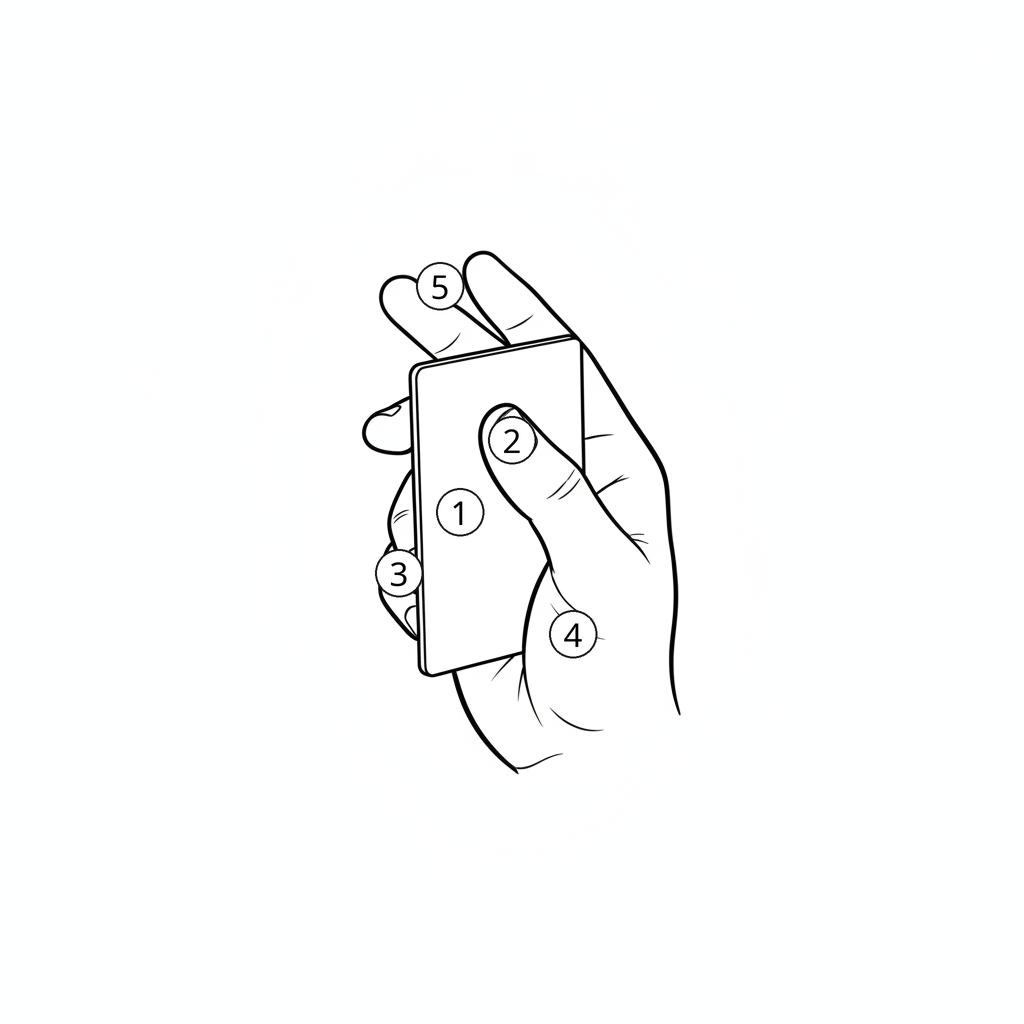
Word Bank:
- The 'tell' (stiffened finger)
- Thumb (stabilization)
- Pinky finger (securing edge)
- Hidden playing card
- Palm (nesting area)
-
-
-
-
-
Activity 2: Multiple Choice – Background and Artistic Style
Instructions: Select the most accurate answer for each of the following questions regarding Shin Lim’s career and performance style. Circle your chosen letter (A, B, C, or D).
- What specific medical condition forced Shin Lim to abandon his career as a concert pianist and pursue magic full-time? A) Rheumatoid arthritis in the knuckles B) Carpal tunnel syndrome in both wrists C) Tendonitis in the forearms D) Repetitive strain injury in the fingers
- Unlike many traditional magicians, Shin Lim's acts are characterized by: A) Rapid-fire verbal storytelling (patter) to distract the audience. B) Large-scale stage illusions involving assistants and pyrotechnics. C) Non-verbal performances synchronized meticulously to a musical score. D) Heavy reliance on audience members being called onto the main stage.
- In 2015 and 2017, Shin Lim famously performed on which show, twice convincing the judges that they could not explain his methods? A) Masters of Illusion B) Penn & Teller: Fool Us C) Britain's Got Talent D) Magic’s Biggest Secrets Finally Revealed
Activity 3: Fill-in-the-Gaps – The "Black Art" and Signature Tricks
Instructions: Complete the paragraph below using appropriate technical terms or names from Shin Lim's repertoire. Provide your answers in the blank spaces.
One of Shin Lim’s most technically demanding routines is titled _________________________ (1), which features rapid color changes and vanishing objects. To achieve these visual impossibilities, Lim often utilizes the _________________________ (2) principle. This involves using specific backgrounds, such as black velvet, and controlled lighting to hide objects or _________________________ (3) in plain sight. Furthermore, he often incorporates a _________________________ (4) during his set, which is a secret move used to exchange a standard deck for a prepared one, often facilitated by a hidden pocket known as a _________________________ (5).
Activity 4: True or False – Performance and Career Milestones
Instructions: Read the following statements about Shin Lim’s professional achievements. Write TRUE or FALSE in the space provided. If the statement is false, briefly explain why.
- Shin Lim is the first and only person to win two consecutive titles in the America's Got Talent franchise. ___________ Reason (if false): ____________________________________________________________________
- His primary focus is on "mentalism," which involves reading the minds of audience members without the use of physical props. ___________ Reason (if false): ____________________________________________________________________
- Lim’s winning routine on AGT Season 13 relied heavily on high-definition camera work to translate close-up magic to a massive audience. ___________ Reason (if false): ____________________________________________________________________
- Before his magic career, Shin Lim attended Lee University as a major in Piano Performance. ___________ Reason (if false): ____________________________________________________________________
- The "Tenkai Palm" is a technique Lim avoids because it requires the fingers to remain closed, making it easier for audiences to spot. ___________ Reason (if false): ____________________________________________________________________
Activity 5: Multiple Choice – Technical Sleight of Hand
Instructions: For each technical magic term described below, select the correct definition or application. Circle your answer.
- What is the primary purpose of a "Shift" (or "The Pass") in card manipulation? A) To turn a card face-up while it is in the middle of the deck. B) To secretly move a chosen card to the top or bottom of the deck. C) To change the color of the back of the card instantly. D) To shuffle the cards in a way that appears fair but maintains their order.
- The principle of "visual misdirection" in Lim's work relies on: A) Using loud noises to startle the audience during a critical move. B) Directing the audience's line of sight away from a "load" using grand gestures. C) Creating a smoke cloud to physically block the view of the entire table. D) Asking a spectator a complex question to occupy their cognitive focus.
- Why is "finger independence" crucial for a magician like Shin Lim? A) It allows him to hold a heavy deck of cards for long periods. B) It prevents the hand from looking stiff or unnatural while palming a card. C) It is a requirement for playing the piano, but not for card magic. D) It enables him to use gloves during his performances without losing grip.
Activity 6: True or False – The Transition from Music to Magic
Instructions: Determine whether the following statements regarding the influence of music on Shin Lim's magic are correct. Write TRUE or FALSE.
- Shin Lim taught himself magic primarily through professional mentoring from Las Vegas legends. ___________
- The "manual dexterity" developed during years of piano practice directly benefited his speed and precision in sleight of hand. ___________
- In his performances, every snap of a finger or card reveal is synchronized with the rhythm of the background music. ___________
- Lim transitioned to magic because he found the lifestyle of a concert pianist to be too solitary. ___________
- He treats his magic routines like musical compositions, focusing on atmosphere and cinematic timing. ___________