Generated with Monsha
The Evolution of Modern Belarusian Gastronomy
Reading Comprehension Questions · Grade 12 · English
The Evolution of Modern Belarusian Gastronomy
The contemporary Belarusian culinary landscape is undergoing a profound transformation, moving beyond its historical reliance on hearty, foundational staples toward a sophisticated synthesis of tradition and global innovation. While traditional dishes such as draniki (savory potato pancakes) and machanka (a rich pork stew) remain the bedrock of the national identity, the emergence of a vibrant cafe culture in urban centers like Minsk has introduced a "New Nordic" ethos. This philosophy emphasizes the utilization of seasonal, locally foraged ingredients—such as chanterelles and sea buckthorn—paired with refined international culinary techniques, effectively redefining the Belarusian dining experience.
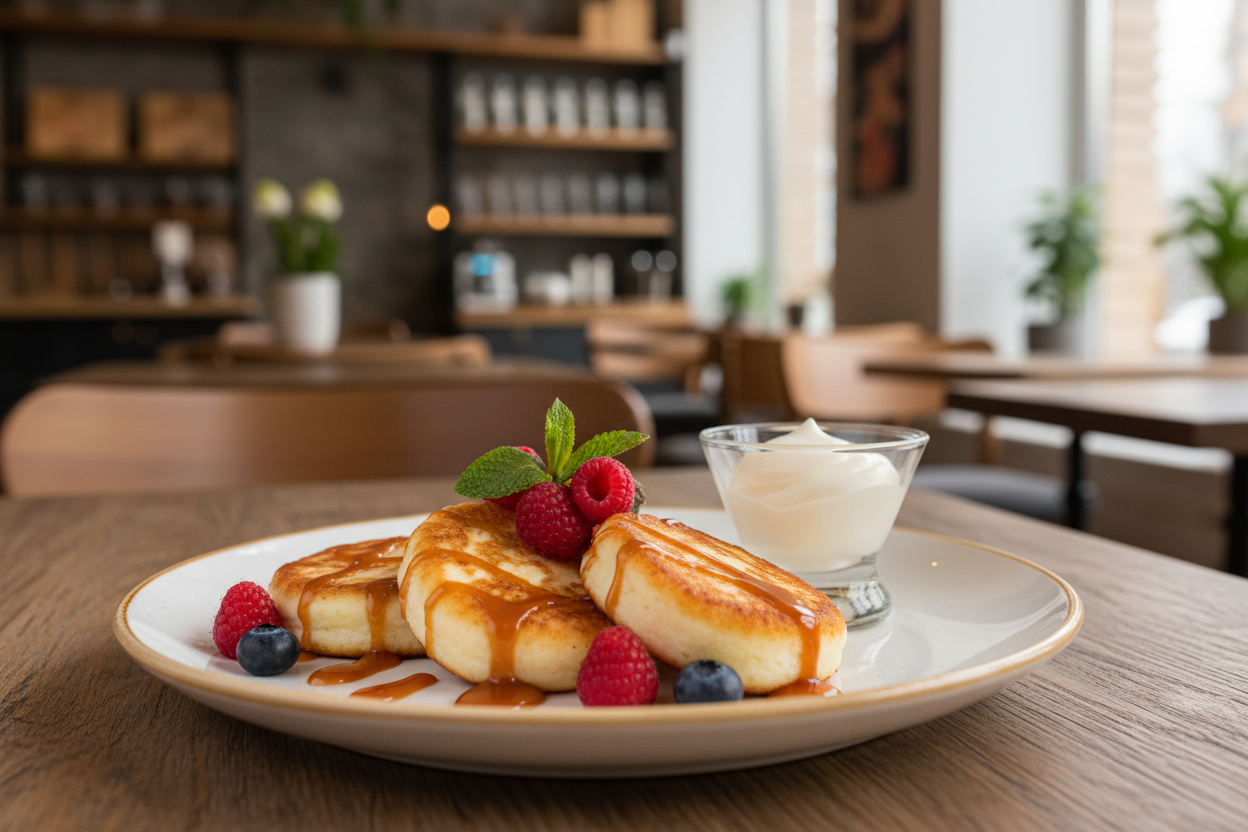
In creative districts like Oktyabrskaya and Internatsionalnaya, an "all-day breakfast" culture has become a hallmark of the modern scene. Traditional syrniki (cottage cheese pancakes), once a simple domestic breakfast, have been reimagined as avant-garde desserts or brunch centerpieces, topped with matcha cream, white chocolate mousse, or passion fruit. This trend extends to global favorites like Eggs Benedict and avocado toast, which are now ubiquitous on Minsk menus, often elevated with artisanal brioche or locally smoked salmon.
This modernization is equally evident in the evolution of starters and soups. The heavy, mayonnaise-based salads of the Soviet era have largely been supplanted by lighter, ingredient-focused dishes. A prime example is the warm chicken liver salad, typically featuring caramelized pears and a raspberry balsamic glaze, which has become a staple of contemporary bistros. Similarly, classic soups like solyanka now share menu space with pumpkin cream soups and Asian-inspired broths like Tom Yum, reflecting the increasing cosmopolitanism of the local palate.
The phenomenon of "Gastrofest" further accelerates this culinary evolution. Held several times annually, this event incentivizes restaurants to create unique, fixed-price sets, pushing chefs to innovate with traditional ingredients in unexpected ways. Whether it is the inclusion of foraged mushrooms in Italian risotto or the deconstruction of the classic medovik (honey cake) into a light lavender-infused mousse, the modern Belarusian dining scene represents a deliberate and successful amalgamation of historical roots and global epicurean trends.
True/False Questions
- The "New Nordic" style in Belarusian dining emphasizes the use of imported ingredients over local ones.
- Syrniki are traditional cottage cheese pancakes that have been modernized with toppings like matcha cream.
- The creative districts of Oktyabrskaya and Internatsionalnaya are known for their all-day breakfast trends.
- Heavy mayonnaise-based salads remain the most popular starter in modern Minsk cafes.
- Gastrofest is a culinary event held only once every five years to celebrate traditional recipes.
- Sea buckthorn tea is a popular non-alcoholic beverage known for its vibrant orange color and health benefits.
- Modern Belarusian burgers often incorporate local elements like cranberry jam or local cheeses.
Fill in the Blank Questions
- The modern Belarusian cafe scene is described as a "New ________" style of dining.
- Traditional potato pancakes are known in Belarus as ________.
- A popular contemporary starter in Minsk features warm ________ liver served with caramelized pears.
- The "burnt" Basque ________ is a current top trend in Belarusian specialty cafes.
- Gastrofest encourages chefs to use prized ________ mushrooms in dishes ranging from pizza to desserts.
- Modernized medovik is often served as a light ________ with lavender or honeycomb toffee.
- International mains like pasta and risotto are frequently adapted using local forest ________ to add a Belarusian identity.
Multiple Choice Questions
- What is the primary characteristic of the "New Nordic" style mentioned in the text?
- A) A total rejection of historical Belarusian recipes
- B) The exclusive use of pan-Asian cooking techniques
- C) An emphasis on seasonal, local ingredients paired with international techniques
- D) A return to heavy, mayonnaise-based traditional salads
- Which ingredient is frequently used to add a "local twist" to gourmet burgers and duck leg confit?
- A) Matcha cream
- B) Cranberry or berry reductions
- C) White chocolate mousse
- D) Avocado and prosciutto
- According to the text, how has the traditional medovik cake been modernized?
- A) It is now served as a heavy, multi-layered savory dish
- B) It has been replaced entirely by San Sebastian cheesecake
- C) It is refined into a light mousse with lavender or honeycomb toffee
- D) It is traditionally served with smoked salmon and brioche
- What role does Gastrofest play in the Belarusian culinary scene?
- A) It serves as a historical reenactment of ancient cooking methods
- B) It discourages the use of international influences in local restaurants
- C) It encourages restaurants to create unique, affordable fixed-price sets and innovate
- D) It focuses exclusively on the production of non-alcoholic sea buckthorn tea
- The transition from heavy salads to lighter, ingredient-focused dishes like the warm chicken liver salad reflects a shift toward:
- A) Soviet-era culinary traditions
- B) Contemporary, health-conscious global trends
- C) Fast-food consumption patterns
- D) Exclusive reliance on imported seafood
- Which of the following is an example of an Asian influence mentioned in the modernized soup section?
- A) Pumpkin Cream Soup
- B) Solyanka
- C) Tom Yum
- D) Borscht
- What traditional bread is often used to provide a "local textural contrast" when serving tartare?
- A) French Baguette
- B) Borodinsky rye bread
- C) Artisanal Brioche
- D) Italian Ciabatta