Generated with Monsha
An Academic Analysis of One-Punch Man: Deconstructing the Superhero Genre
Handout · University (Grade 16) · English
An Academic Analysis of One-Punch Man: Deconstructing the Superhero Genre
One-Punch Man: A Deconstruction of the Superhero Genre
Introduction
One-Punch Man (OPM), originally a webcomic by the enigmatic author ONE and later spectacularly illustrated by Yusuke Murata, stands as a unique and critically acclaimed entry in the contemporary superhero narrative landscape. Far from a conventional tale of an underdog rising to power, OPM immediately subverts expectations by presenting a protagonist, Saitama, who has already achieved insurmountable strength. This premise — a hero who can defeat any foe with a single punch — transforms the traditional superhero struggle from one of physical conquest to an introspective exploration of purpose, societal values, and the very nature of heroism. This handout will delve into the multifaceted layers of One-Punch Man, examining its narrative structure, thematic depth, character dynamics, and its profound commentary on the superhero genre and modern society. By analyzing its deconstructive approach, we can appreciate OPM not merely as an action-comedy, but as a sophisticated work of meta-commentary that challenges its audience to reconsider their preconceived notions of power, justice, and existential fulfillment.
The Premise and Narrative Subversion
At its core, One-Punch Man introduces Saitama, a seemingly ordinary man who, after three years of intense training (
push-ups, $100$ sit-ups, $100$ squats, and a $10 km$ run every day), attains unparalleled physical prowess. This extreme strength, however, becomes his greatest curse. The thrill of battle, the tension of a life-or-death struggle, and the satisfaction of overcoming adversity are all stripped away, leaving Saitama with a profound sense of boredom and ennui. This central conceit immediately distinguishes OPM from typical shonen manga and superhero comics, where the hero's journey is defined by incremental power-ups, arduous training, and the gradual ascent to peak strength. Instead, Saitama's journey begins at the apex, forcing the narrative to shift its focus from 'how will the hero win?' to 'what does winning mean when victory is assured?'The narrative, therefore, derives its tension not from Saitama's physical battles, which are invariably short and decisive, but from the psychological and sociological ramifications of his power. The story explores the lives of other heroes who genuinely struggle, the bureaucratic complexities of the Hero Association, the public's often misguided perception of heroes, and Saitama's own internal quest for meaning. This inverted narrative arc allows OPM to meticulously deconstruct established genre tropes. The climactic battles, usually the zenith of a superhero story, become anticlimactic jokes for Saitama, highlighting the absurdity of absolute power in a world that still requires struggle and growth. The series masterfully balances intense action sequences, often rendered with breathtaking detail by Murata, with a deadpan comedic sensibility that underscores the existential plight of its protagonist.
Thematic Analysis
Existentialism and Apathy in Absolute Power
Saitama's character embodies a profound existential dilemma: what is the meaning of life when all challenges are effortlessly overcome? His overwhelming strength, while seemingly a blessing, strips him of purpose and passion. He often expresses a detached apathy, lamenting the lack of a genuinely challenging opponent. This state of boredom, a direct consequence of his omnipotence, mirrors philosophical concepts of existential angst, where the absence of inherent meaning forces an individual to create their own purpose. Saitama's pursuit of heroism, initially driven by a childhood dream, loses its luster as the 'fun' of fighting vanishes. His longing for a 'good fight' is not merely a desire for violence but a yearning for an experience that can reignite his sense of self and purpose. This theme resonates with modern anxieties about achievement and fulfillment, questioning whether ultimate success truly brings happiness or merely opens the door to a new, more profound form of dissatisfaction.
The Nature of Heroism: Motivation and Perception
One-Punch Man offers a rich tapestry of heroic motivations, contrasting Saitama's pure, almost childlike desire to be a hero 'for fun' with the varied, often flawed, reasons of other characters. The Hero Association, a bureaucratic organization, categorizes and ranks heroes, inadvertently fostering competition, egoism, and a focus on public image rather than genuine altruism. Heroes like Puri-Puri Prisoner are driven by their own peculiar desires, while others like Tatsumaki are arrogant and aloof, yet undeniably powerful protectors. Mumen Rider, a C-Class hero with no superpowers, exemplifies pure, selfless heroism through his unwavering commitment to justice, even against insurmountable odds. His struggles highlight the moral core of heroism, irrespective of power level. This spectrum of heroes allows OPM to critique the commercialization and institutionalization of heroism, suggesting that true heroism might lie not in strength or recognition, but in an unwavering spirit and dedication to helping others, even when it is inconvenient or dangerous.
Critique of Society and Bureaucracy
The Hero Association serves as a satirical commentary on organizational structures and public perception. Its rigid ranking system, public relations strategies, and occasional corruption expose the flaws inherent in any large institution. Heroes are often judged by their public image, their ability to defeat 'flashy' monsters, or their popularity, rather than their actual effectiveness. Saitama, due to his unassuming appearance and lack of public recognition, is frequently underestimated and unfairly judged, even by the very organization he works for. This highlights the superficiality of public opinion and the media's role in shaping narratives. The citizens, too, are often fickle, quick to praise and equally quick to condemn, demonstrating a herd mentality that prioritizes immediate gratification and readily assigns blame. OPM uses these societal elements to critique the human tendency to oversimplify complex issues and to place undue importance on superficial metrics, rather than genuine contributions.
The Value of Struggle and Growth
While Saitama has transcended the need for struggle, the narrative frequently emphasizes its importance through the journeys of other characters. Genos, Saitama's cyborg disciple, constantly strives for greater power and seeks to learn from his master, even though Saitama's 'secret' to strength is deceptively simple. Other heroes face genuine threats, train relentlessly, and experience both victories and defeats, allowing them to grow stronger and more experienced. This contrast underscores a fundamental aspect of human existence: growth is often predicated on overcoming adversity. Saitama's lack of struggle means a lack of growth, leaving him stagnant in his emotional and intellectual development, despite his physical perfection. The series implicitly argues that the journey, with all its trials and tribulations, is often more fulfilling and character-building than the destination itself, especially when that destination is reached too easily.
Deconstruction of Shonen and Superhero Tropes
One-Punch Man systematically dismantles common tropes found in shonen manga and superhero comics. The 'power-up' sequence, a staple of these genres, is rendered moot by Saitama's already maxed-out abilities. The long, drawn-out battles with escalating stakes are resolved in an instant, often with comedic timing. The brooding, mysterious hero archetype is replaced by a mundane, often bored protagonist worried about grocery sales. Even the concept of a 'secret identity' is given a humorous twist, as Saitama is mostly unknown to the public despite his heroic deeds. The series uses these subversions not just for humor but to provoke thought about why these tropes exist and what they truly signify. By stripping away the conventional hero's journey, OPM forces the audience to look beyond the surface-level spectacle and engage with the deeper philosophical questions about heroism and purpose.
Character Analysis
Saitama: The Apathetic Paragon
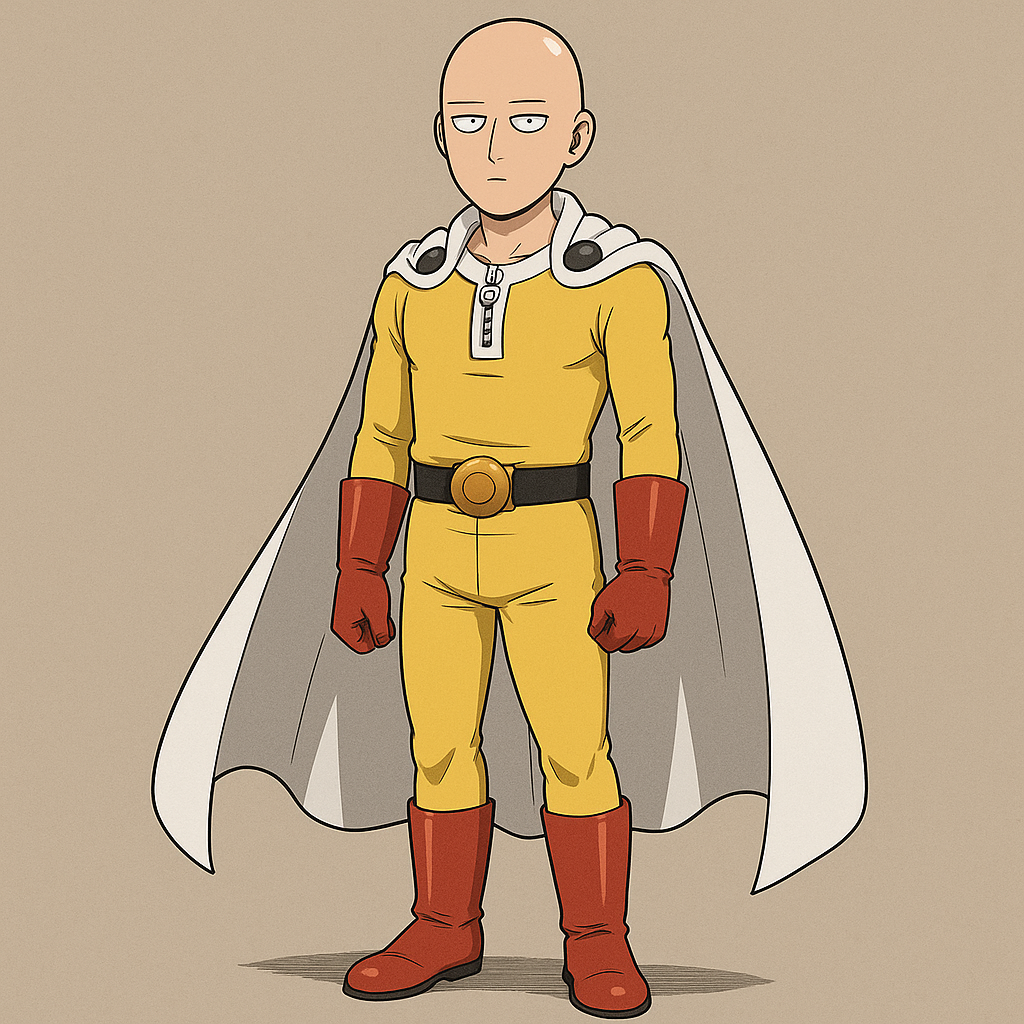
Saitama, the titular One-Punch Man, is a paradoxical figure. Physically, he is the epitome of strength, capable of destroying any foe with a single, effortless blow. Psychologically, however, he is an everyman plagued by an existential crisis. His motivation for being a hero is simple: 'for fun,' a childlike aspiration that loses its appeal once the challenge vanishes. He is often oblivious to the gravity of situations, preoccupied with mundane concerns like missing a sale or a favorite TV show. This juxtaposition of god-like power and ordinary human concerns is central to his character's appeal and the series' humor. Saitama's apathy is not born of malice but of profound boredom, a search for meaning that his power has ironically made unattainable. He represents the ultimate realization of a hero's dream, yet also its ultimate emptiness.
Genos: The Earnest Disciple and Foil
Genos serves as Saitama's loyal disciple and primary foil. A powerful cyborg driven by a burning desire for justice and revenge against the cyborg who destroyed his hometown, Genos is everything Saitama is not: serious, focused, constantly seeking to improve, and deeply concerned with his public image as a hero. He meticulously documents Saitama's 'training regimen' and attempts to understand the 'secret' to his master's power, often overcomplicating Saitama's simple answers. Genos's earnestness and his ongoing struggle against increasingly powerful foes provide the conventional shonen narrative elements that Saitama's story lacks. Through Genos, the audience experiences the traditional hero's journey, providing a contrast that highlights Saitama's unique predicament and the series' deconstructive themes.
The Hero Association and its Members
The Hero Association is populated by a diverse cast of heroes, each embodying different aspects of the superhero archetype. The S-Class heroes, the strongest among them, are often eccentric, arrogant, or morally ambiguous, yet undeniably powerful. Figures like Tatsumaki (Terrible Tornado) with her immense psychic powers, or King, the 'strongest man on Earth' who is actually a terrified fraud benefiting from Saitama's reputation, add layers of humor and commentary. King, in particular, highlights the role of perception and reputation in heroism. Below them, heroes like Mumen Rider stand out for their pure-hearted, albeit powerless, dedication. These characters, through their interactions and individual struggles, flesh out the world of OPM, showcasing the complex ecosystem of heroism and its challenges beyond simply defeating monsters.
The Villains: Catalysts for Exploration
The villains in One-Punch Man primarily serve as catalysts for exploring the world and developing other characters, rather than posing a genuine threat to Saitama. From the monstrous Crabante to the alien warlord Boros, and the human-monster Garou, each antagonist pushes the narrative forward, allowing for elaborate action sequences and showcasing the struggles of the other heroes. While some villains, like Boros, briefly offer Saitama a glimpse of a challenging fight, they ultimately reinforce his overwhelming power. Garou, the 'Hero Hunter,' provides a more complex villain arc, driven by a twisted sense of justice and a desire to be the 'absolute evil.' His journey allows for a deeper exploration of moral relativism and the cyclical nature of conflict, blurring the lines between hero and villain.
Artistic and Production Aspects
ONE's Original Webcomic
The original One-Punch Man webcomic, drawn by ONE, is characterized by its simplistic, almost crude art style. Despite the rudimentary visuals, ONE's genius shines through in his masterful comedic timing, engaging paneling, and profound storytelling. The webcomic's raw aesthetic allowed the narrative and character development to take center stage, proving that compelling storytelling does not always require polished graphics. It was this unique blend of humor, action, and philosophical depth, conveyed through ONE's distinctive narrative voice, that first captured a massive online audience and paved the way for its professional adaptation.
Yusuke Murata's Manga Adaptation
Yusuke Murata's manga adaptation is renowned for its breathtaking artistry and dynamic action sequences. Murata, known for his work on Eyeshield 21, brings an unparalleled level of detail, fluidity, and visual spectacle to ONE's story. His intricate panel layouts, kinetic battle choreography, and expressive character designs elevate the material to new heights. The contrast between Saitama's simplistic design and the elaborate rendering of other characters and monsters further emphasizes his unique status. Murata's art not only faithfully adapts ONE's vision but enhances it, making the epic scale of the battles truly resonate while preserving the comedic impact of Saitama's one-punch victories. This collaboration is a rare example of two distinct artistic visions merging to create a work greater than the sum of its parts.
The Anime Adaptation
The anime adaptation of One-Punch Man, particularly its first season by Madhouse, further popularized the series and brought its spectacular action to life. The animation perfectly captured Murata's dynamic art, delivering fluid and impactful battle scenes that garnered widespread critical acclaim. The voice acting, comedic timing, and musical score all contributed to a highly engaging viewing experience. The anime's success demonstrated the universal appeal of OPM's unique premise and its ability to transcend its manga origins, reaching a global audience and solidifying its place as a modern classic.
One-Punch Man's Place in Popular Culture
One-Punch Man has cemented its place in popular culture as a groundbreaking work that redefines the superhero genre for a contemporary audience. Its unique premise and deconstructive approach have inspired numerous discussions and analyses regarding heroism, power, and existentialism. It appeals to both seasoned fans of superhero narratives and newcomers, offering both thrilling action and thoughtful commentary. The series' ability to balance intense action with sharp humor and philosophical undertones has made it a benchmark for quality in manga and anime. Its influence can be seen in subsequent works that attempt to subvert or comment on established genre tropes, demonstrating OPM's lasting impact on the creative landscape of sequential storytelling. It stands as a testament to the power of original ideas and the potential for a fresh perspective to revitalize even the most established genres.
Conclusion
One-Punch Man is more than just a comedic action series; it is a sophisticated deconstruction of the superhero genre that challenges its audience to think critically about power, purpose, and societal values. Through the paradoxical figure of Saitama, the series explores the existential void that can accompany ultimate strength, while the diverse cast of supporting characters and the satirical Hero Association provide a rich commentary on the multifaceted nature of heroism and the pitfalls of bureaucracy and public perception. The remarkable collaboration between ONE's narrative genius and Murata's artistic prowess, further amplified by the acclaimed anime adaptation, has created a work that is both incredibly entertaining and intellectually stimulating. One-Punch Man invites us to look beyond the spectacle of superhuman feats and consider the deeper human quest for meaning, making it a pivotal and enduring contribution to modern storytelling and a subject worthy of academic inquiry.