Generated with Monsha
Save this resource to edit, expand, or export it, or create more resources for free.
Water Cycle Handout — 4th Grade Science (Printable with Flowchart)
Handout
Grade 5
English
Water Cycle Handout — 4th Grade Science (Printable with Flowchart)
Water Cycle Handout
Name: __________________________
Date: __________________________
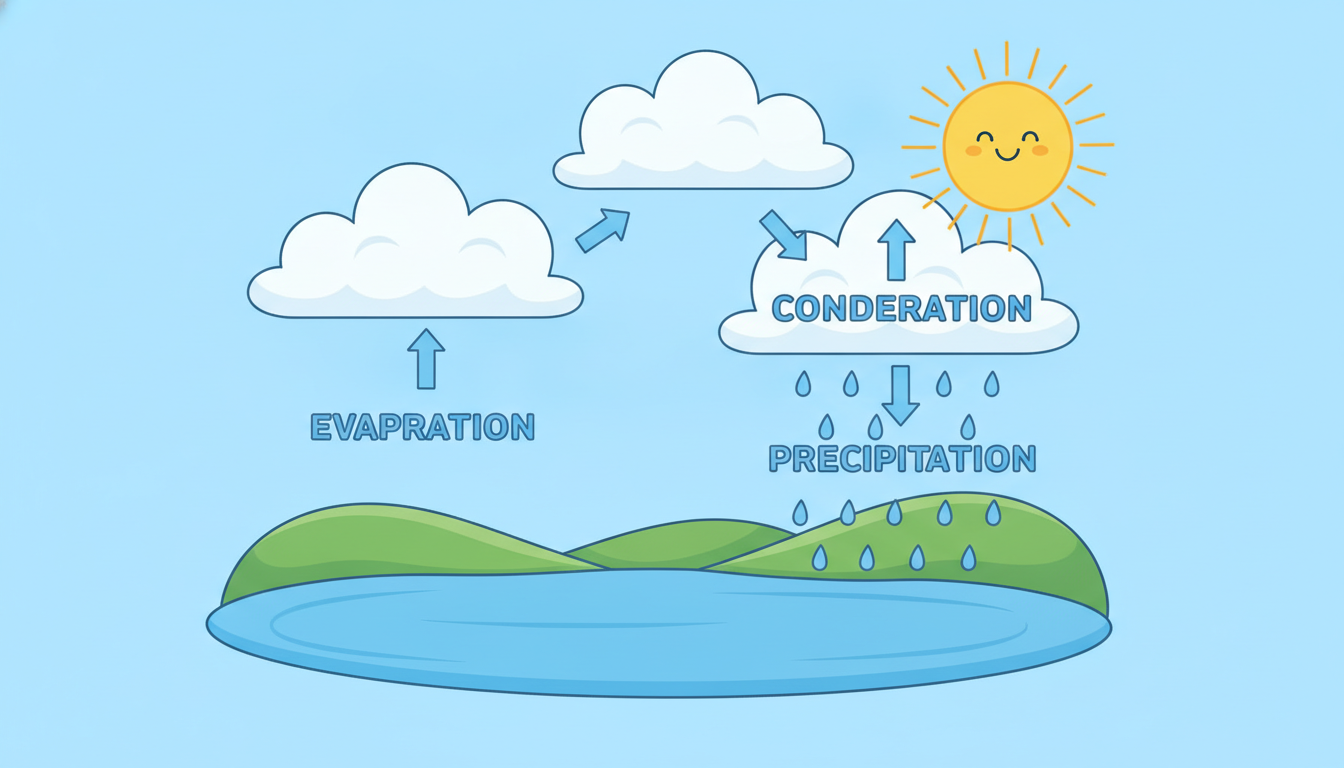
Section 1: What is the water cycle?
The water cycle is the never-ending journey that water takes as it moves from the Earth to the sky and back down again. Nature uses the sun’s energy to recycle all the water on our planet so that we can use it over and over. This means the water you drink today is the same water that existed millions of years ago when dinosaurs roamed the Earth! It is a beautiful, giant circle that keeps our plants green and our oceans full.
The Big Picture: Imagine the Earth is like a giant spaceship with a limited supply of water. Since we can't get more water from space, our planet has to be an expert at cleaning and reusing what it already has. The water cycle is Earth's way of making sure every living thing—from the tiniest blade of grass to the biggest blue whale—has the water it needs to survive. Whether it is a snowflake landing on a mountain or a raindrop splashing in a puddle, every bit of water is part of this amazing team effort!
Section 2: The Water Cycle Flowchart
At the center of everything is this circular journey. Follow the arrows to see how water changes form and moves through our world.
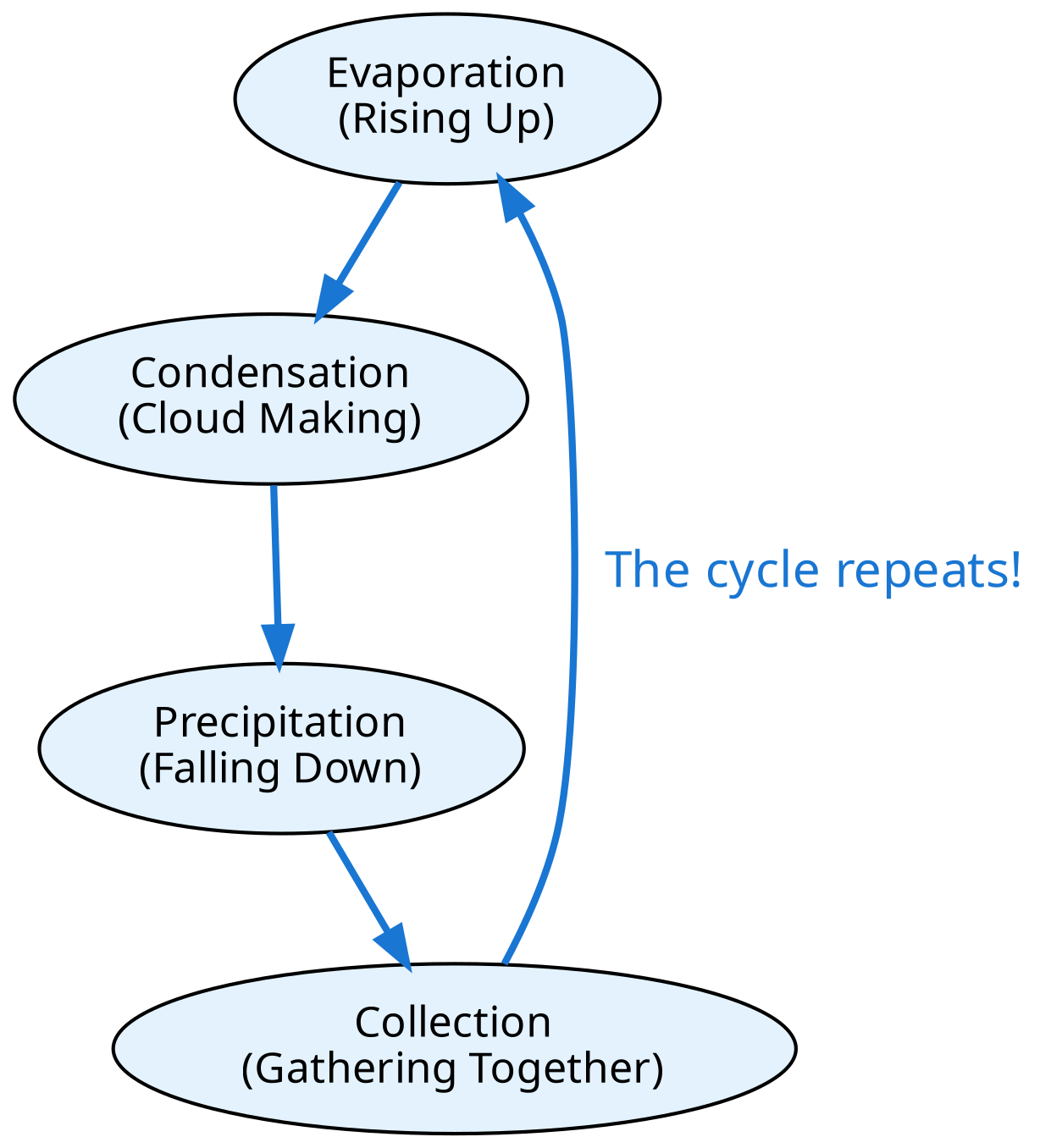
How the Stages Work
- Evaporation: The sun warms up the water in our oceans and lakes, turning it into an invisible gas called water vapor that floats up into the sky.
- Condensation: High in the sky where the air is cooler, the water vapor cools down and huddles together to form fluffy white clouds.
- Precipitation: When the clouds get too heavy and full of water, they let go, and the water falls back to Earth as rain, snow, or hail.
- Collection: The water that falls gathers together in oceans, rivers, and even underground, waiting for the sun to start the cycle all over again.
Section 3: Words to Know
Learning the language of science helps us explain the world around us! Here are the most important words to remember when you think about the water cycle.
- Evaporation Definition: The process where liquid water heats up and changes into an invisible gas called water vapor. Example: Think of a small puddle on the sidewalk on a sunny afternoon; after a few hours, the puddle is gone because it evaporated into the air!
- Condensation Definition: The process where water vapor (gas) cools down and turns back into liquid water droplets. Example: Have you ever seen "breath clouds" on a cold morning or foggy steam on the bathroom mirror after a hot shower? That is condensation!
- Precipitation Definition: Any form of water that falls from the clouds and reaches the Earth's surface. Example: While rain is the most common, precipitation also includes soft white snow, icy sleet, and even hard balls of hail during a storm.
- Collection Definition: The stage where water falls from the sky and gathers in one place like a lake, ocean, or even deep in the soil. Example: A deep, blue lake in the mountains is a perfect example of collection, where all the rainwater from the hills gathers together in one spot.
- Water Vapor Definition: The state of water when it is an invisible gas floating in the air all around us. Example: You can't see the water vapor in the air right now, but it is there—just like the steam rising off a hot cup of cocoa before it disappears!
Scientific Tip: Did you know that plants also contribute to the water cycle? Through a process called transpiration, plants "breathe out" water vapor from their leaves, which then goes up into the sky to join the clouds! It's like the trees are helping to make the rain.
Section 4: The Water Cycle Around You
Science isn't just in books; it is happening right outside your window! Think about where you live and the things you see every day. Can you name one place where you have seen these stages in real life?
1. Evaporation: I saw this when ___________________________________________________
2. Condensation: I saw this when __________________________________________________
3. Precipitation: I saw this when _________________________________________________
4. Collection: I saw this when ____________________________________________________
Section 5: Quick-Check Questions
Test your water cycle knowledge with these three quick questions!
1. What provides the energy that keeps the water cycle moving?
A. The Sun
B. The Moon
C. The wind
D. Deep-sea volcanoes
2. Which process is responsible for the formation of clouds?
A. Collection
B. Evaporation
C. Condensation
D. Precipitation
Short Answer:
Explain why we say the water cycle is a "cycle" and not just a one-way trip.
Sources: National Geographic Kids, NASA Climate Kids, and U.S. Geological Survey (USGS) Water Science School.