Generated with Monsha
Honeybee Ecosystems: Cause and Effect Reading Comprehension and Causal Chain Worksheet
Reading Comprehension Questions · Grade 4 · English
Honeybee Ecosystems: Cause and Effect Reading Comprehension and Causal Chain Worksheet
- Have you ever noticed a tiny, fuzzy honeybee buzzing from flower to flower in a garden? While it might look like they are just playing, these insects are actually performing one of the most crucial jobs on our planet. Honeybees are pollinators, which means they help plants make seeds and fruit. Without the hard work of these small creatures, our dinner plates would look very different. Because honeybees are so interconnected with our environment, a change in their population can cause a massive chain reaction throughout the entire world.
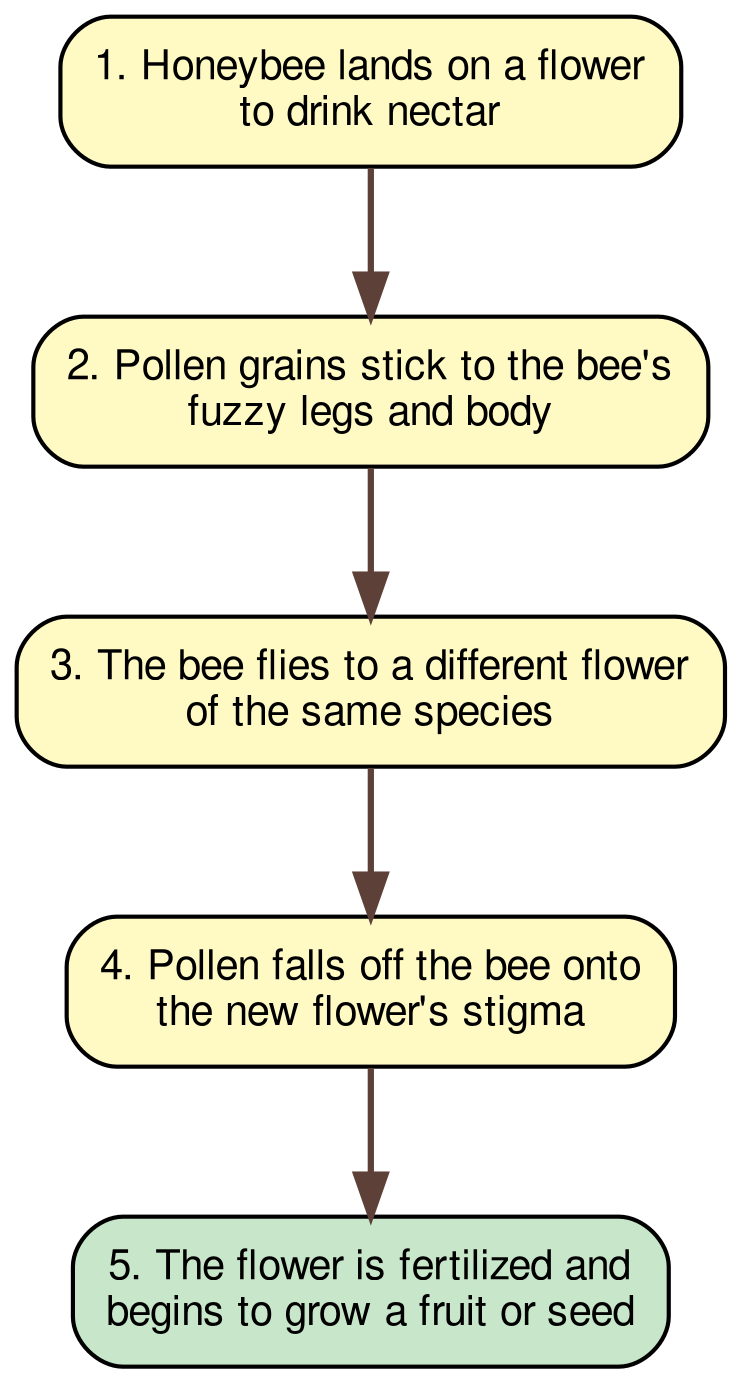
- The process starts when a bee is attracted to a flower's bright colors and sweet scent. The bee visits the flower to drink nectar, which is a sugary liquid it uses for food. Since the bee has a very fuzzy body, tiny grains of pollen stick to its legs and chest while it drinks. When the bee flies to the next flower, some of that pollen falls off. This simple action allows the plant to fertilize and create a seed. As a result of this movement, plants like apples, berries, and almonds can grow the food we love to eat.
- This relationship is a perfect example of cause and effect. The cause is the bee visiting the flower for food, and the effect is the movement of pollen. This is vital because nearly one-third of the food humans eat depends on pollination. If bees did not move pollen, many plants would stop producing fruits and vegetables. So, the health of our farms and forests is directly tied to the health of bee colonies.
- Unfortunately, honeybee populations have been declining in recent years. Scientists have found that there are several causes for this drop. One major cause is habitat loss. As humans build more roads and buildings, there are fewer wild meadows for bees to live in. Another cause is the use of certain chemicals, called pesticides, on large farms. These chemicals are meant to keep bad bugs away from crops, but they often make honeybees sick or confused. As a result, many bees cannot find their way back to their hives, causing the colony to grow weak.
- When bee colonies become weak, the effects are felt far beyond the hive. Farmers struggle to grow enough crops to sell to grocery stores. As a result, the price of food like watermelons and broccoli might go up because there is less of it available. This shows that even a tiny insect can have a huge impact on the economy and our daily lives.
- We can take small steps to help solve this problem. For example, planting native flowers in a backyard provides a safe place for bees to find food. When people protect bee habitats, the bee population has a chance to recover. By understanding the cause and effect of our actions, we can ensure that honeybees continue their important work for generations to come.
Annotation Prompt
Instructions: Reread the passage. Draw a circle around at least four signal words that indicate a cause-and-effect relationship (Example words: because, so, since, as a result).
Cause and Effect Analysis
Part A: Logic Table
Complete the chart below by filling in the missing cause or effect based on the text.
Cause | Effect |
|---|---|
A bee has a very fuzzy body. | |
| Plants are fertilized and grow seeds/fruit. |
Farmers use certain chemicals (pesticides). | |
| Many bees cannot find their way back to their hives. |
Humans build more roads and buildings. | |
| The price of food at the grocery store goes up. |
Part B: Multi-Step Causal Chain
Examine the diagram below to see how one event leads to another in a sequence.
Comprehension Questions
- In paragraph 1, what does the word 'crucial' most likely mean? A. Extremely loud B. Common C. Very important D. Dangerous
- Based on paragraph 2, what causes pollen to stick to a honeybee? A. The wind blowing through the garden B. The fuzzy hair on the bee's body C. The sweet scent of the nectar D. The bright colors of the flower petals
- According to the text, what is the 'effect' of a plant being fertilized? A. The plant creates a seed or fruit. B. The flower changes its color. C. The bee gets confused and lost. D. The nectar turns into honey.
- Which sentence from the text best supports the idea that bees are essential for our food supply? A. 'Honeybees are pollinators, which means they help plants make seeds and fruit.' B. 'We can take small steps to help solve this problem.' C. 'The bee visits the flower to drink nectar.' D. 'Nearly one-third of the food humans eat depends on pollination.'
- What is one cause of habitat loss for honeybees mentioned in paragraph 4? A. Bees getting lost on their way home B. The planting of native flowers C. Construction of roads and buildings D. Too much rain in wild meadows
- In paragraph 2, the word 'fertilize' refers to which process? A. A bee drinking sweet nectar B. A farmer spraying chemicals on crops C. A bee building a hive out of wax D. A plant receiving pollen to make a seed
- What happens as a result of pesticides making bees confused? A. They cannot find their way back to their hives. B. They grow larger and fly faster. C. They produce more honey than usual. D. They stop drinking nectar entirely.
- Based on paragraph 5, how does a decline in the bee population affect grocery stores? A. Stores will stop selling vegetables entirely. B. The price of certain foods might increase. C. Grocery stores will start keeping their own beehives. D. Farmers will sell more honey to the stores.
- Which of the following describes the correct sequence of the pollination causal chain? A. Bee drinks nectar -> Pollen sticks to bee -> Pollen falls on new flower -> Seed grows B. Seed grows -> Bee drinks nectar -> Flower smells sweet -> Pollen sticks C. Bee gets confused -> Pesticides are sprayed -> Habitat is lost -> Food prices rise D. Pollen falls on new flower -> Seed grows -> Bee flies away -> Flower dies
- Which sentence from the text provides evidence for the 'effect' of building more roads? A. 'Many bees cannot find their way back to their hives.' B. 'We can take small steps to help solve this problem.' C. 'One major cause is habitat loss.' D. 'There are fewer wild meadows for bees to live in.'
- Look at paragraph 3. The author uses the word "So" to start the last sentence. What does this word tell the reader about the relationship between bee health and farm health?
- List two specific crops mentioned in the text that grow as a result of bee pollination.
- According to the conclusion (paragraph 6), what is one 'cause' humans can initiate to create the 'effect' of helping bee populations recover?
Extended Constructed Response
Prompt: Explain one cause-and-effect relationship from the text and why it matters to humans. Use at least two pieces of evidence from the passage to support your explanation.
Sentence Starters:
- One cause-and-effect relationship mentioned in the text is...
- This happens because...
- This relationship is important to humans because...
- According to the text, "..."
Student Response:
ECR Rubric (Self-Check):
Points | Criteria |
|---|---|
3 | Clearly explains a relationship, uses 2+ pieces of evidence, and explains why it matters. |
2 | Explains a relationship and uses 1 piece of evidence. |
1 | Mentions a cause or effect but lacks evidence or clear explanation. |
0 | Response is unrelated or missing. |