Generated with Monsha
Mastering Lesson Planning: A Guide for Year 2 Teachers
Presentation Slides · Year 2 · English
Mastering Lesson Planning: A Guide for Year 2 Teachers
Mastering Lesson Planning: A Guide for Year 2 Teachers
Lesson Plan: Mastering Lesson Planning for Year 2
Subject: Professional Development
Topic: Effective Lesson Planning in Key Stage 1 (Year 2)
Duration: 60 Minutes
Target Audience: Year 2 Educators and Teaching Assistants
Lesson Overview
This session is designed to empower Year 2 teachers with the tools and strategies needed to create engaging, structured, and impactful lessons. We will focus on the unique developmental needs of 6-7 year olds, the 'Gradual Release of Responsibility' model, and data-driven planning cycles.
Learning Objectives
By the end of this session, participants will be able to:
- Identify key developmental traits of Year 2 learners and their impact on lesson pacing.
- Construct clear Learning Objectives and 'Steps to Success' (Success Criteria).
- Apply the 'I Do, We Do, You Do' framework to a core subject area.
- Implement differentiation and scaffolding strategies specifically for KS1 classrooms.
Success Criteria (Steps to Success)
- I can define the 'Attention Span' rule for Year 2 (10-15 minute chunks).
- I can draft a 'Specific and Measurable' Learning Objective.
- I can identify three ways to differentiate a task (by task, support, or resource).
- I can explain the role of a 'Working Wall' in daily planning.
Resources Needed
- Mini-whiteboards and pens (for 'We Do' activity)
- A 'Discovery Box' (for The Hook demonstration)
- Post-it notes for the Plenary
Lesson Phases
1. The Hook: Engaging Young Minds (5 Minutes)
Trainer Activity: Enter the room holding a mysterious, gift-wrapped 'Discovery Box'.
Concept: Explain that for Year 2, engagement must happen in minute one. Whether it's a box, a costume, or a mysterious letter, the 'Hook' is the catalyst for learning curiosity.
2. I Do: Teacher Modeling (15 Minutes)
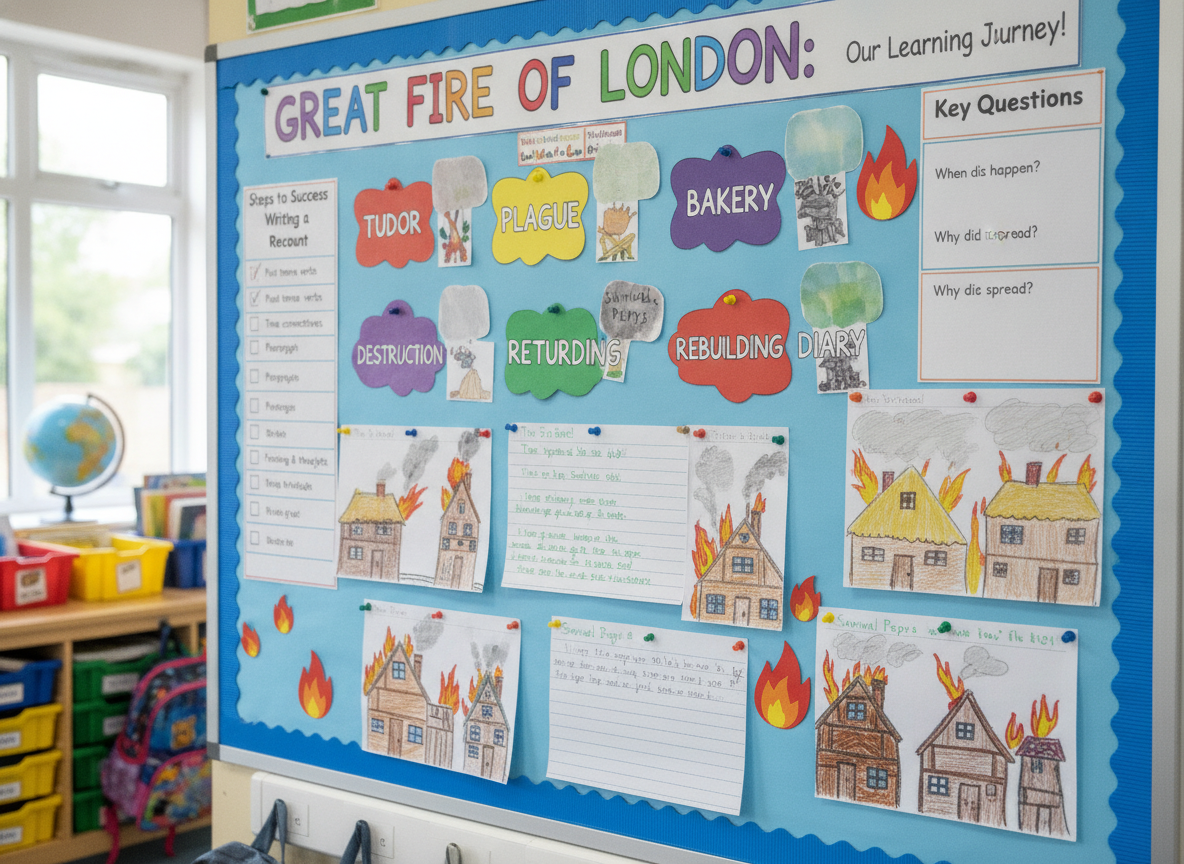
Trainer Activity: Model the process of planning a sample English lesson (e.g., The Great Fire of London diary entries).
- Think Aloud: Narrate the decision-making process for setting the LO: "I can write a diary entry in the first person."
- Visuals: Use the visualizer to show how to break the task into small 'Steps to Success'.
- The Working Wall: Show the image below to illustrate how a lesson plan transitions from paper to the classroom wall.
3. We Do: Guided Practice (15 Minutes)
Activity: Collaborative Planning Challenge.
- Participants work in pairs using mini-whiteboards.
- Task: Given a Year 2 Math objective (e.g., Adding two 2-digit numbers), pairs must brainstorm three differentiation strategies: By Task, By Support, and By Resource (e.g., using Base 10 blocks).
- Quick Check: Use 'Thumbs Up/Down' to gauge confidence in these strategies.
4. You Do: Independent Application (15 Minutes)
Activity: The 5-Minute Planning Sprint.
- Each teacher selects a curriculum area they are teaching next week.
- Task: Draft the 'I Do, We Do, You Do' phases for that lesson, ensuring no single phase exceeds 15 minutes to match the Year 2 attention span.
- Scaffolding: Provide word banks and writing frames to teachers to model what they should provide to their students.
5. Plenary: Review & Reflection (10 Minutes)
Activity: The Feedback Mark.
- Review the Learning Objectives.
- Next Steps: Teachers write one small, actionable change they will make to their planning on a Post-it note (e.g., "I will include a visual timer in every lesson").
Key Pedagogical Strategies
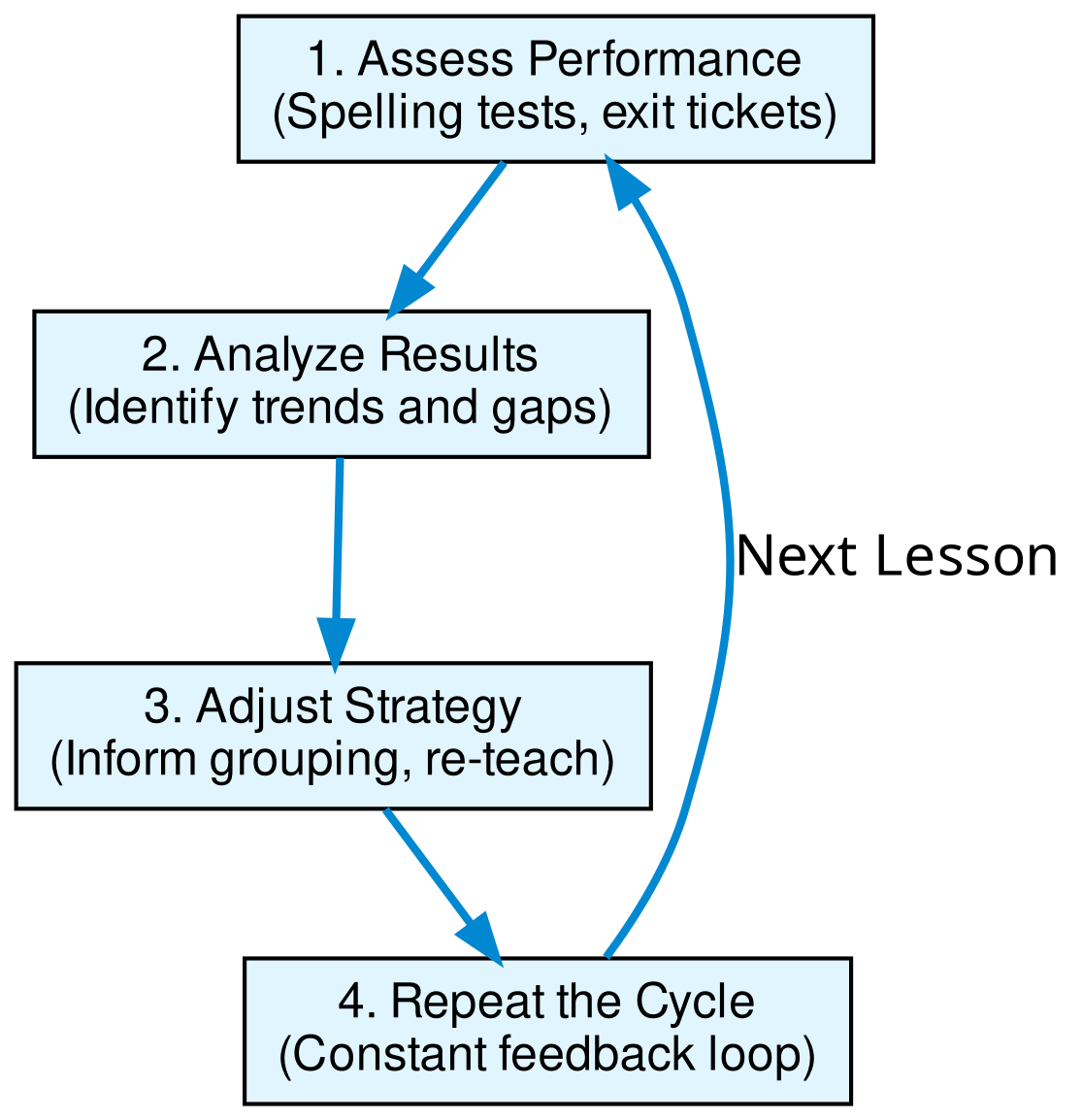
The Data-Driven Planning Cycle
Planning is not a straight line; it is a cycle informed by student performance. Use the following cycle to ensure your lessons stay relevant to your students' needs.
Inclusivity & SEND Support
- Visual Timetables: Always show the sequence of the lesson on the board.
- Sensory Breaks: Plan for a '1-minute wiggle' if energy levels drop or if the 'We Do' phase is running long.
- TA Integration: Ensure Teaching Assistants are briefed before the lesson starts. Clarify if they are scribing, questioning, or observing a specific group.
Troubleshooting Your Lesson Plan
Scenario | Strategy |
|---|---|
Tech Failure | Always have a 'no-tech' backup (e.g., paper-based activities or mini-whiteboards). |
Lesson Too Short | Keep a 'Fast Finisher' folder or a class storybook ready. |
Lesson Too Long | Cut the lesson at a logical point and continue tomorrow. Focus on outcomes, not completion. |