Generated with Monsha
World War II Adaptive Reading Passage — Grade 8 History (with Answer Key & Images)
Adaptive Reading Passage · Grade 8 · English
World War II Adaptive Reading Passage — Grade 8 History (with Answer Key & Images)
The Global Storm: An Overview of World War II
World War II was not just a series of battles; it was a total transformation of the human experience. Between 1939 and 1945, the world witnessed a conflict of unprecedented scale, involving more than 50 nations and claiming tens of millions of lives. It was a war of technology, industrial might, and ideologies that reshaped the map of the world and the course of history. To understand our modern world, one must first understand the storm that nearly tore it apart.
The Spark of Conflict
The roots of World War II were planted in the soil of World War I's aftermath. The Treaty of Versailles, which ended the first Great War in 1919, left Germany economically devastated and deeply resentful. During the 1920s and 30s, the Great Depression crippled global economies, creating a vacuum that allowed radical leaders to rise to power. In Germany, Adolf Hitler and the Nazi Party rose by promising to restore national pride and ignore the "humiliating" terms of the peace treaty.
By the mid-1930s, Hitler began a secret and then open rearmament of Germany. He formed the Axis Powers alliance with Benito Mussolini’s Italy and later with Imperial Japan. While Britain and France initially followed a policy of appeasement—giving in to some of Hitler’s territorial demands in hopes of avoiding war—the limit was reached on September 1, 1939. On that morning, German forces launched a massive invasion of Poland. Two days later, Britain and France declared war. The second global conflict had begun.
The Combatants and Blitzkrieg
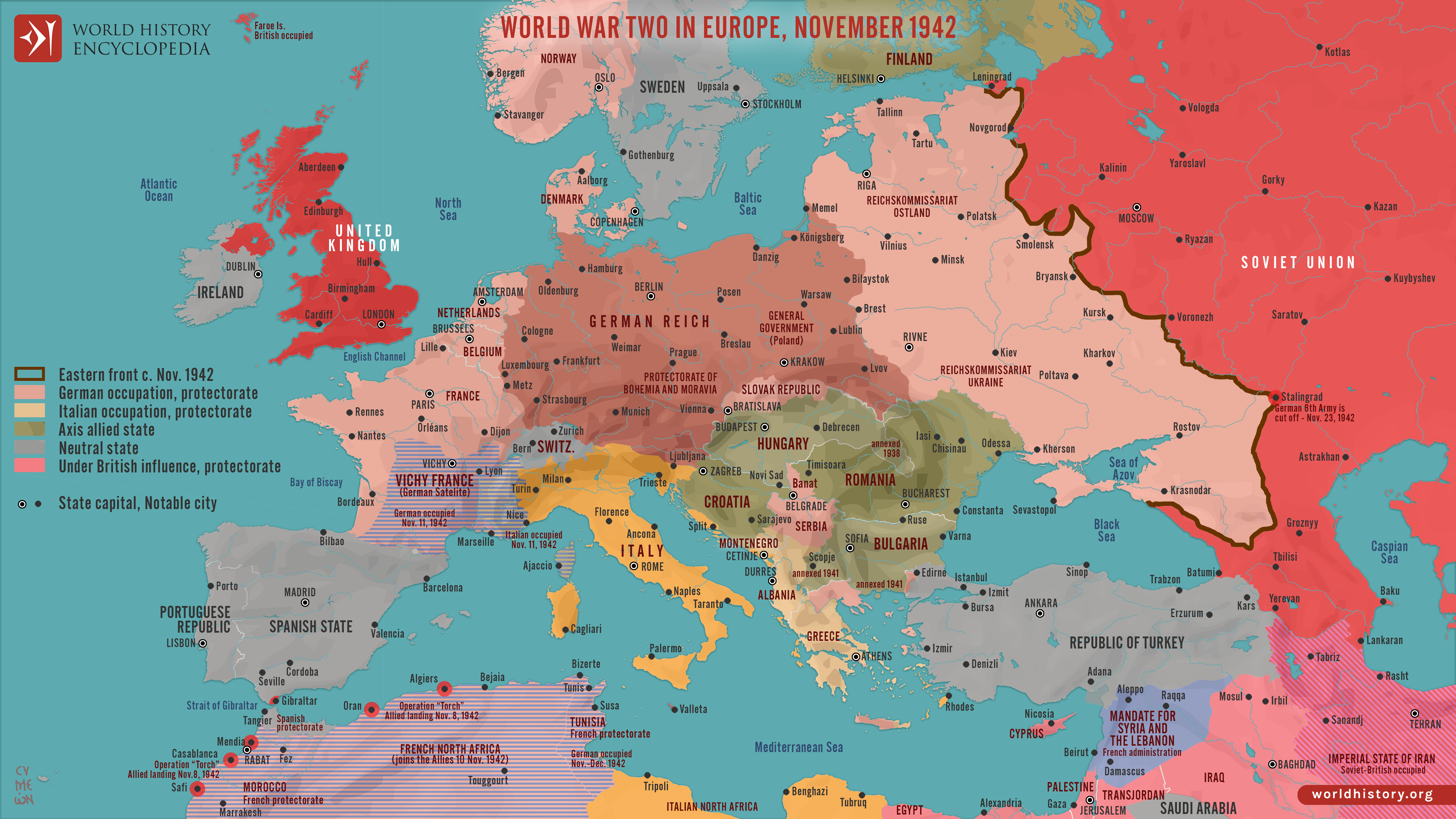
The war pitted two major alliances against each other. The Axis Powers, led by Germany, Italy, and Japan, sought to expand their empires through conquest. Opposing them were the Allied Powers, initially led by Great Britain and France, and later joined by the Soviet Union and the United States.
In the early stages, Germany utilized a revolutionary military tactic known as Blitzkrieg, or "lightning war." This strategy involved the coordinated use of fast-moving tanks (Panzers), motorized infantry, and overwhelming air support (the Luftwaffe). Blitzkrieg allowed Germany to bypass traditional defensive lines. In May 1940, German forces swept through Belgium and the Netherlands, eventually forcing France to surrender in just six weeks. By the summer of 1940, Great Britain stood alone against the Nazi tide.
Turning Point 1: The Battle of Britain
Hitler’s next goal was the invasion of the British Isles. However, to cross the English Channel, he first needed to destroy the Royal Air Force (RAF). Throughout the summer and autumn of 1940, the skies over England became a battlefield. This period, known as the Battle of Britain, saw the RAF's outnumbered pilots use new technology like radar to defend their home.
When the Luftwaffe failed to gain air superiority, Hitler turned to "The Blitz"—the strategic bombing of London and other cities to break civilian morale. Thousands of civilians lost their lives, but the British refused to surrender. Prime Minister Winston Churchill’s defiant leadership galvanized the nation. Eventually, Hitler postponed the invasion, marking the first major check to Nazi expansion and ensuring Britain remained a base for a future Allied return to Europe.
Turning Point 2: The Giant Awakes
Across the Atlantic, the United States had remained officially neutral, though it provided critical supplies to Britain through the Lend-Lease Act. This changed on December 7, 1941. In a surprise morning raid, Japanese aircraft attacked the U.S. naval base at Pearl Harbor, Hawaii. The attack was intended to disable the U.S. Pacific Fleet so Japan could secure oil and resources in Southeast Asia without interference.
Instead, the attack unified the American public. President Franklin D. Roosevelt declared it a "date which will live in infamy," and the U.S. entered the war on the side of the Allies. This transition brought the immense industrial power of the United States into the fight, turning the conflict into a war of attrition that the Axis powers would eventually be unable to win.
Turning Point 3: The Tide Turns in the Pacific
Just six months after Pearl Harbor, the U.S. Navy achieved a decisive victory at the Battle of Midway in June 1942. American codebreakers had intercepted Japanese plans, allowing U.S. carriers to ambush the Japanese fleet. Japan lost four of its large aircraft carriers, a blow from which its navy never fully recovered. Midway shifted the momentum in the Pacific from Japanese expansion to an Allied counter-offensive. The U.S. began a strategy of "island hopping," capturing key islands to serve as airbases for the final approach to the Japanese mainland.
Turning Point 4: The Russian Winter and Stalingrad
In June 1941, Hitler broke his non-aggression pact with the Soviet Union and launched Operation Barbarossa, the largest land invasion in history. Initially, German forces made rapid gains, reaching the outskirts of Moscow. However, the Soviet Union's vast territory and the brutal Russian winter began to take a toll.
The turning point on the Eastern Front occurred at the Battle of Stalingrad (1942-1943). In one of the bloodiest battles in human history, Soviet forces surrounded and captured an entire German army. The defeat shattered the myth of German invincibility and forced the Nazis into a long, slow retreat toward Berlin. From this point on, the Soviet Union took the offensive, eventually bearing the brunt of the land war in Europe.
The Home Front: Total War
While soldiers fought on distant shores, the "Home Front" was equally critical. World War II was a "total war," meaning nations mobilized all their resources—industrial, economic, and human—toward the war effort. In the United States, factories that once made cars began churning out tanks and planes at a staggering rate.
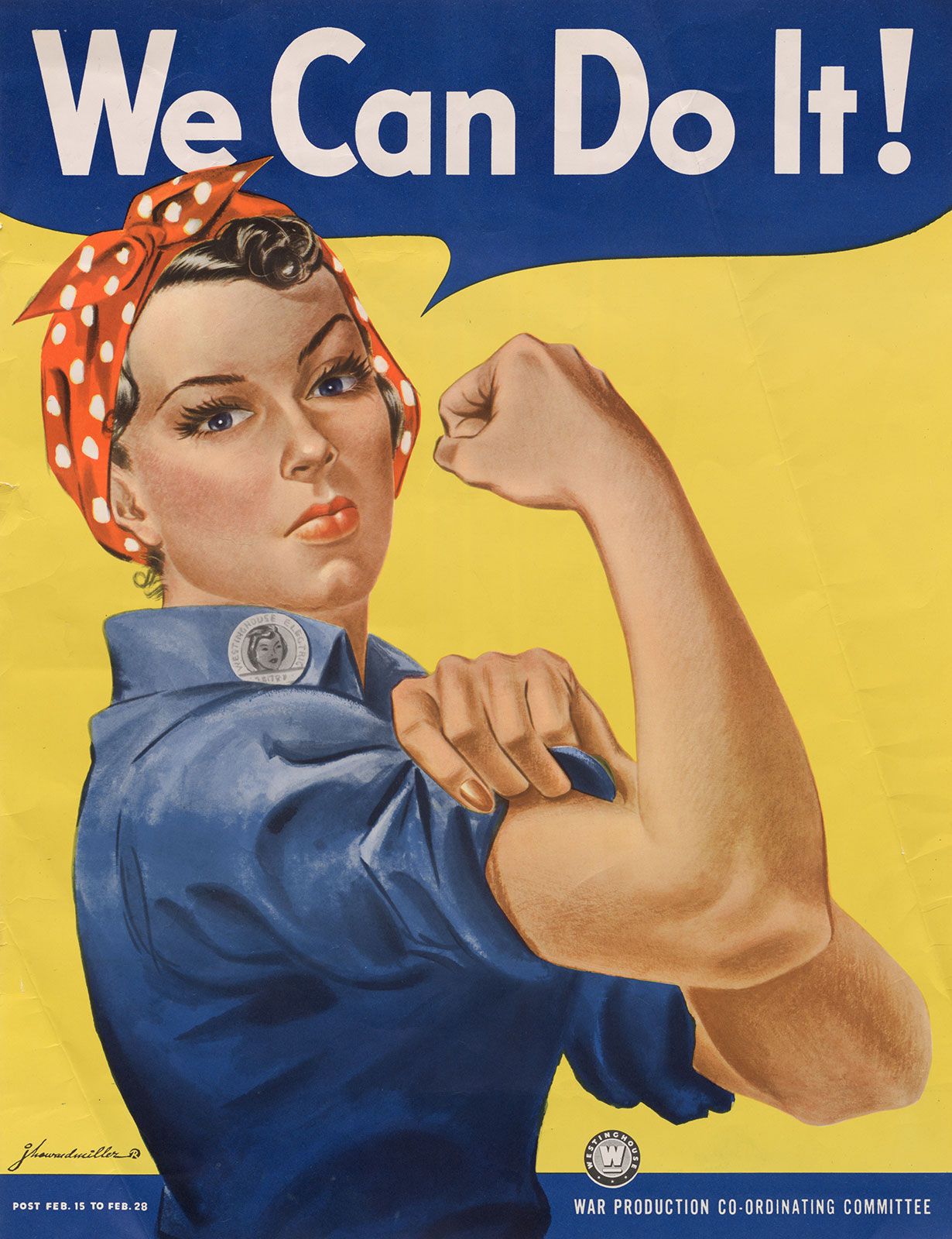
Because so many men were away fighting, millions of women entered the industrial workforce for the first time. The character of "Rosie the Riveter" became a symbol of this new female strength. At the same time, civilians dealt with rationing—limits on how much gasoline, meat, and sugar they could buy—to ensure the military had enough supplies. This collective sacrifice was essential to the Allied victory.
Turning Point 5: D-Day and the Liberation of Europe
By 1944, the Allies were ready to reclaim Western Europe. On June 6, 1944, known as D-Day, Allied forces launched Operation Overlord. This massive amphibious invasion saw over 150,000 American, British, and Canadian troops land on the beaches of Normandy, France. Despite heavy casualties and fierce German defenses, the Allies established a beachhead. This opened a "Second Front" in the West, forcing Germany to fight a two-front war against the Soviets in the East and the Western Allies in the West. Paris was liberated in August, and the march toward Germany began.
The Holocaust: A Dark Legacy
As Allied troops moved into German-occupied territory, they discovered the full extent of Nazi atrocities. The Holocaust was the state-sponsored, systematic murder of approximately six million Jews, along with millions of others including Romani people, individuals with disabilities, and political dissidents. The Nazis built concentration and extermination camps, such as Auschwitz, to carry out what they called the "Final Solution." These horrors shocked the world and led to the establishment of the Nuremberg Trials after the war, where Nazi leaders were held accountable for "crimes against humanity."
The End and a Reshaped World
Germany formally surrendered on May 8, 1945 (V-E Day), following the suicide of Adolf Hitler and the fall of Berlin to Soviet forces. However, the war in the Pacific continued. To avoid a costly land invasion of Japan, President Harry Truman authorized the use of a new weapon: the atomic bomb. Developed by the top-secret Manhattan Project, bombs were dropped on the cities of Hiroshima and Nagasaki in August 1945. Japan surrendered shortly after on September 2, 1945 (V-J Day), officially ending the war.
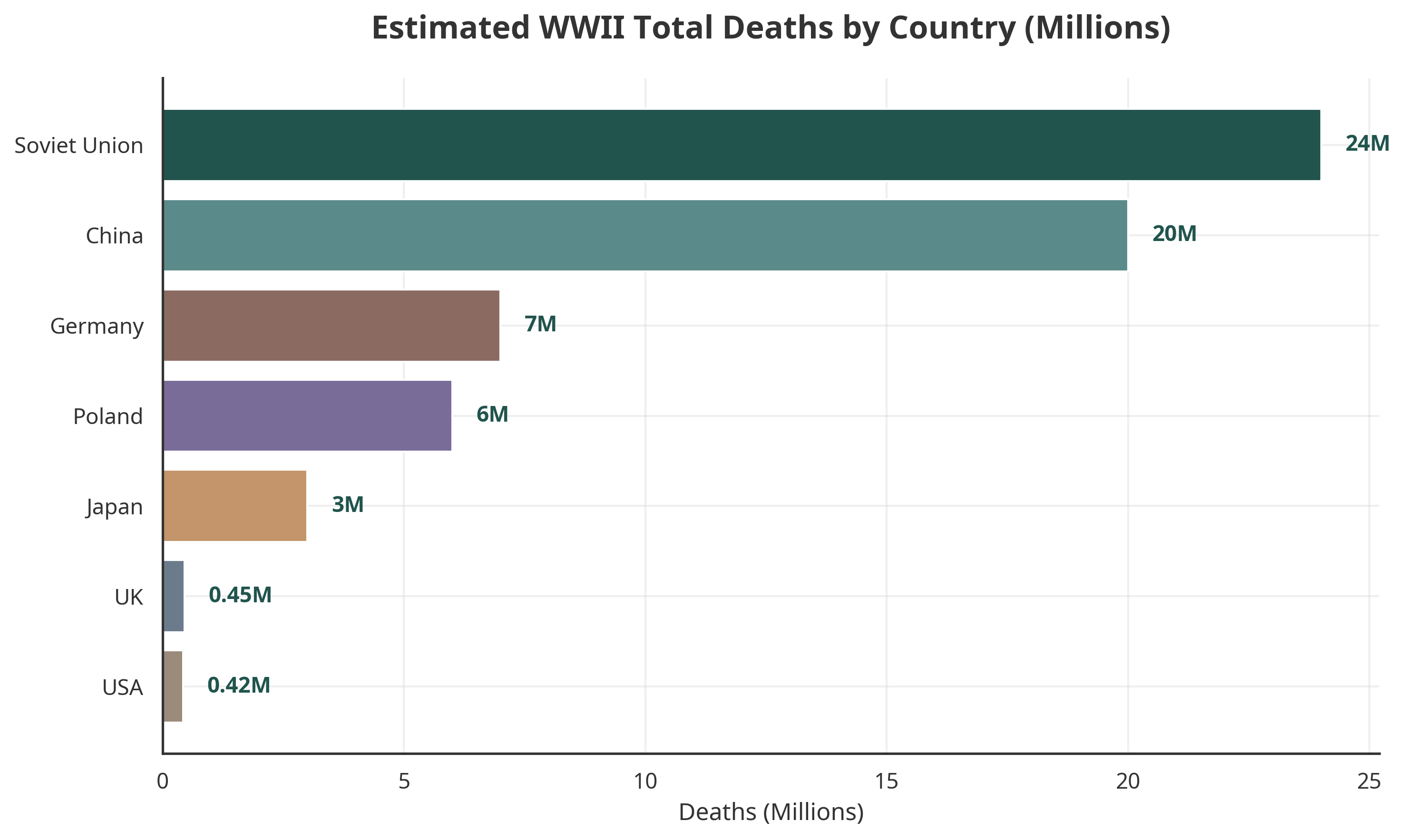
World War II reshaped the globe. The old European colonial powers were weakened, and two new superpowers emerged: the United States and the Soviet Union. This rivalry would soon lead to the Cold War. To prevent such a tragedy from happening again, the United Nations was created in 1945 as an international organization dedicated to maintaining peace and security. The war had ended, but its legacy—from the nuclear age to the push for civil rights—continues to define our lives today.
Comprehension Questions
1. Which event is considered the official beginning of World War II in Europe?
A. The signing of the Treaty of Versailles
B. The attack on Pearl Harbor
C. The German invasion of Poland
D. The Battle of Britain
2. What was the primary purpose of the "island hopping" strategy used by the United States in the Pacific?
A. To avoid fighting the Japanese navy directly
B. To establish agricultural colonies for food supplies
C. To capture key islands to serve as airbases for an eventual invasion of Japan
D. To search for the secret location of the atomic bomb
3. Which battle is widely considered the major turning point on the Eastern Front, ending German expansion into the Soviet Union?
A. The Battle of the Bulge
B. The D-Day Invasion
C. The Battle of Midway
D. The Battle of Stalingrad
4. Sequencing: Place the following events in the correct chronological order (from earliest to latest).
- The D-Day Invasion of Normandy
- The Attack on Pearl Harbor
- The Surrender of Nazi Germany (V-E Day)
- The Battle of Britain
5. Explain why World War II is referred to as a "total war," and provide one specific example from the passage of how it affected people living on the Home Front.
Source Citation:
HISTORY.com Editors. "World War II." History.com, A&E Television Networks, 29 Oct. 2009, https://www.history.com/topics/world-war-ii/world-war-ii-history . Accessed 30 Aug. 2026.