Generated with Monsha
Mitosis: The Equational Cell Division
Lesson Plan · Class 8 · English
Mitosis: The Equational Cell Division
1. Objectives & Learning Outcomes
By the end of this lesson, students will be able to:
- Define mitosis as a process of cell division where one parent cell divides into two identical daughter cells.
- Identify and Describe the four main stages of mitosis: Prophase, Metaphase, Anaphase, and Telophase.
- Explain the importance of mitosis in growth, repair, and asexual reproduction in organisms.
- Differentiate between the parent cell and daughter cells in terms of chromosome number.
2. Instructional Sequence (Total Duration: 50 Minutes)
I. Introduction & Hook (5 Minutes)
- Activity: Show a picture of a small seedling and a large tree, or a healing wound on skin.
- Question: How does a tiny seedling become a huge tree? How does our skin heal after a cut?
- Concept: Introduce the idea that cells must multiply to allow for growth and repair. This specific type of multiplication is called Mitosis.
II. The Cell Cycle Overview (5 Minutes)
- Briefly explain that cells don't just divide instantly; they go through a cycle of growth and preparation.
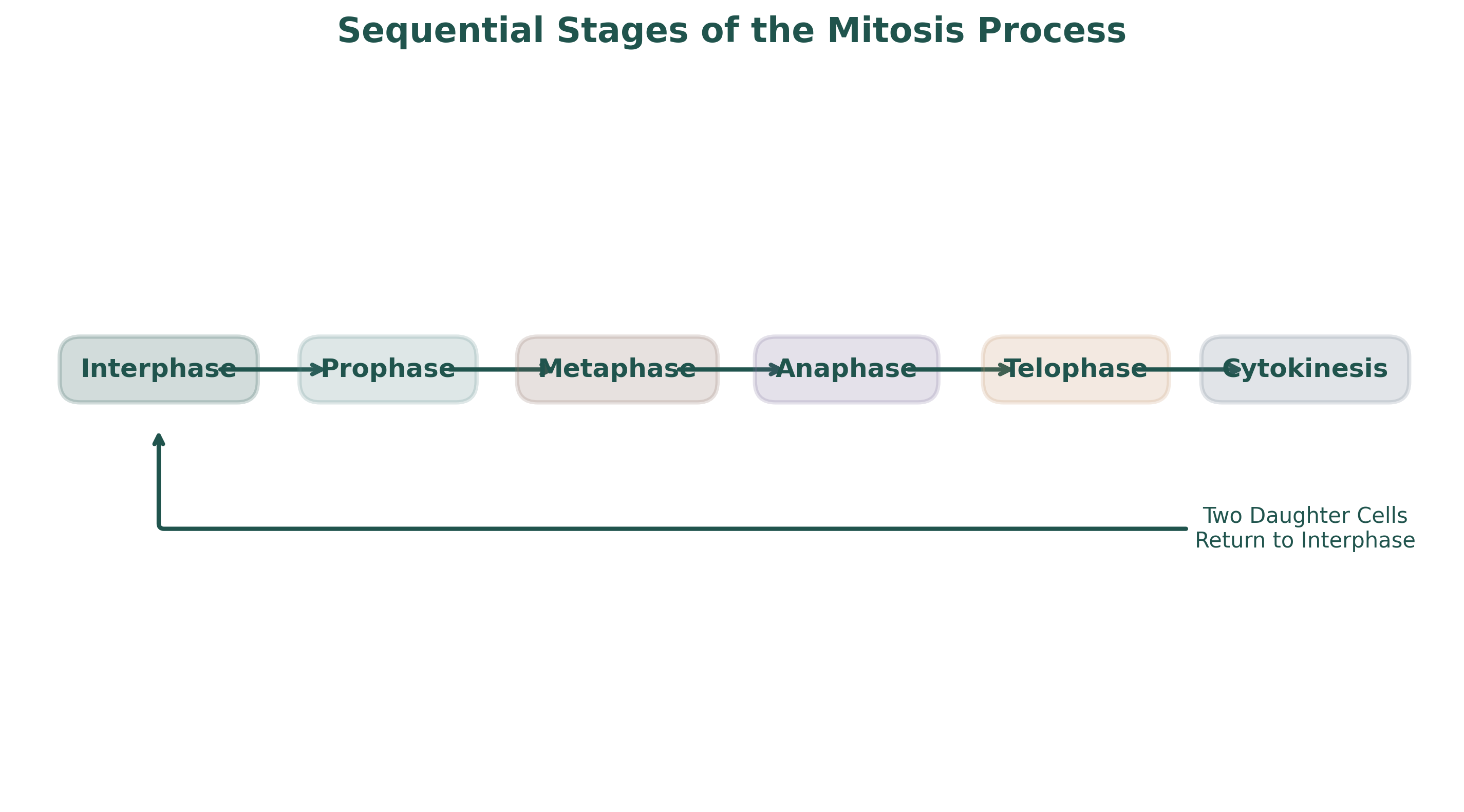
- Interphase: The phase where the cell grows and copies its DNA (chromosomes).
III. The Stages of Mitosis (20 Minutes)
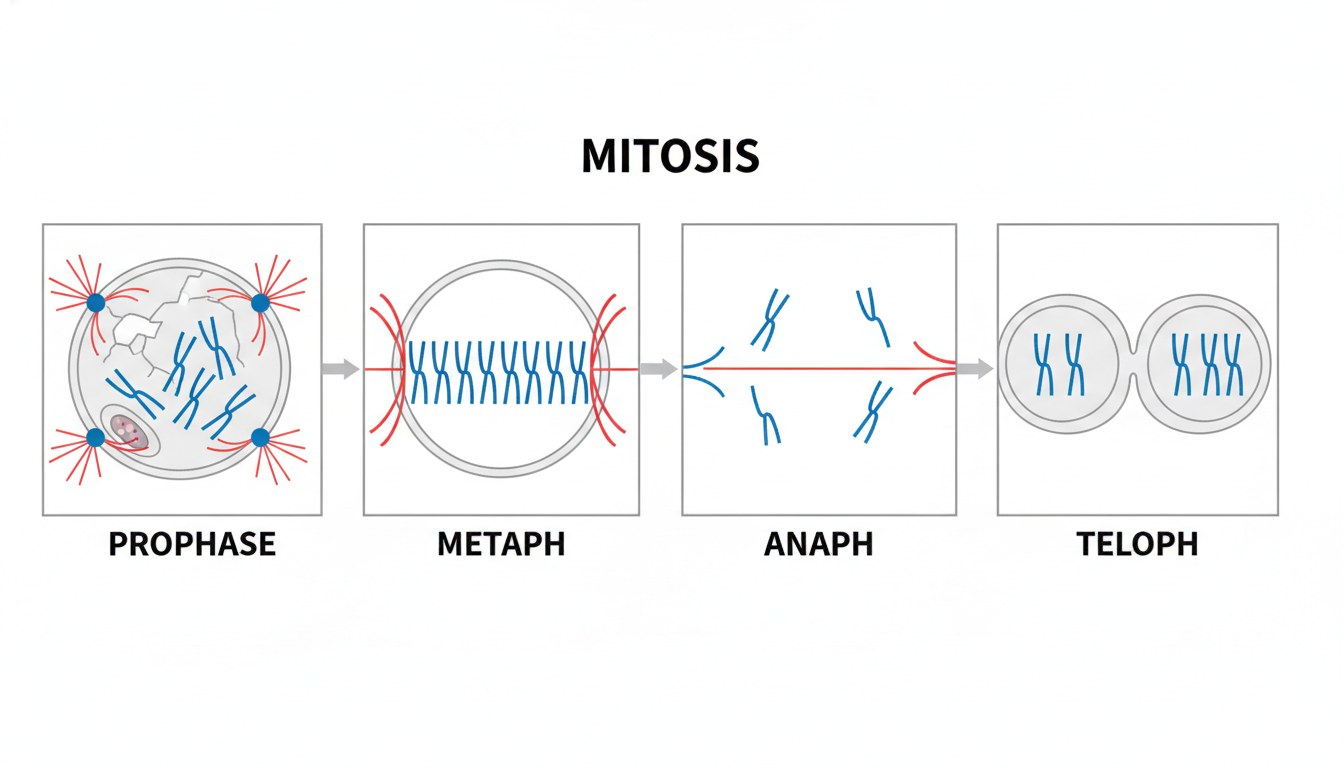
Explain that mitosis is divided into four main stages to ensure DNA is shared equally.
- Prophase: The chromosomes become visible (condense), and the nuclear membrane starts to disappear.
- Metaphase: Chromosomes line up in the middle (equator) of the cell. Think M for Middle.
- Anaphase: The twin copies of chromosomes are pulled apart toward opposite ends of the cell. Think A for Away.
- Telophase: Two new nuclei form around the separated chromosomes at each end.
IV. Cytokinesis & Significance (10 Minutes)
- Cytokinesis: The final step where the cytoplasm divides, physically splitting the parent cell into two identical daughter cells.
- Key Point: If a parent cell has chromosomes, each daughter cell also receiveschromosomes. This is why mitosis is called equational division.
V. Summary & Quick Check (10 Minutes)
- Recap the phases using the mnemonic: PMAT (Prophase, Metaphase, Anaphase, Telophase).
- Conduct a quick verbal quiz asking students to identify a phase based on a description (e.g., "In which phase do chromosomes line up in the middle?").
3. Assessment and Evaluation Plan
Formative Assessment (During Lesson)
- Think-Pair-Share: Students explain the difference between Anaphase and Telophase to their partner.
- Observation: Teacher circulates during the explanation of diagrams to check for student understanding of chromosome movement.
Summative Assessment (End of Lesson/Homework)
Part A: Short Quiz
- In which stage of mitosis do the chromosomes align at the cell's equator?
- A) Prophase
- B) Metaphase
- C) Anaphase
- D) Telophase
- Why is mitosis important for a multicellular organism? (Short answer)
- If a cell with 14 chromosomes undergoes mitosis, how many chromosomes will each daughter cell have?
Part B: Creative Task (Homework)
- Draw and label a diagram of the four stages of mitosis in your science journal. Use different colors to represent the cell membrane, the nucleus, and the chromosomes.