Generated with Monsha
Climate Change Resilience and Governance in Pakistan: A Socio-Technological Analysis
Lesson Plan · University (Grade 16) · English
Climate Change Resilience and Governance in Pakistan: A Socio-Technological Analysis
Objectives & Learning Outcomes
By the end of this 60-minute session, students will be able to:
- Analyze the correlation between specific anthropogenic activities (fossil fuel combustion, deforestation) and Pakistan's vulnerability ranking in the Global Climate Risk Index.
- Evaluate the effectiveness of Pakistan’s national governance framework (e.g., Climate Change Act 2017) and its ability to achieve Nationally Determined Contributions (NDCs) targets.
- Apply integrated solution models (Technological, Nature-Based, and Social) to propose localized adaptation strategies for high-density urban centers like Karachi or Lahore.
- Synthesize the economic and environmental trade-offs inherent in international regulations, such as the impacts of the IMO 2020 sulfur cap on global temperature spikes.
At a Glance
This university-level lesson explores the critical nexus between environmental science, national policy, and international climate governance through the specific lens of Pakistan—one of the top ten countries most vulnerable to climate change. The session transitions from the physical mechanisms of global warming to sectoral impacts (Agriculture, Water, and Energy), concluding with a critical analysis of governance structures and integrated adaptation strategies.
- Core Question: How can a developing nation like Pakistan reconcile its negligible global emission footprint () with the massive socioeconomic costs of climate-induced disasters?
- Target Level: Senior Undergraduate (Grade 16).
- Duration: 60 Minutes.
Material & Resources Needed
- Primary Documents: Asian Development Bank (ADB) Climate Change Profile of Pakistan; The Lancet Planetary Health study on Integrated Solutions.
- Digital Tools: Moodle Access for submission, Berkeley Earth High-Resolution Surface Temperature datasets.
- Visual Aids: Sectoral GHG Emission Chart, Governance Hierarchy Diagram, and Urban Adaptation Infographic.
- Case Studies: 2022 "Monsoon on Steroids" and the "Recharge Pakistan" initiative.
Key Concepts
1. Anthropogenic Forcing vs. Natural Variability
While solar radiation variations and volcanic activity (e.g., Hunga Tonga 2022) provide natural forcing, scientific evidence confirms that anthropogenic activities have accelerated the current warming spike. In Pakistan, the energy sector is the primary contributor, responsible for approximately
of national emissions.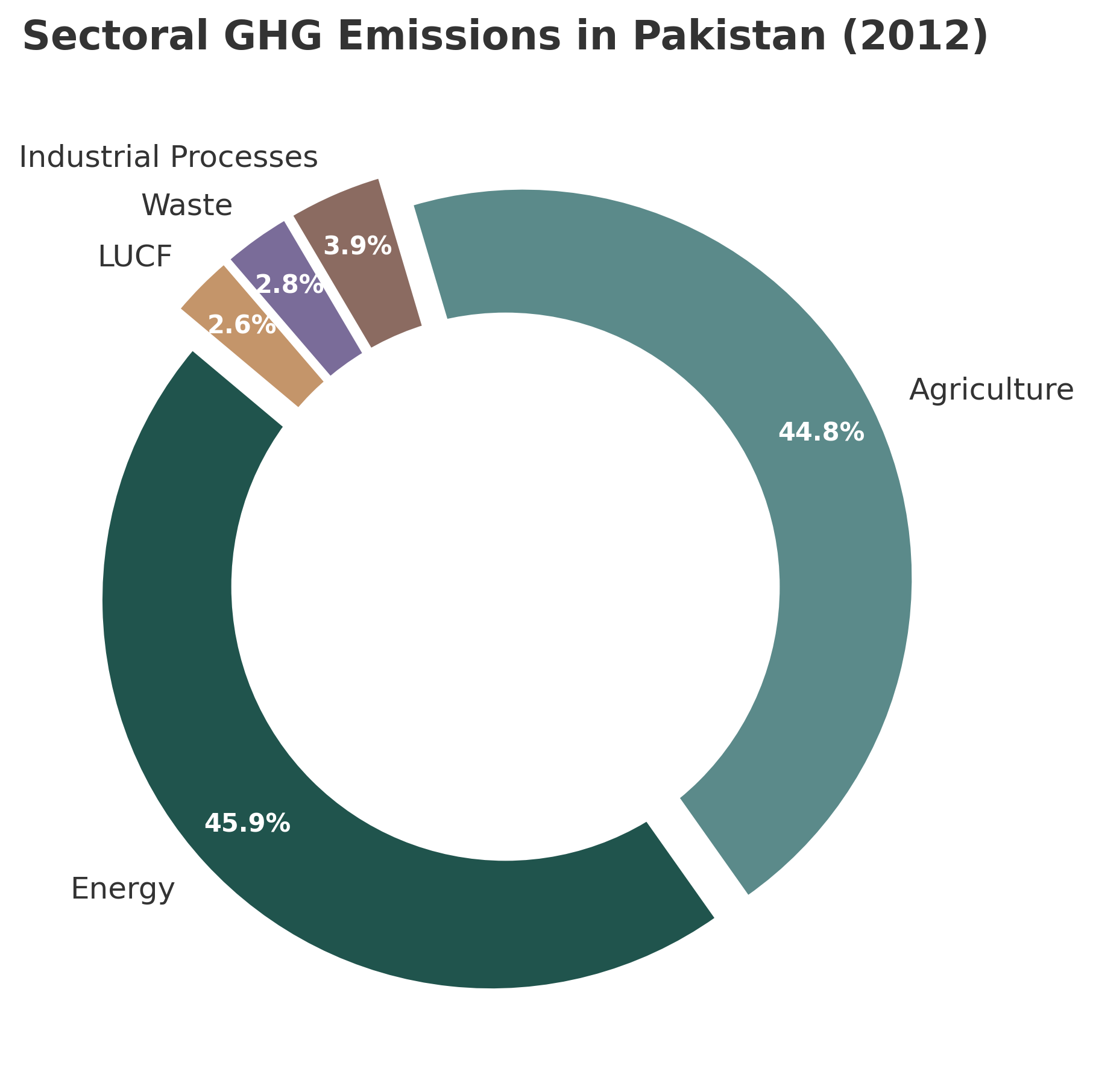
2. Sectoral Vulnerability: The "Water-Food-Energy" Nexus
- Water: Pakistan relies on the Hindu Kush-Himalayan glaciers for of its freshwater. Glacial loss has increased byover the last 50 years, threateningof agriculture.
- Agriculture: Employs of the workforce but faces a projectedreduction in wheat yields andin basmati rice by 2080.
- Energy: Extreme weather events cause damage to infrastructure (e.g., 2010 floods caused a 3,500 MW shortfall). Rising temperatures increase cooling demand, further straining the grid.
3. Polycentric Governance
Based on Elinor Ostrom's theory, effective climate governance involves multiple autonomous groups (local, national, and international) working together. In Pakistan, this is operationalized through the Ministry of Climate Change (MoCC), the National Disaster Management Authority (NDMA), and the Pakistan Climate Change Council (PCCC).
4. Integrated Adaptation
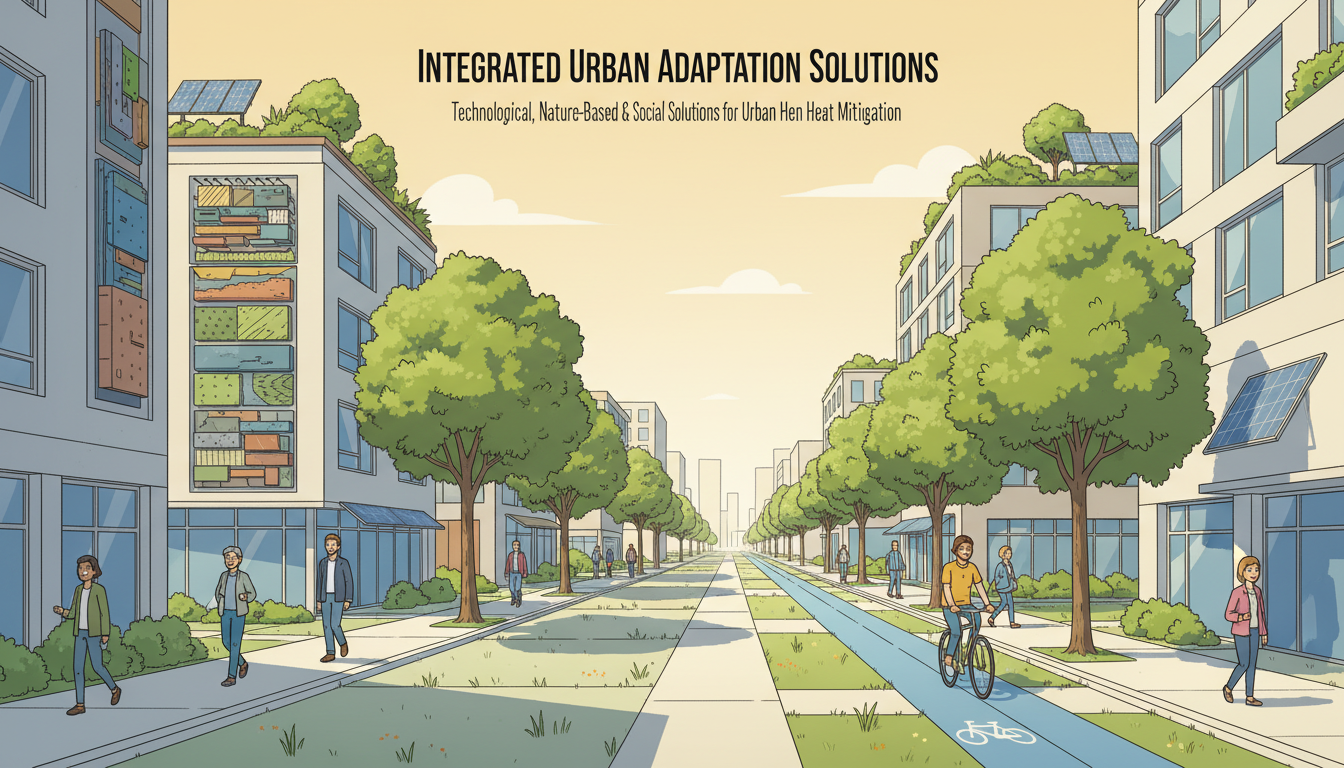
Adaptation cannot rely on single-mode solutions. Effective urban resilience requires the integration of three distinct modes:
- Technological: High-tech insulation and water-sensitive urban design (WSUD).
- Nature-Based: Green roofs, urban forests, and bioswales.
- Social: Behavioral shifts in transport and community-led planning.
Instructional Sequence
Time | Phase | Activity Description |
|---|---|---|
0-10 min | Introduction | The Global Spike: Review the Berkeley Earth 2025 Findings. Discuss the "Warming Spike" of 2023–2025 and the paradoxical role of the IMO 2020 sulfur limit in reducing reflective aerosols. |
10-25 min | Contextualizing Pakistan | Vulnerability Analysis: Examine why Pakistan, despite contributing to global GHGs, faced over US$40 billion in damages from the 2022 floods. Discuss the "Water-Food-Energy" nexus risks. |
25-40 min | Governance & Policy | Framework Evaluation: Critically assess the Pakistan Climate Change Act 2017. Why has the National Environmental Protection Council (PEPC) met only once in its first decade? Discuss NDCs targets ( reduction by 2030). |
40-55 min | Active Learning | Integrated Strategy Design: Group activity. Apply the Lancet's "Integrated Solutions" framework to solve for "Urban Heat Islands" in Karachi. Groups must include one technological, one nature-based, and one social solution. |
55-60 min | Wrap-Up | Synthesis: Summary of the "Recharge Pakistan" project as a real-world application of Ecosystem-based Adaptation (EbA). |
Assessment and Evaluation Plan
1. Formative Assessment (During Lesson)
- Peer-Review of Urban Strategy: Groups will present their integrated solution for Karachi. Peers will evaluate based on "Transferability" and "Social Equity" (e.g., does the solution marginalize low-income slum dwellers?).
2. Summative Assessment (Post-Lesson)
- Policy Analysis Essay (1,500 words): "Evaluate the feasibility of Pakistan's Third NDC target (reduction by 2035) in light of the energy sector's dependency on fossil fuels and the projected cost of US$565.7 billion. Propose one governance reform to improve inter-provincial coordination."
3. Discussion Prompt (Moodle Submission)
- The IMO Paradox: Discuss whether international environmental regulations (like IMO 2020) should be modified if their short-term secondary effects contribute to global temperature spikes, especially for vulnerable nations in the Global South.
Emergency Cabinet Simulation: Resilient Pakistan 2050
Objectives & Learning Outcomes
By the end of this 60-minute simulation, students will be able to:
- Analyze the "Vicious Cycle of Poverty" in Pakistan where geographical vulnerability meets low adaptive capacity (Fifth Assessment Report criteria).
- Evaluate the trade-offs between immediate industrial growth and long-term emission targets (NDCs) in a developing economy.
- Apply a socio-technological framework to draft a 3-point "Integrated Adaptation Memo" for a specific Pakistani metropolitan area.
- Synthesize the paradox of "Cooling for Health vs. Warming for Planet" using the IMO 2020 sulfur limit case study.
At a Glance
This is not a traditional lecture; it is a Problem-Based Learning (PBL) session. Students are cast as members of the "Prime Minister’s Committee on Climate Change." They must navigate real-world data and political constraints to move Pakistan from being the "10th most vulnerable" to a resilient state.
- The Hook: The "Monsoon on Steroids" (2022) cost Pakistan of its GDP in months. How do you stop the next one withof the global carbon footprint?
- Target Level: Senior Undergraduate (Grade 16).
- Duration: 60 Minutes.
Material & Resources Needed
- Digital Dashboard: Access to the Recharge Pakistan project KPIs and Berkeley Earth datasets.
- Stakeholder Briefs: Role cards (e.g., Sindh Farmer, Karachi Industrialist, NDMA Strategist, GCF Donor).
- Interactive Visuals: Sectoral GHG Emission Pie Chart and the Urban Adaptation Synergy Model.
- Workspace: Shared digital whiteboard or Moodle-linked forum for rapid drafting.
Key Concepts (Interactive Inquiry)
1. The Carbon Profile Challenge
Look at the distribution of Pakistan's emissions.
- Inquiry: If Energy and Agriculture account for of emissions, which sector is the "easiest" to reform without causing a food security crisis? Compare this with the fact that industrial contribution is a mere.
2. The Polycentric Governance Maze
Governance in Pakistan is "anchored" by the 2017 Act, but execution is "fragmented."
- Concept: Elinor Ostrom’s Polycentricity. Why does the devolution of power (18th Amendment) make it harder to manage the Indus River Basin, which flows across four provinces?
3. Integrated Solutions: The Lancet Framework
Resilience isn't just about building higher dams (Grey Infrastructure). It requires a three-pronged strike:
- Technological: Smart grids and "Passivhaus" architecture.
- Nature-Based: Restoring the 10,000 hectares of wetlands via Recharge Pakistan.
- Social: Subsidized public transit and community-led drainage maintenance.
Instructional Sequence (The Simulation)
Time | Phase | Activity Description |
|---|---|---|
0-10 min | The Crisis Briefing | The IMO Paradox: Rapid review of the 2023–25 warming spike. Did cleaning ship fuel (IMO 2020) inadvertently accelerate global warming by removing reflective aerosols? Poll the class: "Should we prioritize human health or planetary cooling?" |
10-25 min | Data Inquiry | Vulnerability Scavenger Hunt: Using the ADB Climate Profile, find three specific reasons why Balochistan’s groundwater is at higher risk than Punjab’s surface water. Students post findings to a live feed. |
25-50 min | Cabinet Meeting | Integrated Strategy Design: Split into "Provincial Units." Task: Allocate a hypothetical billion Green Climate Fund grant for Karachi. Must include one Tech, one Nature, and one Social solution from the Lancet framework. |
50-60 min | The Pitch | Stakeholder Critique: One group pitches; another group (acting as "Industrialists") attempts to block the policy based on economic cost. Synthesize the "Recharge Pakistan" EbA model as the final compromise. |
Assessment and Evaluation Plan
1. The "Policy Memo" Pitch (Formative)
Groups present their 3-point strategy. The class votes via a live poll on which strategy is most "Robust" (capable of handling multiple future climate scenarios).
2. Critical Thinking Challenge (Summative)
Written Submission (500 words): "Apply the concept of 'Maladaptation' to Pakistan. Provide one example where a technological solution (e.g., a massive concrete dam) might actually increase vulnerability for downstream communities in the Indus Delta over the next 50 years."
3. The "Moodle" Debate
- Topic: "Nationally Determined Contributions (NDCs) require billion. Since the Global North produced the historical emissions, should Pakistan refuse to hit itsunconditional target until the funding is fully provided?" Evaluate based on international equity vs. national survival.