Generated with Monsha
Advanced Euclidean and Spatial Geometry Study Guide
Anything · Grade 12 · English
Advanced Euclidean and Spatial Geometry Study Guide
Advanced Euclidean and Spatial Geometry: Grade 12 Study Guide
This guide explores complex geometric relationships and spatial properties required for Grade 12 mathematics. We will cover circle theorems, triangle centers, and 3D mensuration.
1. Advanced Circle Geometry
Circle geometry in Grade 12 moves beyond basic properties into the relationships between tangents, secants, and inscribed polygons.
Cyclic Quadrilaterals
A cyclic quadrilateral is a four-sided figure whose vertices all lie on a single circle. These shapes have unique properties essential for solving complex geometric proofs.
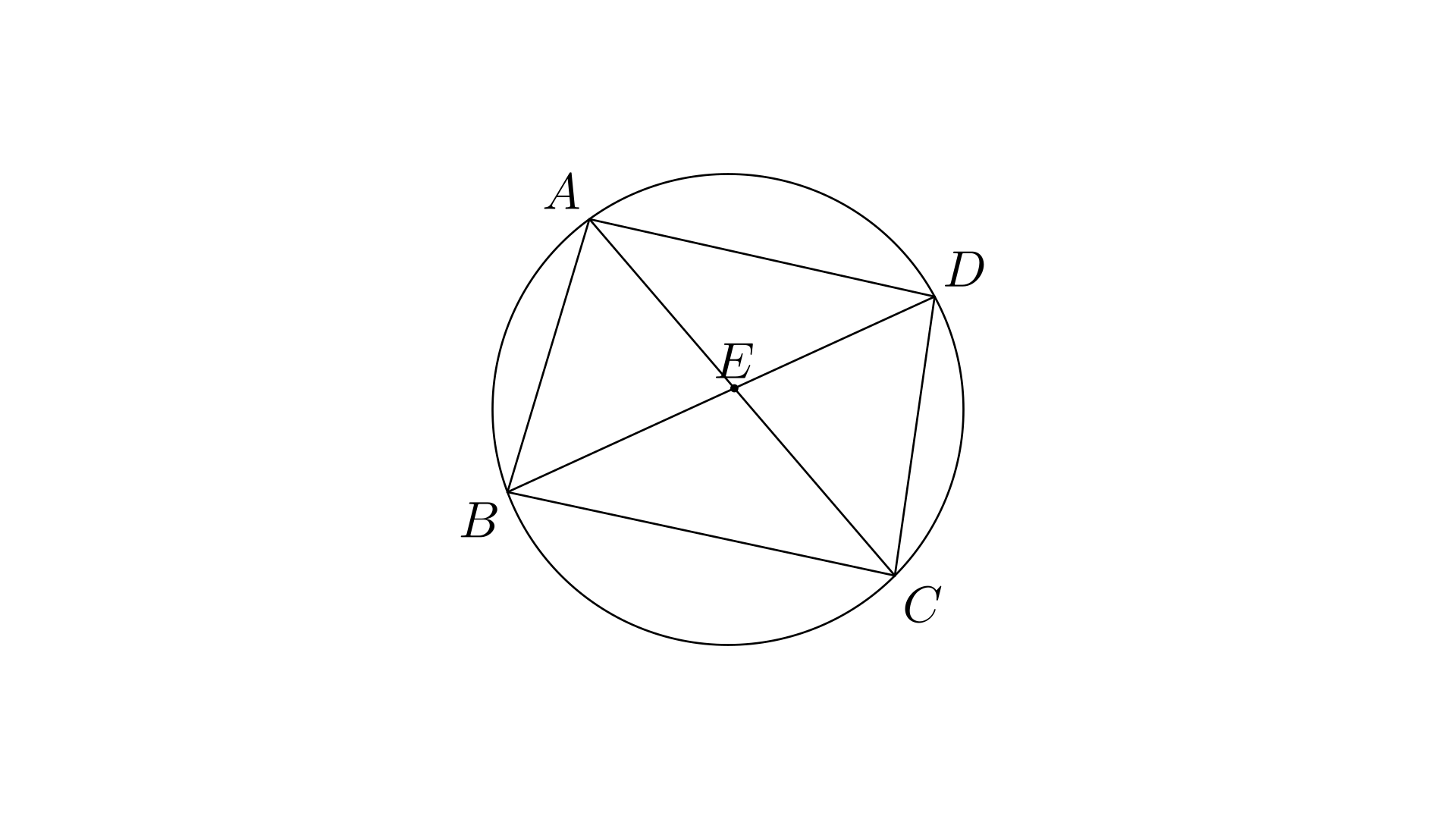
Key Theorem: Supplementary Angles
In any cyclic quadrilateral, the sum of the opposite interior angles is always
.
Ptolemy's Theorem
For a cyclic quadrilateral, the product of the diagonals is equal to the sum of the products of the opposite sides:
The Power of a Point (Tangent-Secant Theorem)
When a tangent and a secant are drawn from a single external point to a circle, a specific proportional relationship is formed.
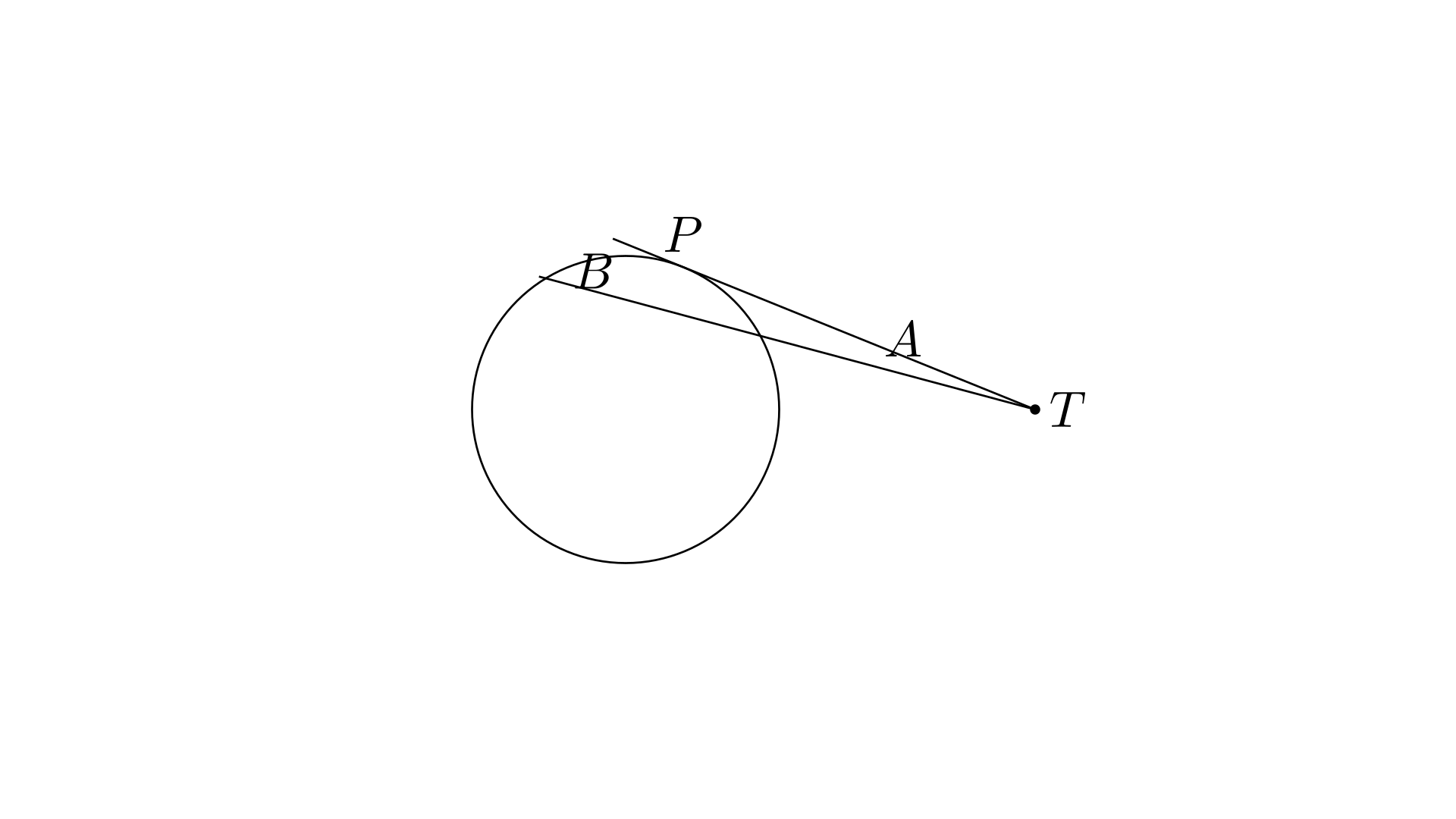
Theorem:
The square of the tangent segment is equal to the product of the whole secant segment and its external part:
2. Triangle Centers: The Incenter
Triangles have several centers, but the incenter is unique as it is the center of the largest circle that can fit inside the triangle (the incircle).
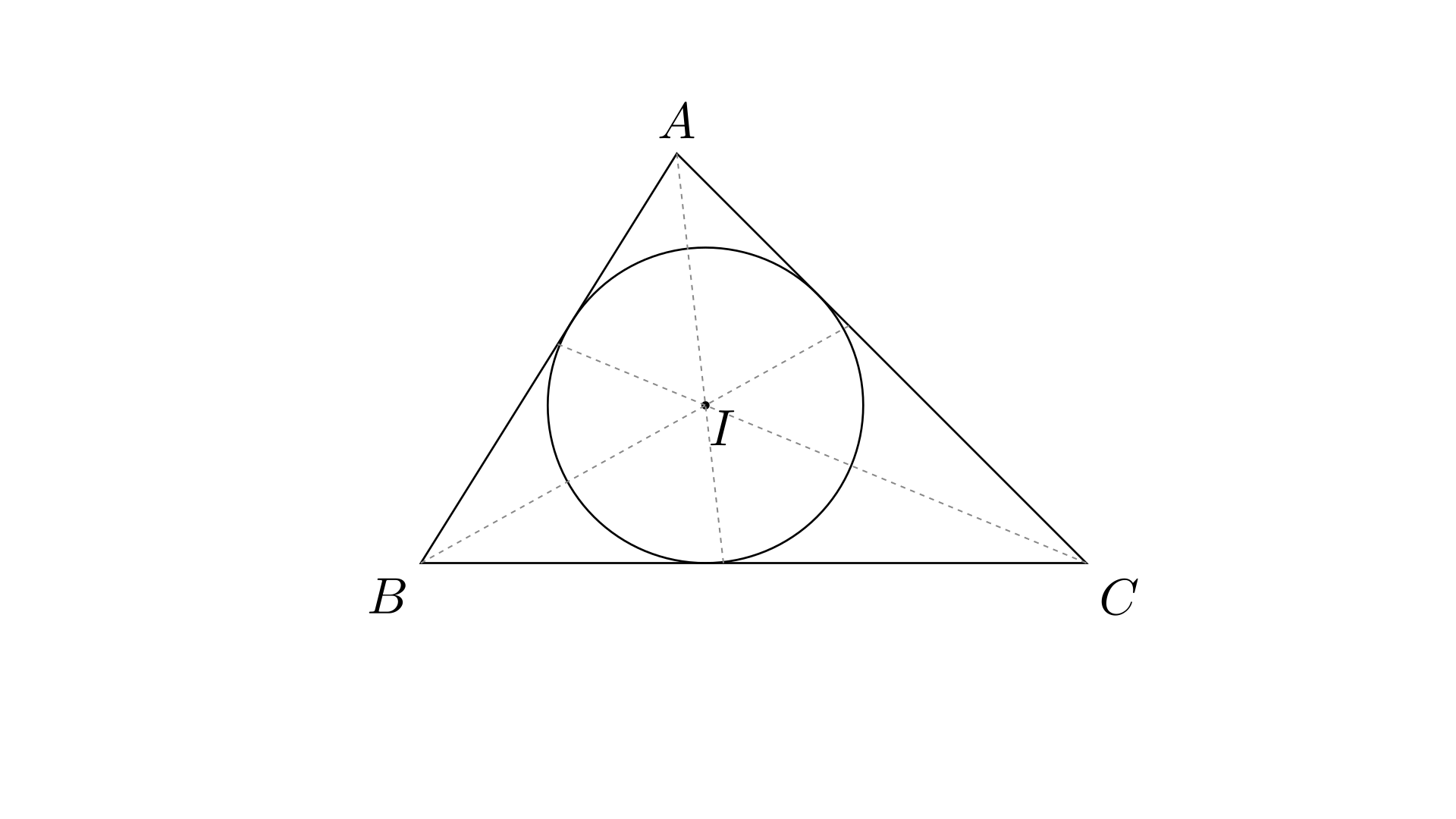
Properties of the Incenter:
- It is the point where the three internal angle bisectors of the triangle intersect.
- It is equidistant from all three sides of the triangle.
Area Formula using Inradius:
The area of any triangle can be calculated using its inradius (
) and semi-perimeter (
):
where
.
3. Spatial Geometry: The Right Circular Cone
Spatial geometry requires visualizing 3D shapes and calculating their metrics using 2D cross-sections.
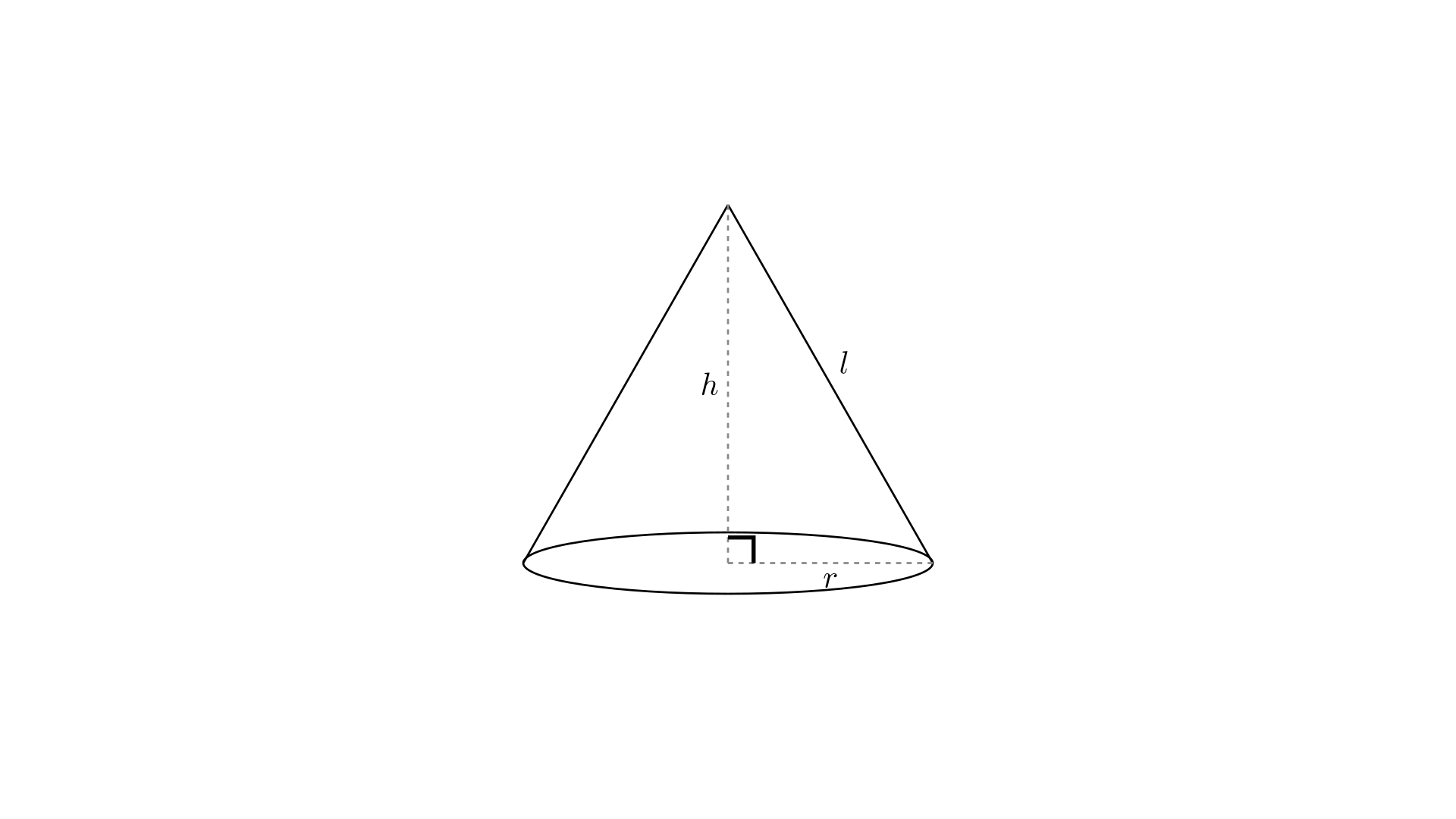
In a right circular cone, the height (
), radius (
), and slant height (
) form a right-angled triangle, satisfying the Pythagorean theorem:
.Volume and Surface Area:
The volume (
) of the cone is one-third that of a cylinder with the same base and height:
The total surface area (
) includes the circular base and the curved lateral surface:
Practice Problems
- Challenge 1: Given a cyclic quadrilateral , ifand, solve forand find the measure of both angles.
- Challenge 2: A tangent segment from point to a circle is 12 cm long. A secant line frompasses through the circle such that the external segment is 8 cm. Calculate the length of the internal part of the secant (chord length).
- Challenge 3: A right circular cone has a base radius of 5 cm and a height of 12 cm. Determine its slant height and its total surface area in terms of .