Generated with Monsha
Structure of Lungs and Mechanism of Breathing
Lesson Plan · 6 · English
Structure of Lungs and Mechanism of Breathing
Lesson Overview
Subject: Science
Grade Level: 7 (CBSE)
Topic: Structure of Lungs and Process of Respiration
Duration: 40 Minutes
1. Objectives & Learning Outcomes
By the end of this lesson, students will be able to:
- Identify and label the major organs of the human respiratory system.
- Describe the pathway of air from the nostrils to the alveoli.
- Explain the mechanical process of breathing, specifically the role of the diaphragm and rib cage during inhalation and exhalation.
- Differentiate between breathing (mechanical) and cellular respiration (chemical).
2. Standards Addressed
- CBSE/NCERT Science Grade 7: Chapter 10 - Respiration in Organisms.
- Focus Areas: Understanding the human respiratory system, breathing mechanism, and the role of the diaphragm.
3. Key Concepts
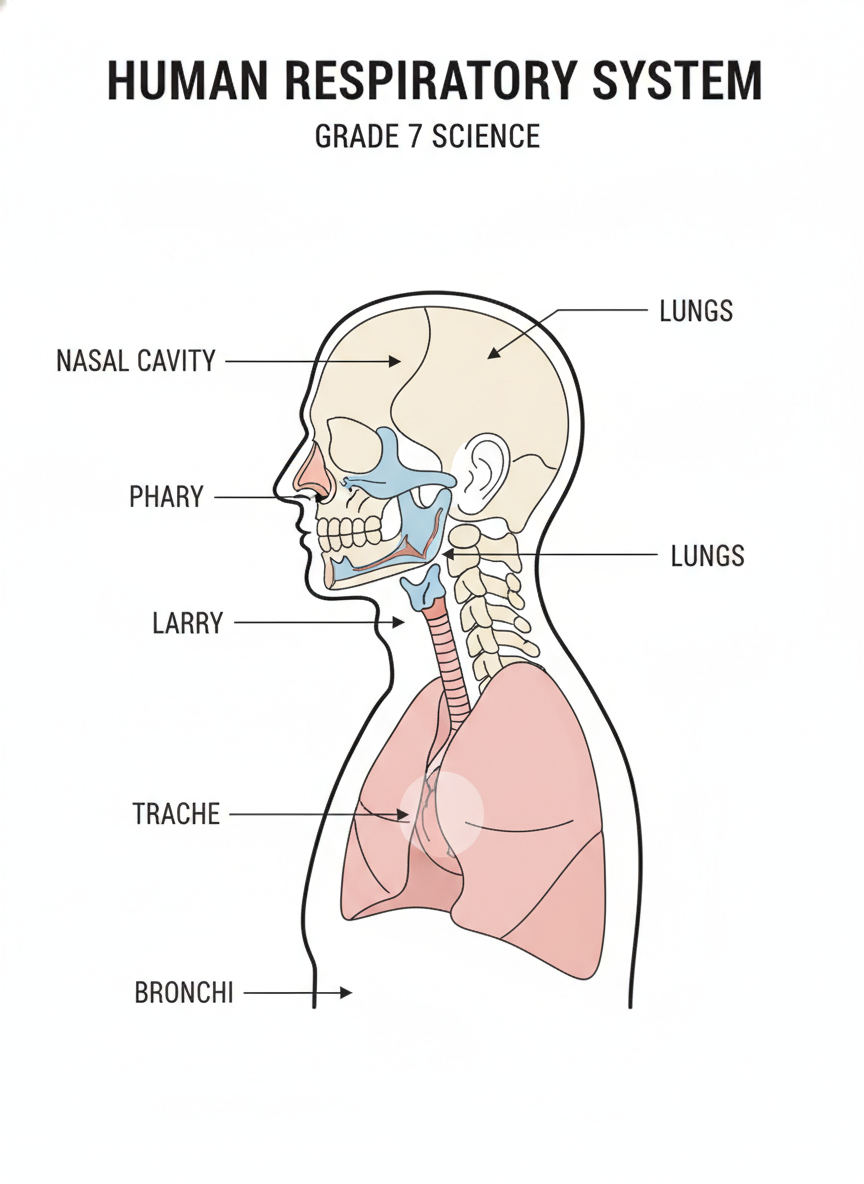
- Human Respiratory System: Comprises the nasal cavity, pharynx, larynx, trachea, bronchi, and lungs.
- Pathway of Air: The specific sequence air follows to reach the lungs for gas exchange.
- Breathing Mechanism: A physical process involving the contraction and relaxation of muscles (diaphragm and intercostal muscles) to change chest cavity volume.
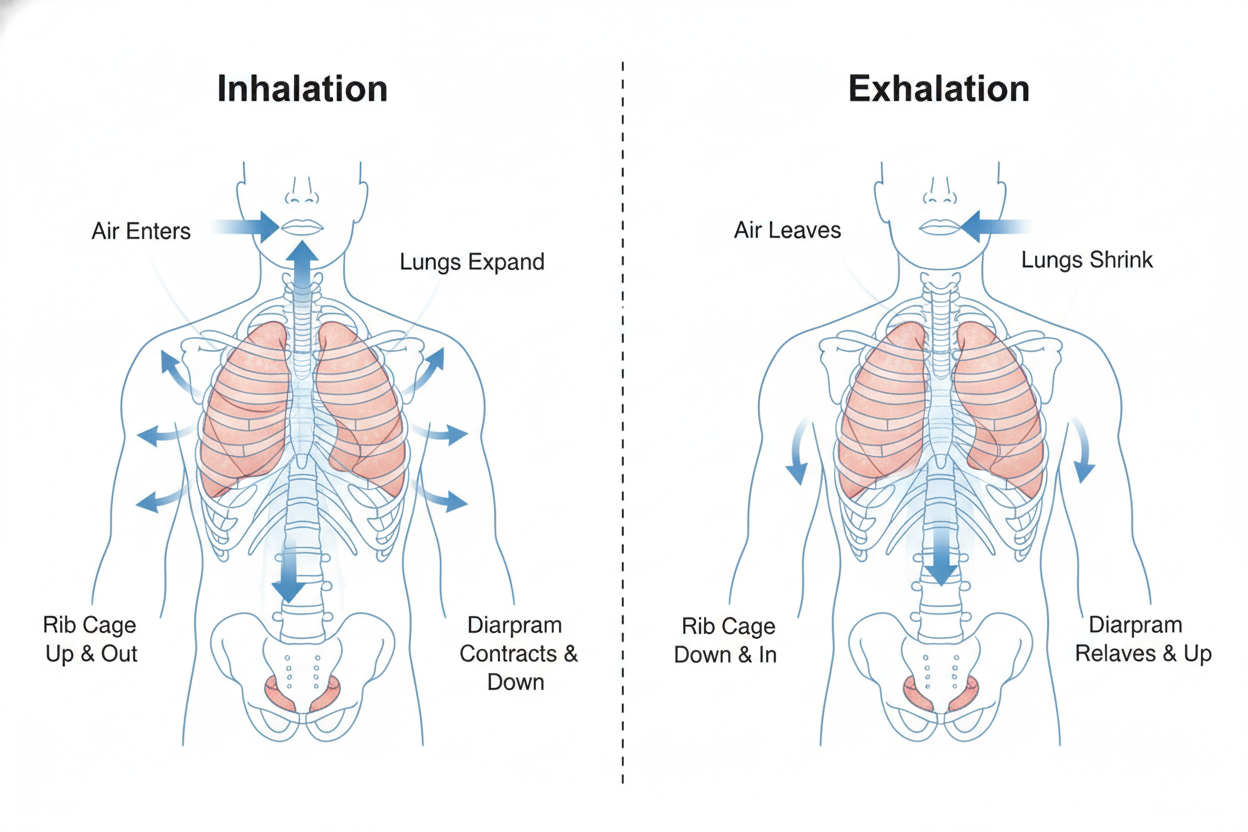
- Inhalation: Ribs move up and out; diaphragm moves down; chest cavity volume increases; air pressure decreases; air rushes in.
- Exhalation: Ribs move down and in; diaphragm moves up/relaxes; chest cavity volume decreases; air pressure increases; air is pushed out.
4. Instructional Sequence (40 Minutes)
Phase 1: Engagement (5 Minutes)
- Hook: Ask students to place their hands on their chests and take a deep breath. Ask: "What do you feel moving? Why does your chest expand?"
- Brainstorming: Briefly discuss the difference between 'breathing' and 'respiration'. Clarify that breathing is the physical act of taking in air, while respiration is the breakdown of food to release energy.
Phase 2: Exploration - Structure of Lungs (10 Minutes)
- Display the diagram of the human respiratory system (Fig 1).
- Trace the pathway of air. Use the following flow diagram to visualize the sequence:

- Key Discussion Points:
- The role of mucus and hair in the nasal cavity (filtration).
- The trachea (windpipe) and its protective rings of cartilage.
- How the bronchi branch into smaller bronchioles ending in alveoli (air sacs) where gas exchange occurs.
Phase 3: Explanation - Mechanism of Breathing (15 Minutes)
- Explain that our lungs do not have muscles of their own; they depend on the diaphragm and rib cage.
- Demonstration/Visual: Use the comparison diagram to explain the two-step process.
- Step-by-Step Breakdown:
- Inhalation: Diaphragm contracts and moves down + Ribs move out = More space in chest Air enters.
- Exhalation: Diaphragm relaxes and moves up + Ribs move in = Less space in chest Air leaves.
Phase 4: Elaborate (5 Minutes)
- Activity: Ask students to measure their chest size (using a measuring tape or string) during deep inhalation and after exhalation to observe the difference in chest cavity volume.
- Concept Check: Why do we sneeze? (Explain the expulsion of foreign particles from the nasal cavity).
Phase 5: Evaluation & Closing (5 Minutes)
- Exit Ticket: Have students quickly sketch the pathway of air or list the three changes that occur in the chest during inhalation.
- Summary: Reiterate that breathing is a continuous process that provides oxygen for cellular respiration:
5. Assessment and Evaluation Plan
- Formative Assessment: Observing student participation during the "deep breath" hook and the chest measurement activity.
- Check for Understanding: Oral questioning during the transition from structure to mechanism.
- Summative Assessment: A short quiz or worksheet requiring students to label a blank diagram of the respiratory system and describe the movement of the diaphragm.
6. Differentiation Strategy
- For Visual Learners: Heavily rely on the diagrams provided (Fig 1, 2, and 3) and the use of color-coded arrows for air flow.
- For Kinesthetic Learners: Use the chest measurement activity and a simple "balloon and bottle" model (if available) to demonstrate diaphragm movement.
- For Advanced Learners: Discuss how the rate of breathing changes during physical exercise and the concept of 'anaerobic respiration' in muscle cells.
7. 21st Century Skills / College & Career Readiness
- Critical Thinking: Analyzing the relationship between volume and pressure in the chest cavity.
- Communication: Explaining a biological process using technical terminology (trachea, bronchi, diaphragm).
- Health Literacy: Understanding how the respiratory system protects the body from dust and germs, emphasizing the importance of clean air.