Generated with Monsha
Living and Non-living Things
Image · Year 3 · English
Living and Non-living Things
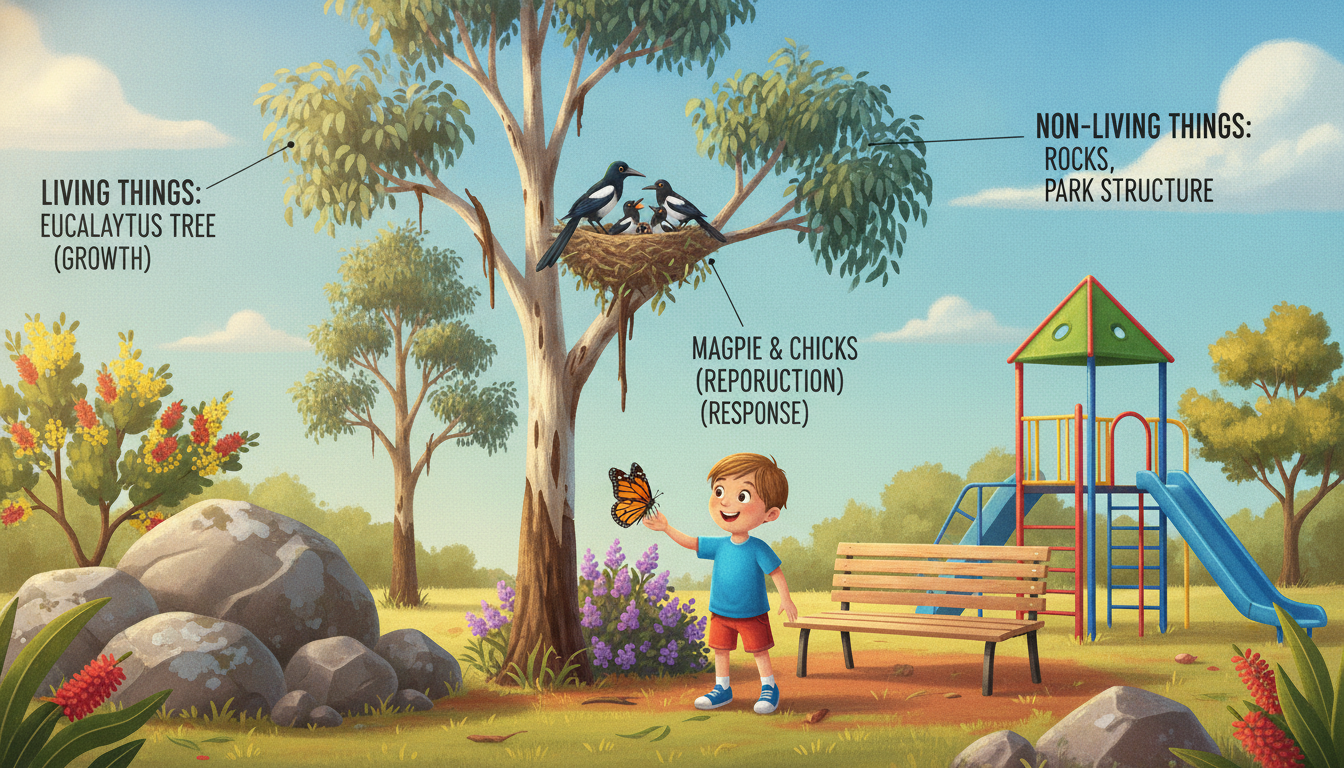
Exploring Our Local Environment
When we look around our local parks and gardens, we see many different things. Some are living and some are non-living.
What is the Difference?
Living things are alive! They need food, water, and air to stay healthy. Non-living things were never alive, or they might be things that used to be part of a living thing but aren't anymore (like a wooden bench made from a tree).
The Characteristics of Living Things
To help us decide if something is living, we can look for three special characteristics:
- They Grow: Living things don't stay the same size forever. They change and get bigger as they get older.
- Example: A small seedling in the garden grows into a tall Gum Tree.
- They Respond: Living things react to what is happening around them. This helps them stay safe or find what they need.
- Example: A Butterfly will flutter away if it feels the wind from your hand, or a Sunflower will turn its head to face the sun.
- They Reproduce: Living things can make more of themselves so that their kind continues to exist.
- Example: A mother Magpie lays eggs in a nest to hatch chicks, or a plant drops seeds into the soil to grow new plants.
Living and Non-living Examples
Here are some examples of what you might find in your local Australian environment:
Living Things | Non-living Things |
|---|---|
Birds (like Magpies or Cockatoos) | Rocks and pebbles |
Trees (like Eucalyptus or Wattle) | Wooden Benches |
Insects (like Ants and Butterflies) | Metal Playground Equipment |
Grasses and flowers | Water in a pond or tap |
Observation Task:
Look at the picture above. Can you spot one thing that is growing, one thing that is responding to its environment, and one thing that is reproducing?