Generated with Monsha
The Science of Tides: A Simulation Guide
Anything · Lower Secondary Stage 7 · English
The Science of Tides: A Simulation Guide
Understanding Tides: Gravity in Motion
Tides are the rise and fall of sea levels caused by the combined effects of the gravitational forces exerted by the Moon and the Sun, and the rotation of the Earth. In this guide, we will explore why tides happen and use a physical simulation to visualize these massive planetary forces.
The Force Behind the Tides
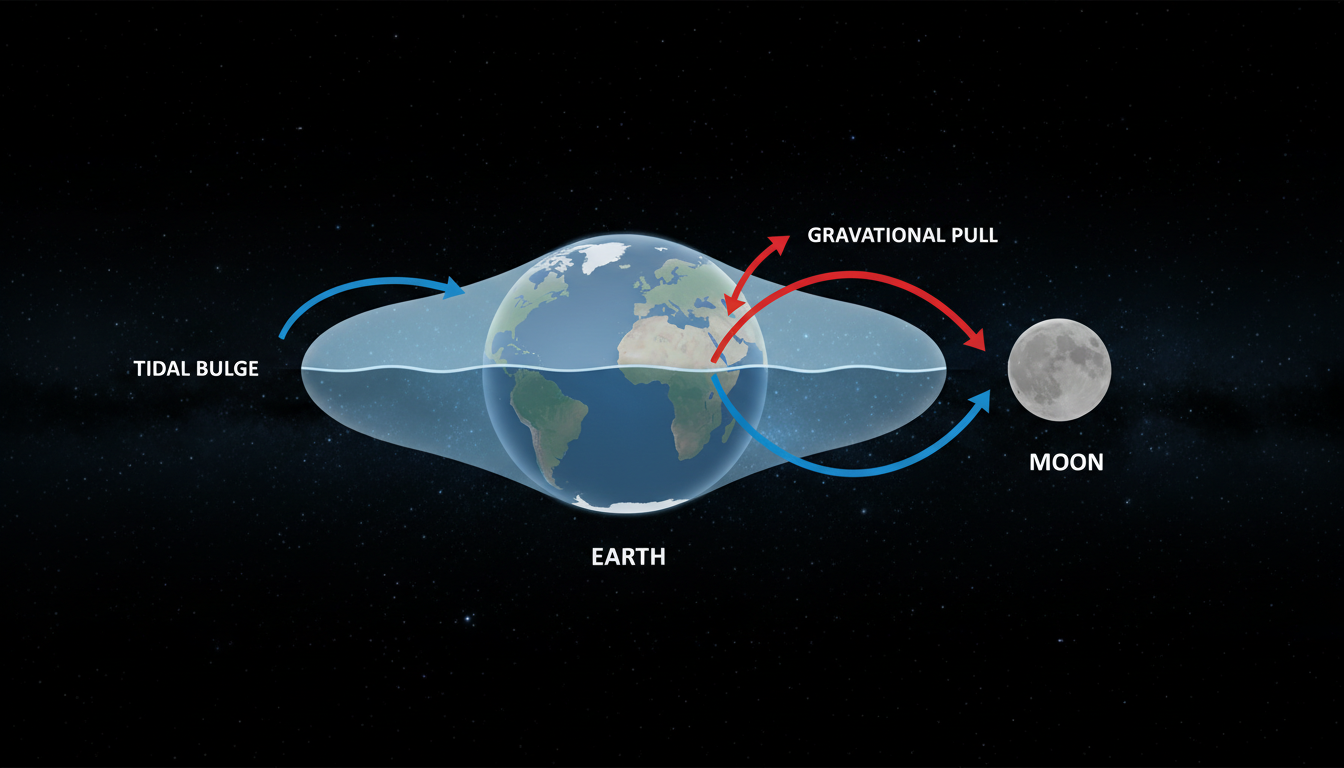
Gravity is the invisible force that pulls objects toward each other. The Moon, although much smaller than the Sun, is much closer to Earth. This proximity makes its gravitational pull on our oceans roughly twice as strong as the Sun's.
When the Moon's gravity pulls on Earth's water, it creates a tidal bulge on the side of the Earth facing the Moon. Interestingly, a second bulge occurs on the opposite side of the Earth because the Moon pulls the Earth itself away from the water on the far side.
Classroom Simulation: The Human Tide
To understand how the Earth, Moon, and Sun interact, follow this simulation activity. This roleplay helps visualize the movement of water across the planet.
Simulation Setup
- The Sun: One student stands in a fixed position at the edge of the room.
- The Earth: One student stands in the center of the circle.
- The Moon: One student orbits the Earth student slowly.
- The Oceans: Four students hold a large circular elastic band (or rope) around the "Earth" student.
Part 1: Daily Rotation
- Action: The Earth student spins slowly in place (one rotation = 24 hours).
- Observation: The Ocean students should pull the elastic slightly toward the Moon.
- Conclusion: As the Earth spins, different coastal locations pass through the "bulges." This is why most places experience two high tides and two low tides every day.
Part 2: Spring Tides (The Maximum Range)
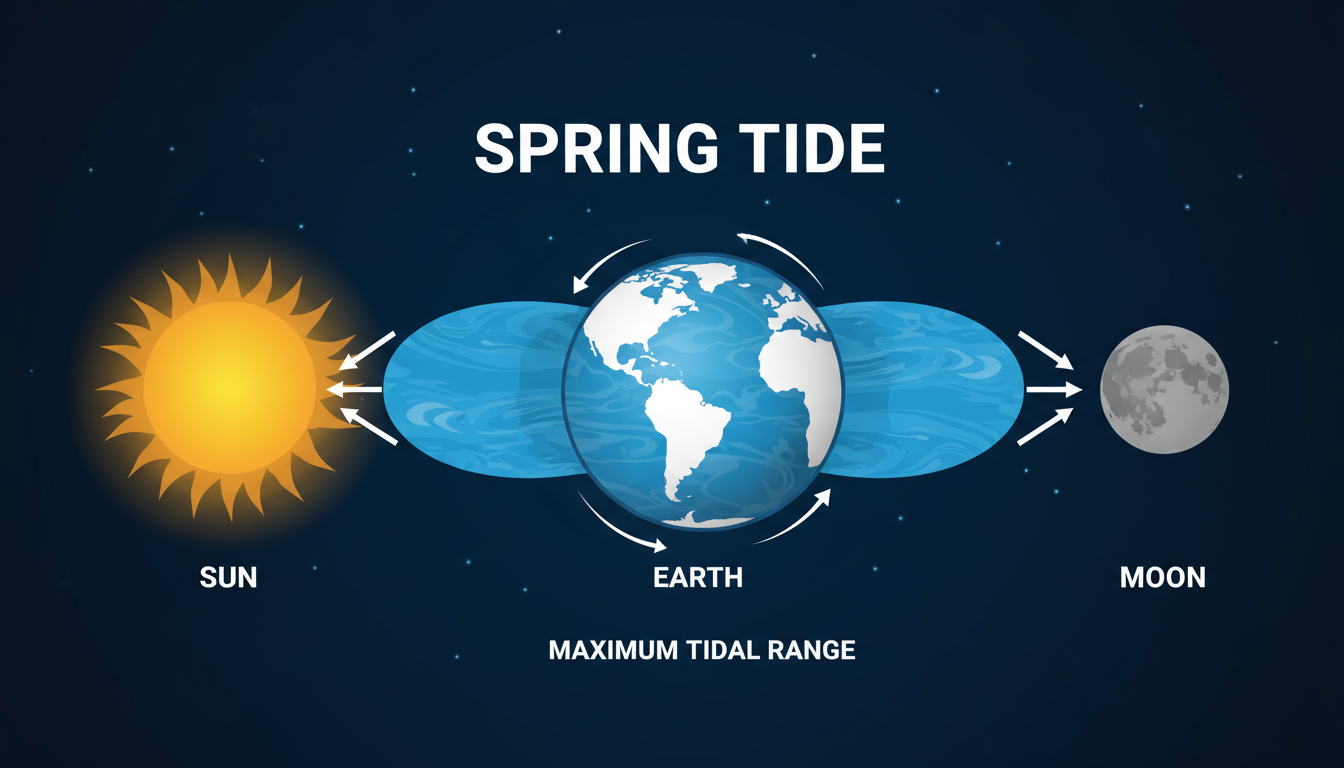
- Alignment: Move the Moon student so they are standing directly between the Earth and the Sun (New Moon).
- Action: Both the Sun and Moon students pull the elastic in the same direction.
- Observation: The elastic stretches significantly, creating very large bulges.
- Result: This represents a Spring Tide. The combined gravity of the Sun and Moon creates the highest high tides and the lowest low tides.
Part 3: Neap Tides (The Minimum Range)
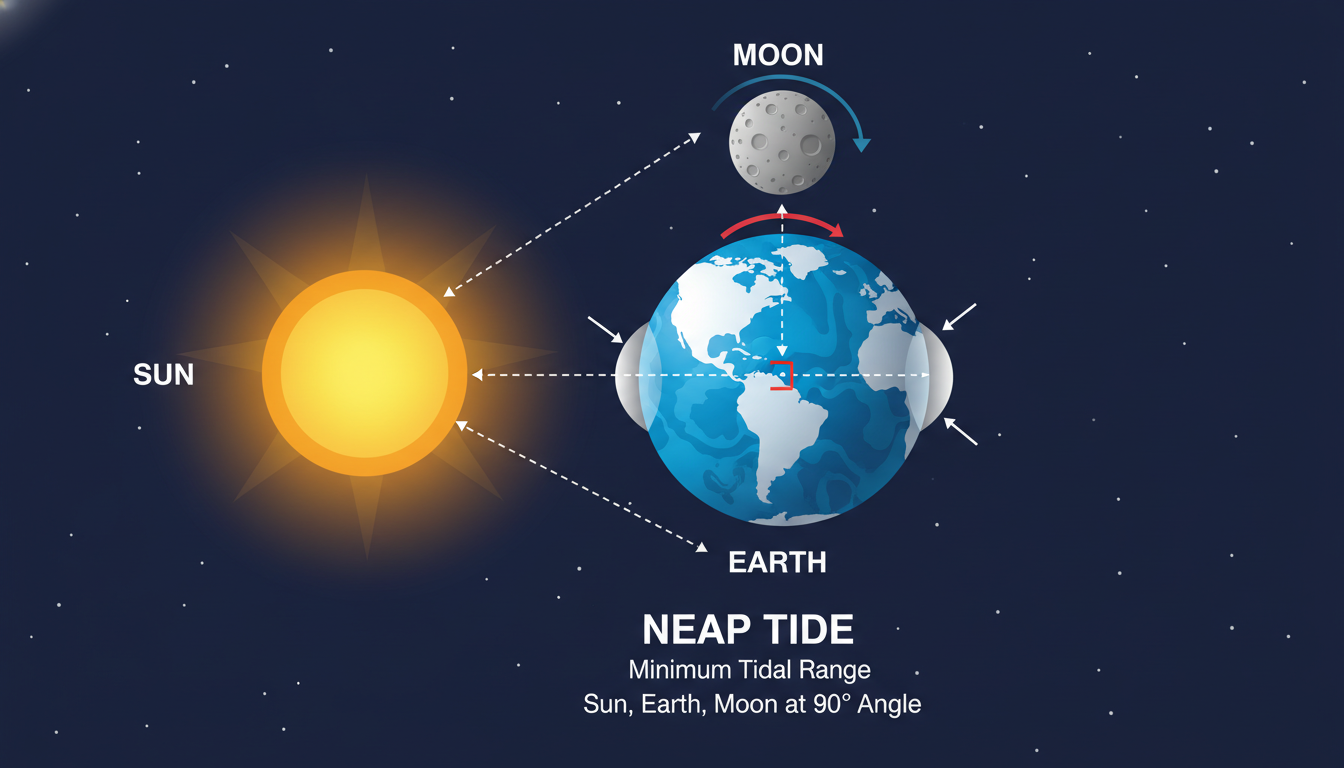
- Alignment: Move the Moon student so they are at a right angle (( 90^\circ \)) relative to the Sun-Earth line.
- Action: The Moon pulls the elastic one way, while the Sun pulls it in a different direction.
- Observation: The forces partially cancel each other out. The elastic is less stretched than before.
- Result: This represents a Neap Tide. The tidal range (the difference between high and low water) is at its smallest.
Summary of Tidal Variations
Use the table below to review the key differences identified during our simulation:
Feature | Spring Tides | Neap Tides |
|---|---|---|
Moon Phase | New Moon & Full Moon | First & Third Quarter |
Celestial Alignment | Straight line (0° or 180°) | Right angle (90°) |
Gravitational Effect | Sun and Moon work together | Sun and Moon work against each other |
Tidal Range | Large (Highest highs, lowest lows) | Small (Moderate water levels) |
Critical Thinking Check
During the simulation, you noticed that the Earth rotates much faster (once a day) than the Moon orbits (once every 27.3 days). This is why we have high tides every day, but the strength of those tides (Spring vs. Neap) only changes every week as the Moon moves through its phases.