Generated with Monsha
Monarch Butterfly Migration: Text Features and Structure Practice
Reading Comprehension Questions · Grade 4 · English
Monarch Butterfly Migration: Text Features and Structure Practice
The Incredible Journey of the Monarch Butterfly
Imagine a tiny insect, weighing no more than a paperclip, traveling thousands of miles across a continent. This is the amazing story of the Monarch butterfly. These bright orange and black insects are famous for their long-distance migration. Every year, millions of Monarchs fly from southern Canada and the United States all the way to the forests of central Mexico.
A Long Flight South
Monarch butterflies cannot survive the freezing cold winters of the north. Because of this, they must travel south to stay warm. This journey is a great example of a sequence of events. First, as the days get shorter and the air turns crisp in the fall, the butterflies begin to gather in large groups. Then, they use the sun and the Earth's magnetic field to guide them. They fly during the day and rest in trees at night. Finally, after traveling for nearly two months, they reach the Oyamel fir forests in Mexico. Here, the climate is just right—not too cold and not too hot.
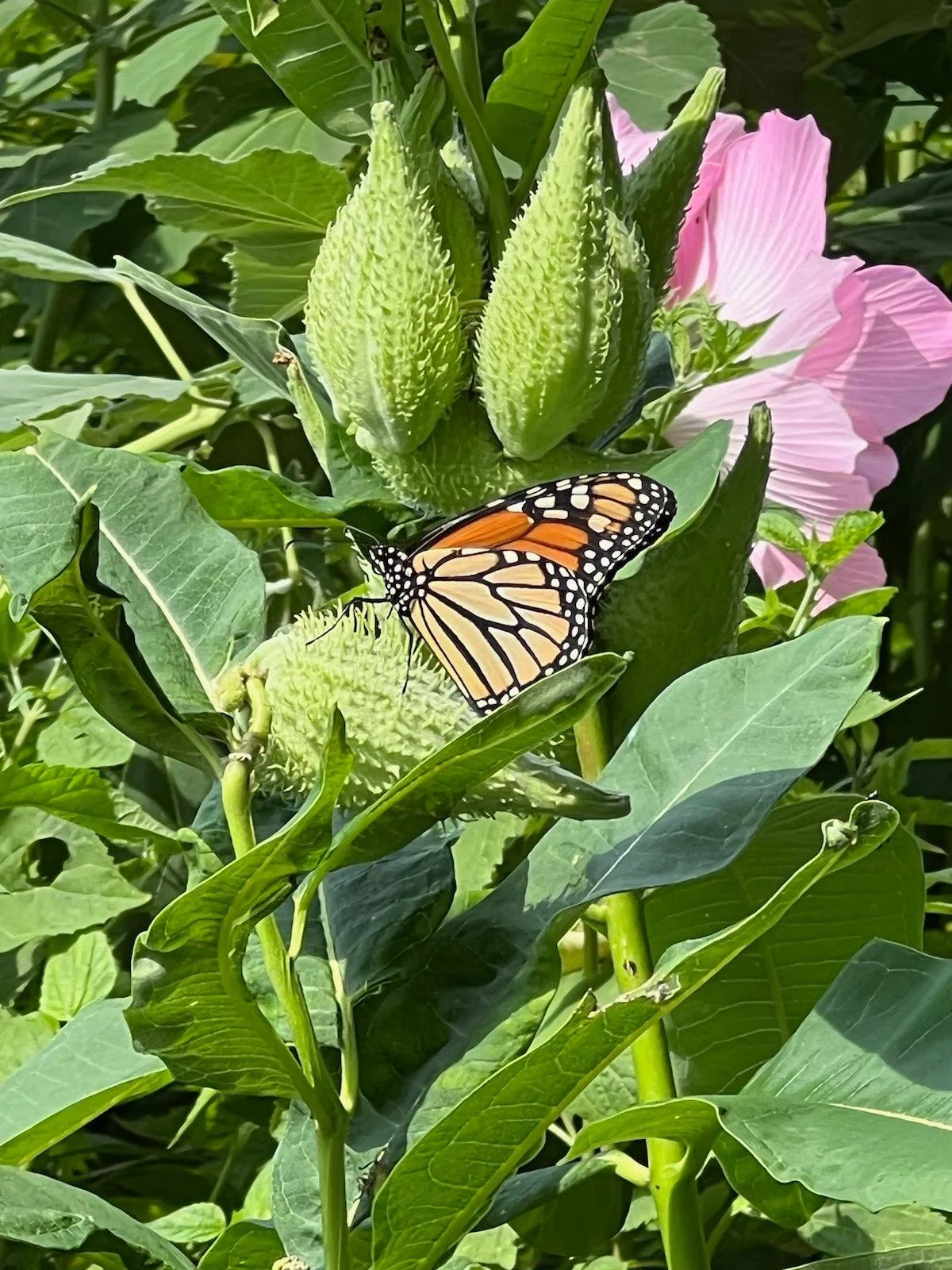
The Monarch Life Cycle
A Monarch’s life is full of changes, a process called metamorphosis. The cycle begins when a female butterfly lays a tiny egg on a milkweed leaf. Milkweed is the only plant that Monarch larvae (caterpillars) eat. Next, the egg hatches into a tiny caterpillar that spends all its time eating. After about two weeks, the caterpillar forms a hard shell called a chrysalis. During this stage, its body completely changes. After another two weeks, a beautiful adult butterfly emerges, ready to find nectar from flowers.
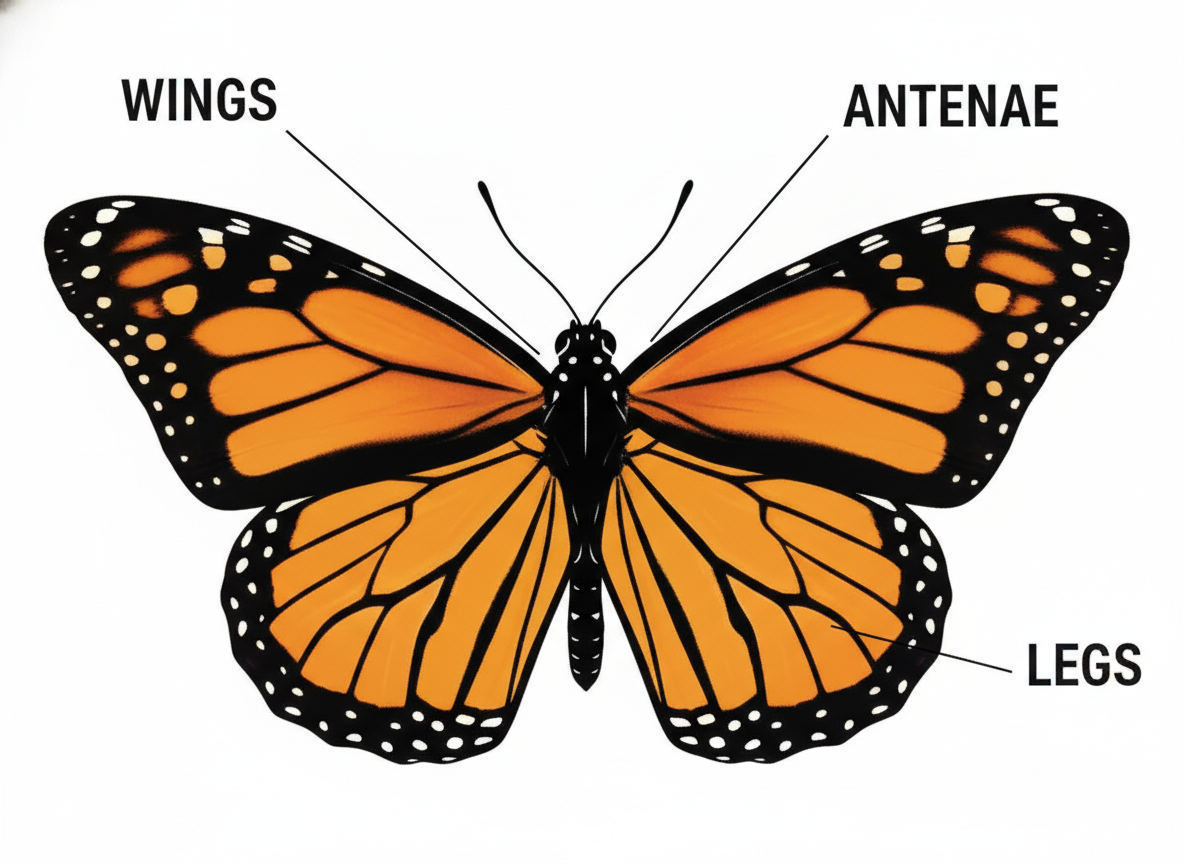
Migration Data
Scientists track Monarchs to see how far they travel each week during the fall. The table below shows the average distance traveled by a single Monarch butterfly during its trip to Mexico.
Week of Migration | Average Miles Traveled |
|---|---|
Week 1 | 250 miles |
Week 2 | 310 miles |
Week 3 | 420 miles |
Week 4 | 380 miles |
Glossary
- Chrysalis: The hard shell that protects a caterpillar while it changes into a butterfly.
- Larvae: The wingless, worm-like stage of an insect; caterpillars.
- Metamorphosis: A complete change in form during an animal's life cycle.
- Migration: The seasonal movement of animals from one region to another.
- Nectar: A sugary liquid produced by flowers that butterflies drink for energy.
Section 1: Text Features Identification
Complete the table below by identifying the text features used in the passage.
Text Feature | Location (Heading or Paragraph) | Purpose (How does it help the reader?) |
|---|---|---|
Title | Top of the page | __________________________________________ |
Heading | Above "A Long Flight South" | __________________________________________ |
Bold Print | Throughout the text | __________________________________________ |
Caption | Under Figure 1 | __________________________________________ |
Diagram | Figure 2 | __________________________________________ |
Data Table | Under "Migration Data" | __________________________________________ |
Section 2: Text Structure Analysis
1. What is the overall text structure of the section "A Long Flight South"?
(Circle one: Description | Sequence | Cause and Effect | Compare and Contrast | Problem and Solution)
2. Evidence: List at least three signal words from the text that helped you identify this structure.
- ____________________ 2. ____________________ 3. ____________________
Section 3: Comprehension Questions
- Based on the glossary and the text, what is the best definition of 'migration'? A. The seasonal movement from one home to another B. The act of eating milkweed to grow strong C. A process where an insect changes its body shape D. A way to hide from predators in the forest
- According to the section 'A Long Flight South,' why do Monarchs travel to Mexico? A. To find more milkweed for their larvae B. Because they cannot survive freezing northern winters C. To follow the path of the moon and stars D. Because they enjoy the high altitude of the mountains
3. Cite the Evidence: Look at the paragraph under "A Long Flight South." Write the exact sentence that explains what tools the butterflies use to find their way to Mexico.
- In the section 'The Monarch Life Cycle,' what does the word 'metamorphosis' refer to? A. The sugar found inside colorful flowers B. The way butterflies gather in large groups C. The change from an egg to an adult butterfly D. The long flight across the continent
4. Vocabulary in Context: In the sentence, 'The egg hatches into a tiny caterpillar that spends all its time eating,' what does the word hatches mean?
5. Cite the Evidence: According to the text, why is the milkweed plant essential for the survival of Monarch butterflies? Write the sentence from the text that supports your answer.
- Based on the 'Migration Data' table, during which week do Monarchs typically travel the farthest? A. Week 4 B. Week 2 C. Week 1 D. Week 3
6. Data Analysis: How many total miles does a Monarch butterfly travel in the first two weeks combined, according to the table?
- What is the primary purpose of Figure 2 (the diagram)? A. To identify the physical parts of a butterfly B. To show where the butterfly lives in Mexico C. To compare a Monarch to other butterfly species D. To illustrate how a caterpillar eats milkweed
- What is the relationship between the chrysalis and metamorphosis? A. The chrysalis is the food butterflies eat during metamorphosis B. Metamorphosis is the shell that protects the chrysalis C. The chrysalis is the tool used for migration D. The chrysalis is the location where metamorphosis happens
7. DOK 2 Question: Why did the author include the heading "The Monarch Life Cycle"?
- Which of the following is a 'signal word' used in the passage to show a sequence of events? A. Imagine B. Because C. Next D. Tiny
8. DOK 3 Question: If a disease killed all the milkweed plants in North America, what would most likely happen to the Monarch butterfly population? Use evidence from the text to support your prediction.
- Based on Figure 1 and its caption, what is the best description of the Monarch's relationship with milkweed? A. They avoid it because it is toxic to them B. They use it as a place to rest and lay eggs C. They only visit it during the winter in Mexico D. They eat the flowers of the plant for nectar only
Section 4: Extended Constructed Response
Prompt: Choose one text feature from the passage (e.g., the diagram, the data table, or the glossary). Explain how this specific feature helped you understand the information about Monarch butterflies better.
- Identify the feature.
- Explain what information the feature provided.
- Explain why that information was easier to understand as a visual feature rather than just as a sentence in a paragraph.