Generated with Monsha
Patterns in Life: A Grade 6 Exploration
Smart Worksheet · 6 · English
Patterns in Life: A Grade 6 Exploration
Patterns in Life: Student Worksheet
Name: ___________________________
Date: ____________________________
Section 1: Geometric and Mathematical Patterns
Activity 1: Bilateral Symmetry
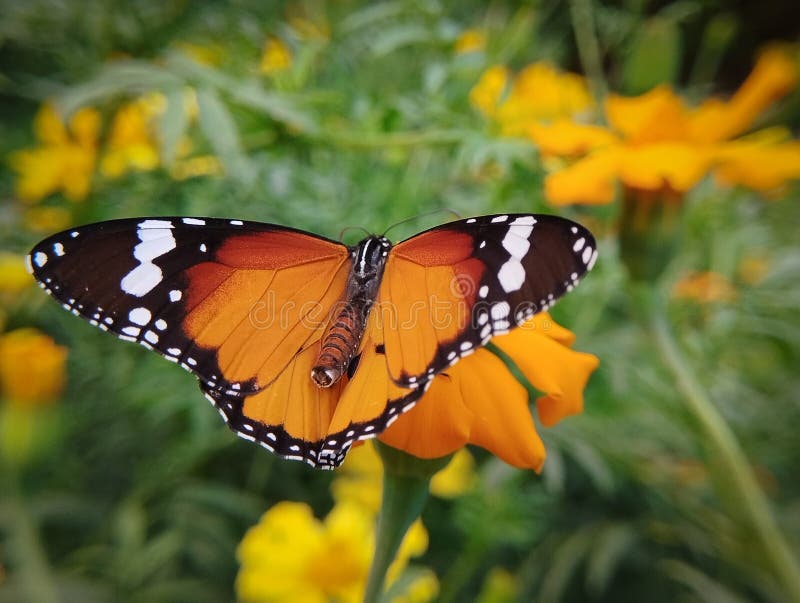
Bilateral symmetry is when an object can be divided into two identical halves. Look at the image of the Monarch butterfly below. Use a ruler to draw the line of symmetry directly on the image.
Activity 2: The Fibonacci Sequence
The Fibonacci sequence is a famous pattern where each number is the sum of the two preceding ones. Complete the sequence below and answer the question.
Sequence:
______, ______, ______How do you find the next number in this pattern?
Activity 3: Identifying Fractals
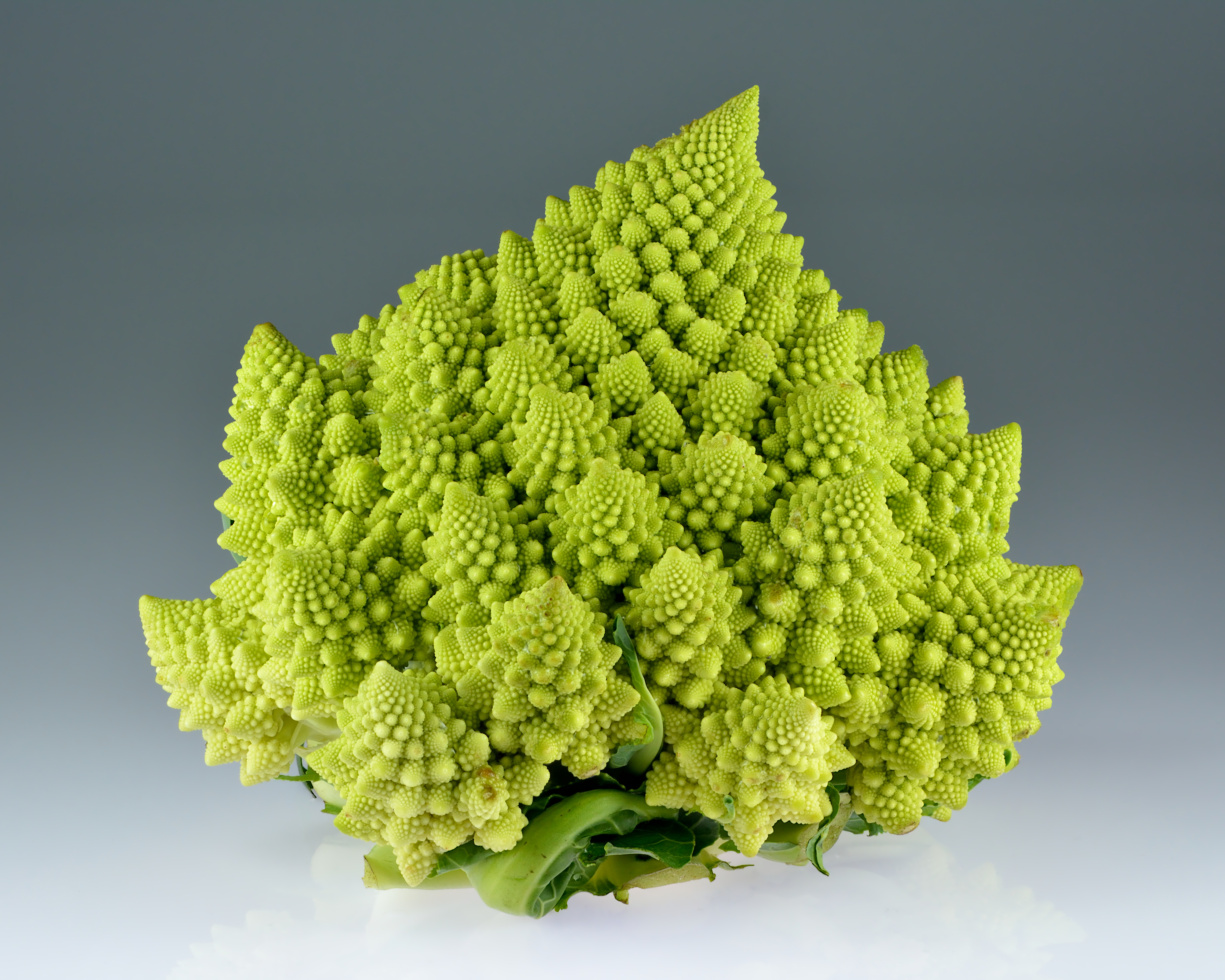
Fractals are complex patterns where the same shape is repeated at smaller and smaller scales. Look at the Romanesco broccoli below. Circle three areas on the image where you see the "self-repeating" pattern.
Activity 4: Logarithmic Spirals
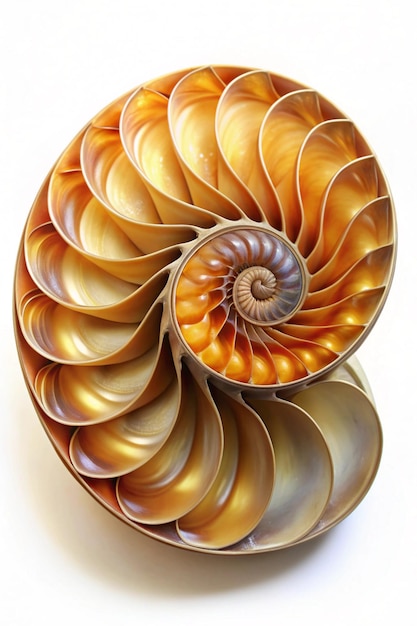
Many shells follow a spiral pattern that gets wider as it grows. Based on the image of the Nautilus shell, why do you think animals like the Nautilus grow in a spiral rather than a straight line?
Answer: __________________________________________________________________
Activity 5: Tessellations and Efficiency
Bees build honeycombs using hexagonal (6-sided) cells. This is a "tessellation"—a pattern of shapes that fit together with no gaps. Why do you think bees use hexagons instead of circles?
Section 2: Biological Cycles and Growth
Activity 6: The Butterfly Life Cycle
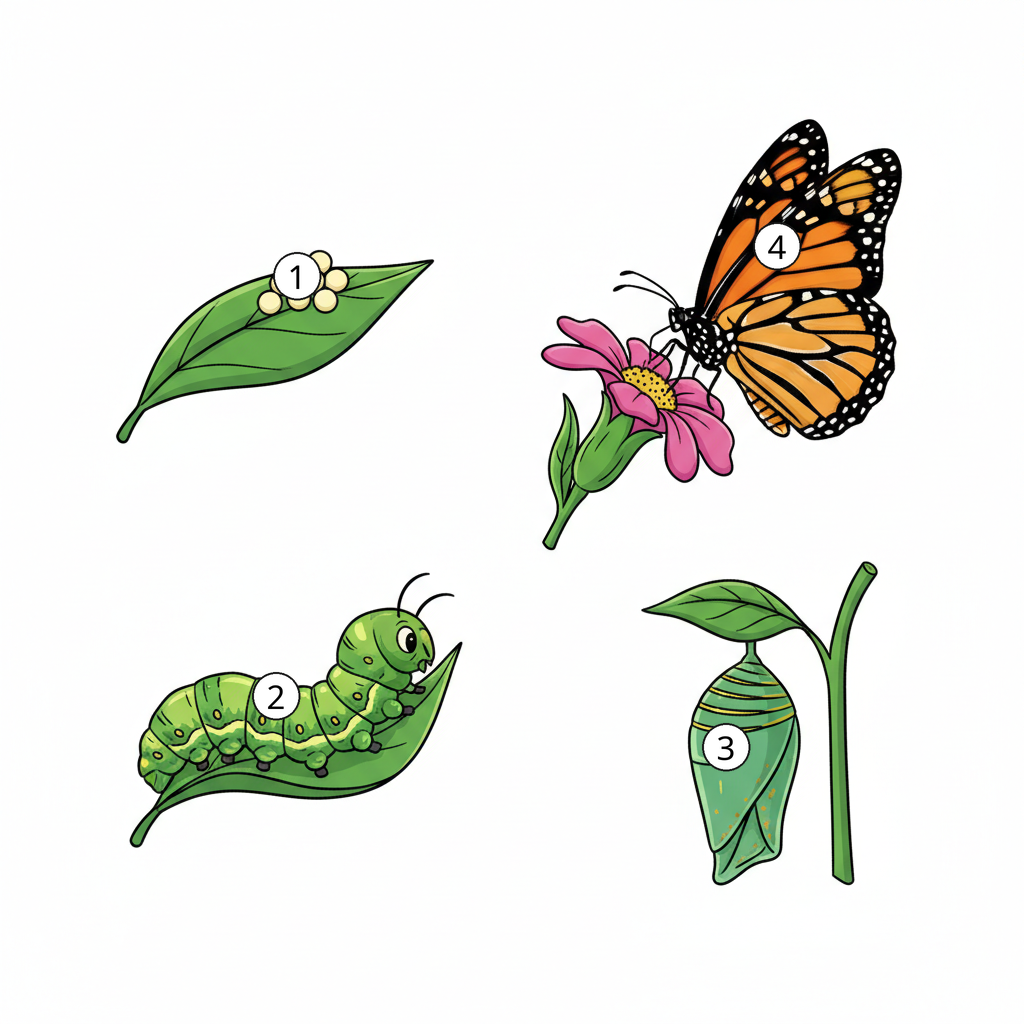
Label the four stages of the butterfly life cycle in the diagram below using the word bank.
Word Bank: Pupa (Chrysalis), Adult Butterfly, Egg, Larva (Caterpillar)
-
-
-
-
Activity 7: Seed Germination Sequencing
Number the stages of seed germination from 1 to 5 to show the correct order of growth.
( ) The first leaves (plumule) emerge from the soil.
( ) The seed coat bursts open due to water absorption.
( ) The seed is planted in moist soil.
( ) The primary root (radicle) grows downward.
( ) The stem grows taller and the plant begins photosynthesis.
Activity 8: Leaf Arrangement Patterns
Plants arrange their leaves in specific patterns to maximize sunlight. Label the three patterns below using the word bank.
Word Bank: Whorled, Alternate, Opposite
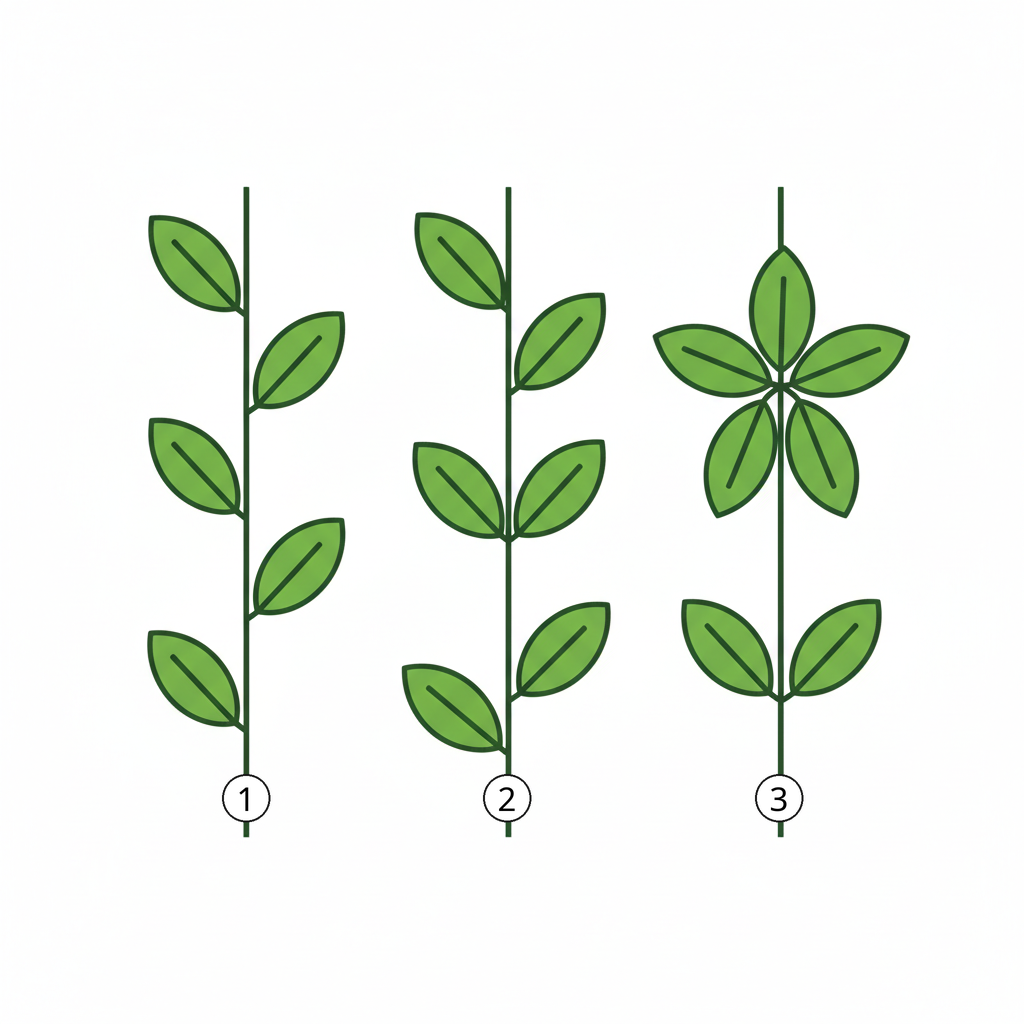
-
-
-
Activity 9: Seasonal Patterns Matching
Match the biological event to the season it typically occurs in by drawing a line.
- Spring • Animals gather food and store fat
- Summer • Trees drop leaves and go dormant
- Autumn • Seeds sprout and birds lay eggs
- Winter • Plants are in full bloom and growth
Activity 10: Day and Night Patterns
Circle True or False for the following statements about the Earth's daily pattern.
- The Earth rotates on its axis once every 24 hours. (True / False)
- The Sun revolves around the Earth, causing the day/night cycle. (True / False)
- When your side of the Earth faces the Sun, it is daytime. (True / False)
Section 3: Animal Patterns and Survival
Activity 11: Camouflage Strategy
Which of the following is an example of a camouflage pattern? (Circle the best answer)
a) A peacock showing its colorful tail to attract a mate.
b) A walking stick insect shaped like a twig to hide from birds.
c) A bee with bright yellow and black stripes to warn predators.
d) A dolphin using sonar to find fish.
Activity 12: Matching Animal Skin Patterns
Match the animal to its distinct skin or fur pattern.
- Zebra A. Rosettes (Circular spots)
- Leopard B. Bold black and white stripes
- Giraffe C. Irregular polygon patches
- Tiger D. Narrow vertical stripes
Activity 13: Bird Migration Fill-in-the-Blanks
Complete the paragraph about migration patterns using the words: magnetic, winter, instinct, equator.
Many birds follow a seasonal pattern called migration. As ____________ approaches in the Northern Hemisphere, birds fly toward the ____________ where it is warmer. They use their ____________ and the Earth's ____________ field to find their way across thousands of miles.
Activity 14: Hibernation Cycles
Define "hibernation" and explain one way an animal's body pattern changes during this time (e.g., heart rate or temperature).
Activity 15: Animal Track Identification
Different animals leave different patterns of tracks. Draw a line from the track description to the animal it likely belongs to.
- Two large hooves • Bird (e.g., Crow)
- Four paws with claws • Deer
- Three thin toes • Dog
Section 4: Advanced Earth and Space Patterns
Activity 16: Moon Phases Sequencing
Arrange the moon phases in the correct order they appear throughout the month, starting with the New Moon.
- New Moon
-
-
- Full Moon
-
Activity 17: The Tides Pattern
What primarily causes the predictable pattern of high and low tides on Earth? (Circle the correct answer)
a) The rotation of the Earth's core.
b) The gravitational pull of the Moon and Sun.
c) The wind blowing across the ocean.
d) The movement of large whales.
Activity 18: Observing Tree Rings
Tree rings provide a pattern that tells us about the tree's history. If a tree has very wide rings in one section and very narrow rings in another, what does that pattern tell you about the weather during those years?
Activity 19: Weather Patterns Word Bank
Fill in the blanks with the correct weather-related term.
Word Bank: Fronts, Jet Stream, Seasons, Air Masses
- Large bodies of air with similar temperature and humidity are called ____________.
- The boundary between two different air masses is called a ____________.
- The ____________ is a fast-moving ribbon of air high in the atmosphere that influences weather patterns.
Activity 20: Design Your Own Pattern
Imagine a new animal that lives in a checkered environment (like a chessboard). Draw a skin pattern for this animal that would help it hide, and explain why your pattern is effective.
Drawing Box:
Explanation: __________________________________________________________