Generated with Monsha
Button Sorting: A Multi-Level Activity for UKG
Anything · UKG · English (UK)
ZPD Button Sorting: A Multi-Level Activity for UKG
Introduction to the Activity
This activity is designed using Lev Vygotsky’s Zone of Proximal Development (ZPD). As a Special Education teacher, the goal is to provide just enough support (scaffolding) to help each child move from what they can do with help to what they can do independently.
By using simple buttons, we can adjust the complexity of the task—motor, visual, and cognitive—to meet every learner where they are.
Materials Needed:
- A large bag of assorted buttons (various colours, sizes, and hole counts).
- Coloured bowls or containers.
- Tongs or tweezers (for motor support/challenge).
- Labels (Big/Small icons, Numbers 2 and 4).
Level 1: The Support Zone (Visual & Motor Scaffolding)
Target Group: Children who require significant help with fine motor skills or visual discrimination. This level provides high-intensity scaffolding to ensure success and build confidence.
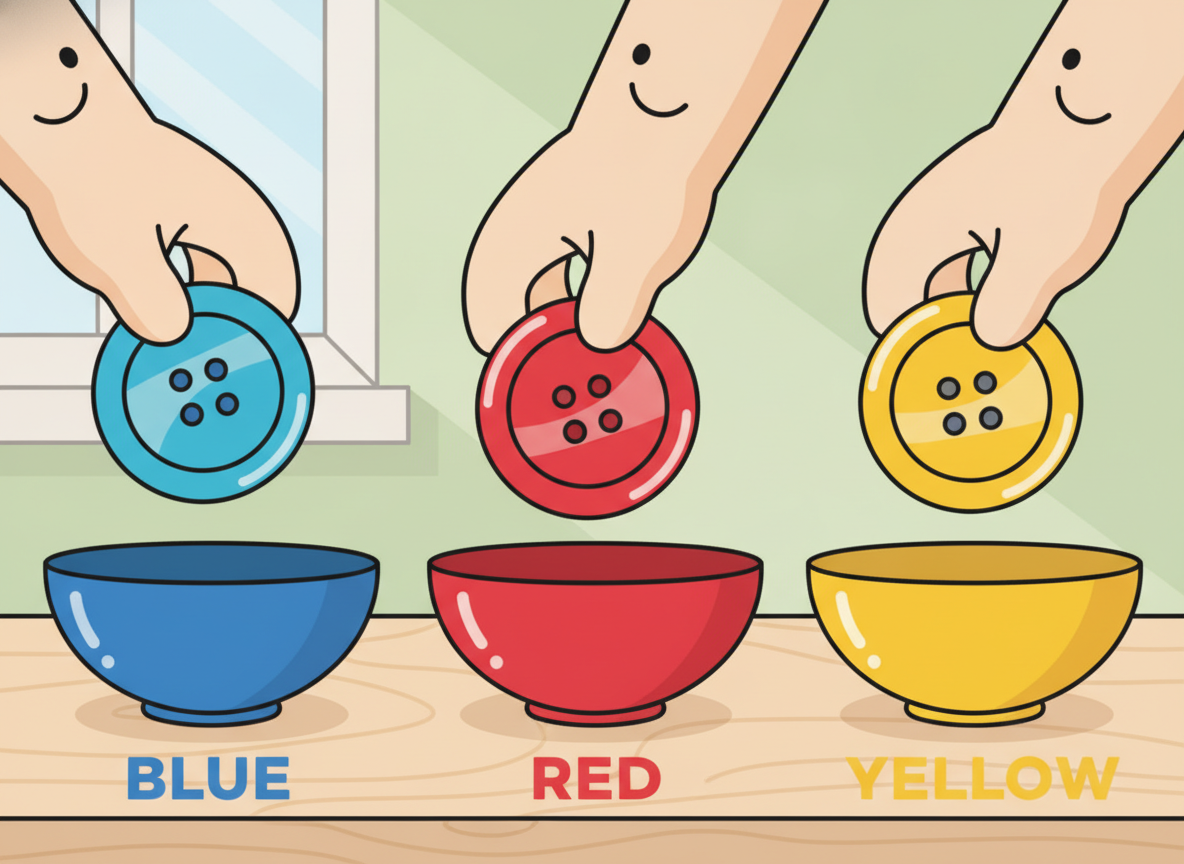
- The Task: Colour Matching.
- Scaffolding Provided:
- Visual Cues: Use bowls that are the exact same colour as the buttons. This creates a clear visual boundary.
- Motor Support: Use extra-large buttons (jumbo size) that are easier to grip. If the child has physical difficulties, use open trays instead of deep bowls.
- Teacher Prompting: Use 'hand-over-hand' guidance or 'point prompts' to assist the child in moving the button to the matching bowl.
Level 2: The Independent Zone (Standard UKG Level)
Target Group: Children working at the expected level for UKG. They can identify basic attributes and have developed 'pincer grip' motor skills.
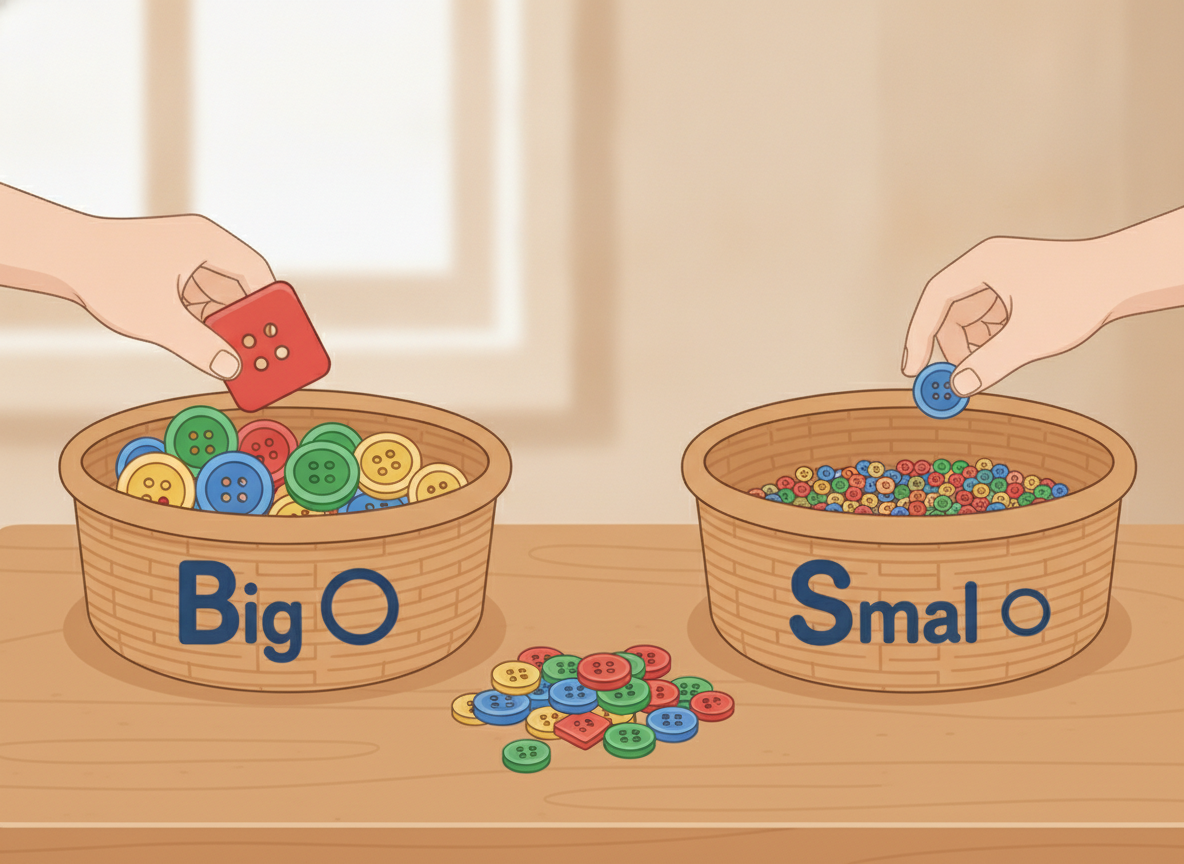
- The Task: Size Sorting (Big vs. Small).
- Scaffolding Provided:
- Labels: Use containers with simple icon labels (a large circle for 'Big' and a tiny dot for 'Small').
- Physical Tools: Provide tongs or tweezers. This adds a fine motor challenge that prepares them for writing, but the task remains cognitively accessible.
- Verbal Prompting: Ask, "Does this feel big in your hand or small?" to encourage self-reflection during the process.
Level 3: The Challenge Zone (Cognitive Extension)
Target Group: Children who have mastered basic sorting and are ready for higher-order thinking and early numeracy integration.
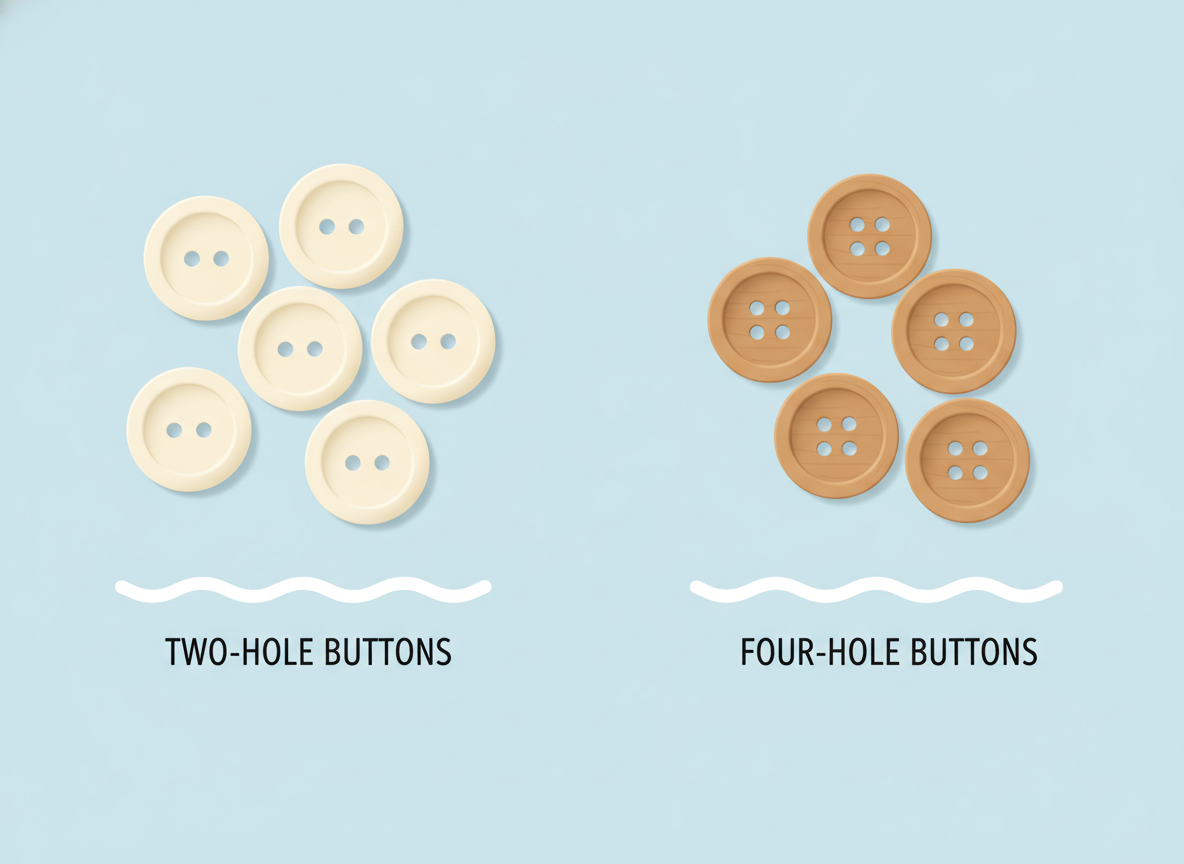
- The Task: Sorting by Number of Holes (2 vs. 4).
- The Challenge:
- Abstract Attributes: Unlike colour or size, the number of holes is a detailed feature that requires close observation and counting.
- Mathematical Integration: Use containers labelled with the numerals 2 and 4. This bridges the gap between physical objects and abstract numbers.
- Extension: Ask the child to predict: "I have five buttons left. Do you think more will have two holes or four holes?"
Teacher’s Cheat Sheet: Scaffolding Strategies
If the child is struggling... | If the child is succeeding easily... |
|---|---|
Reduce the choice: Give them only 2 colours instead of 5. | Add a constraint: "Can you find only blue buttons with 4 holes?" |
Model the action: Say, "I am looking for a red one... here it is!" | Increase motor difficulty: Use smaller buttons or smaller tweezers. |
Use physical tactile cues: Guide their hand to feel the size difference. | Introduce Data: Count the piles together at the end to see which has 'more' or 'less'. |
ZPD बटन छँटाई: UKG के लिए एक बहु-स्तरीय गतिविधि
गतिविधि का परिचय
यह गतिविधि लेव वायगोत्स्की के समीपस्थ विकास का क्षेत्र (Zone of Proximal Development - ZPD) का उपयोग करके तैयार की गई है। एक विशेष शिक्षा शिक्षक के रूप में, लक्ष्य बच्चे को उतनी ही सहायता (स्कैफोल्डिंग) प्रदान करना है जितनी उसे मदद से किए जाने वाले कार्यों से स्वतंत्र रूप से किए जाने वाले कार्यों की ओर बढ़ने के लिए आवश्यक हो।
साधारण बटनों का उपयोग करके, हम प्रत्येक शिक्षार्थी की आवश्यकता के अनुसार कार्य की जटिलता—मोटर (शारीरिक), दृश्य और संज्ञानात्मक—को समायोजित कर सकते हैं।
आवश्यक सामग्री:
- विभिन्न बटनों का एक बड़ा बैग (विभिन्न रंग, आकार और छेदों की संख्या)।
- रंगीन कटोरे या कंटेनर।
- चिमटी या ट्वीज़र (मोटर सहायता/चुनौती के लिए)।
- लेबल (बड़े/छोटे के आइकन, संख्या 2 और 4)।
स्तर 1: सहायता क्षेत्र (दृश्य और मोटर स्कैफोल्डिंग)
लक्षित समूह: वे बच्चे जिन्हें सूक्ष्म मोटर कौशल (fine motor skills) या दृश्य भेदभाव (visual discrimination) में महत्वपूर्ण सहायता की आवश्यकता होती है। यह स्तर सफलता सुनिश्चित करने और आत्मविश्वास बढ़ाने के लिए उच्च-तीव्रता वाली सहायता प्रदान करता है।
- कार्य: रंग मिलान (Colour Matching)।
- प्रदान की गई सहायता (Scaffolding):
- दृश्य संकेत (Visual Cues): उन कटोरों का उपयोग करें जिनका रंग बटनों के बिल्कुल समान हो। यह एक स्पष्ट दृश्य सीमा बनाता है।
- मोटर सहायता: अतिरिक्त-बड़े बटनों (जंबो आकार) का उपयोग करें जिन्हें पकड़ना आसान हो। यदि बच्चे को शारीरिक कठिनाई है, तो गहरे कटोरों के बजाय खुली ट्रे का उपयोग करें।
- शिक्षक का प्रोत्साहन: बच्चे को बटन को सही कटोरे में डालने में मदद करने के लिए 'हाथ-पर-हाथ' मार्गदर्शन या 'इशारों' का उपयोग करें।
स्तर 2: स्वतंत्र क्षेत्र (मानक UKG स्तर)
लक्षित समूह: UKG के अपेक्षित स्तर पर काम करने वाले बच्चे। वे बुनियादी विशेषताओं की पहचान कर सकते हैं और उनमें 'पिंसर ग्रिप' (अंगूठे और उंगली की पकड़) विकसित हो गई है।
- कार्य: आकार की छँटाई (बड़ा बनाम छोटा)।
- प्रदान की गई सहायता (Scaffolding):
- लेबल: सरल आइकन लेबल वाले कंटेनरों का उपयोग करें ('बड़े' के लिए एक बड़ा गोला और 'छोटे' के लिए एक छोटा बिंदु)।
- शारीरिक उपकरण: चिमटी या ट्वीज़र प्रदान करें। यह एक सूक्ष्म मोटर चुनौती जोड़ता है जो उन्हें लेखन के लिए तैयार करती है, लेकिन कार्य संज्ञानात्मक रूप से सुलभ रहता है।
- मौखिक प्रोत्साहन: पूछें, "क्या यह आपके हाथ में बड़ा लग रहा है या छोटा?" ताकि बच्चा प्रक्रिया के दौरान आत्म-चिंतन कर सके।
स्तर 3: चुनौती क्षेत्र (संज्ञानात्मक विस्तार)
लक्षित समूह: वे बच्चे जिन्होंने बुनियादी छँटाई में महारत हासिल कर ली है और उच्च-स्तरीय सोच और प्रारंभिक संख्यात्मक एकीकरण के लिए तैयार हैं।
- कार्य: छेदों की संख्या के आधार पर छँटाई (2 बनाम 4)।
- चुनौती:
- अमूर्त विशेषताएँ: रंग या आकार के विपरीत, छेदों की संख्या एक सूक्ष्म विशेषता है जिसके लिए सावधानीपूर्वक अवलोकन और गिनती की आवश्यकता होती।
- गणितीय एकीकरण: संख्या 2 और 4 लेबल वाले कंटेनरों का उपयोग करें। यह भौतिक वस्तुओं और अमूर्त संख्याओं के बीच की दूरी को कम करता है।
- विस्तार: बच्चे से अनुमान लगाने के लिए कहें: "मेरे पास पाँच बटन बचे हैं। आपको क्या लगता है, क्या ज़्यादा बटनों में दो छेद होंगे या चार?"
शिक्षकों के लिए चीट शीट: स्कैफोल्डिंग रणनीतियाँ
यदि बच्चा संघर्ष कर रहा है... | यदि बच्चा आसानी से सफल हो रहा है... |
|---|---|
विकल्प कम करें: उन्हें 5 के बजाय केवल 2 रंग दें। | एक प्रतिबंध जोड़ें: "क्या आप केवल 4 छेद वाले नीले बटन ढूंढ सकते हैं?" |
क्रिया का प्रदर्शन करें: कहें, "मैं एक लाल बटन ढूंढ रहा हूँ... यह रहा!" | मोटर कठिनाई बढ़ाएँ: छोटे बटनों या छोटी चिमटी का उपयोग करें। |
शारीरिक स्पर्श संकेतों का उपयोग करें: आकार के अंतर को महसूस करने के लिए उनके हाथ का मार्गदर्शन करें। | डेटा पेश करें: अंत में ढेरों को एक साथ गिनें यह देखने के लिए कि किसमें 'ज़्यादा' है या किसमें 'कम'। |