Generated with Monsha
The Evolution, Beauty, and Influence of French Architecture
Anything · Year 13 · English
The Evolution, Beauty, and Influence of French Architecture
The Evolution, Beauty, and Influence of French Architecture
1. Introduction
Architecture is often described as the most visible and enduring testament to the soul of a civilization. It is the crystallization of a society's values, its technological triumphs, and its aesthetic aspirations. To study the architecture of a nation is to read its history through its skyline—a narrative written in stone, glass, and steel. Among the world’s most admired architectural traditions, France stands as a singular titan. From the towering, ethereal vaults of medieval cathedrals to the bold, geometric glass of the modern era, French architecture has consistently set the standard for elegance and innovation.
French architecture is characterized by its remarkable diversity and its capacity for reinvention. It is a tradition that spans more than two millennia, encompassing the rugged durability of Roman aqueducts and the delicate, lace-like stonework of the High Gothic. It is seen in the sweeping grandeur of royal palaces that reflect the absolute power of the monarchy and in the uniform, limestone boulevards of Paris that define the modern urban experience. Each era of French construction has not only addressed the functional needs of its time but has also served as a profound expression of cultural identity.
This essay explores the trajectory of French architectural development, analyzing how it has been shaped by the shifting currents of history, religion, politics, and art. The central thesis posits that French architecture is more than just a collection of beautiful buildings; it is a dynamic synthesis of engineering brilliance and cultural philosophy. It reflects a nation that has perpetually balanced a deep reverence for its classical past with an audacious drive toward the avant-garde, creating a living record of human progress that continues to influence the global stage.

2. Historical Background of French Architecture
The foundations of French architecture are deeply rooted in the soil of ancient Gaul. Following the Roman conquest, the territory became a laboratory for Roman engineering. Structures such as the Pont du Gard aqueduct and the Maison Carrée in Nîmes introduced the concepts of the arch, the vault, and the classical order to the region. These Gallo-Roman monuments established a precedent for monumental stone construction and a respect for symmetry and proportion that would resurface centuries later during the Renaissance.
Following the collapse of the Western Roman Empire, architectural development entered a period of transition. The Early Christian and Merovingian periods saw the repurposing of Roman materials, but it was during the Carolingian Renaissance under Charlemagne that a distinct, monumental style began to re-emerge. The Romanesque period (roughly 10th to 12th century) was characterized by massive walls, small windows, and rounded arches. These buildings, often monastic in nature, were designed as spiritual fortresses, reflecting the instability of the medieval world and the central role of the Church in providing sanctuary and order.
As the power of the French monarchy grew and feudalism became more centralized, architecture became a tool of political and religious consolidation. The transition from the heavy, earthbound Romanesque to the soaring Gothic was not merely a change in style, but a reflection of a changing social order—one where the king and the church sought to manifest their authority through unprecedented scale and light.
3. Gothic Architecture in France: The Triumph of Light
France is the undisputed birthplace of Gothic architecture. In the mid-12th century, Abbot Suger of Saint-Denis sought to renovate his abbey church to reflect a new theological concept: Lux Continua, or continuous light. He believed that beauty and light were conduits to the divine. This shift required a radical departure from Romanesque thickness toward a structural system that could support higher walls and larger windows.
The Structural Revolution
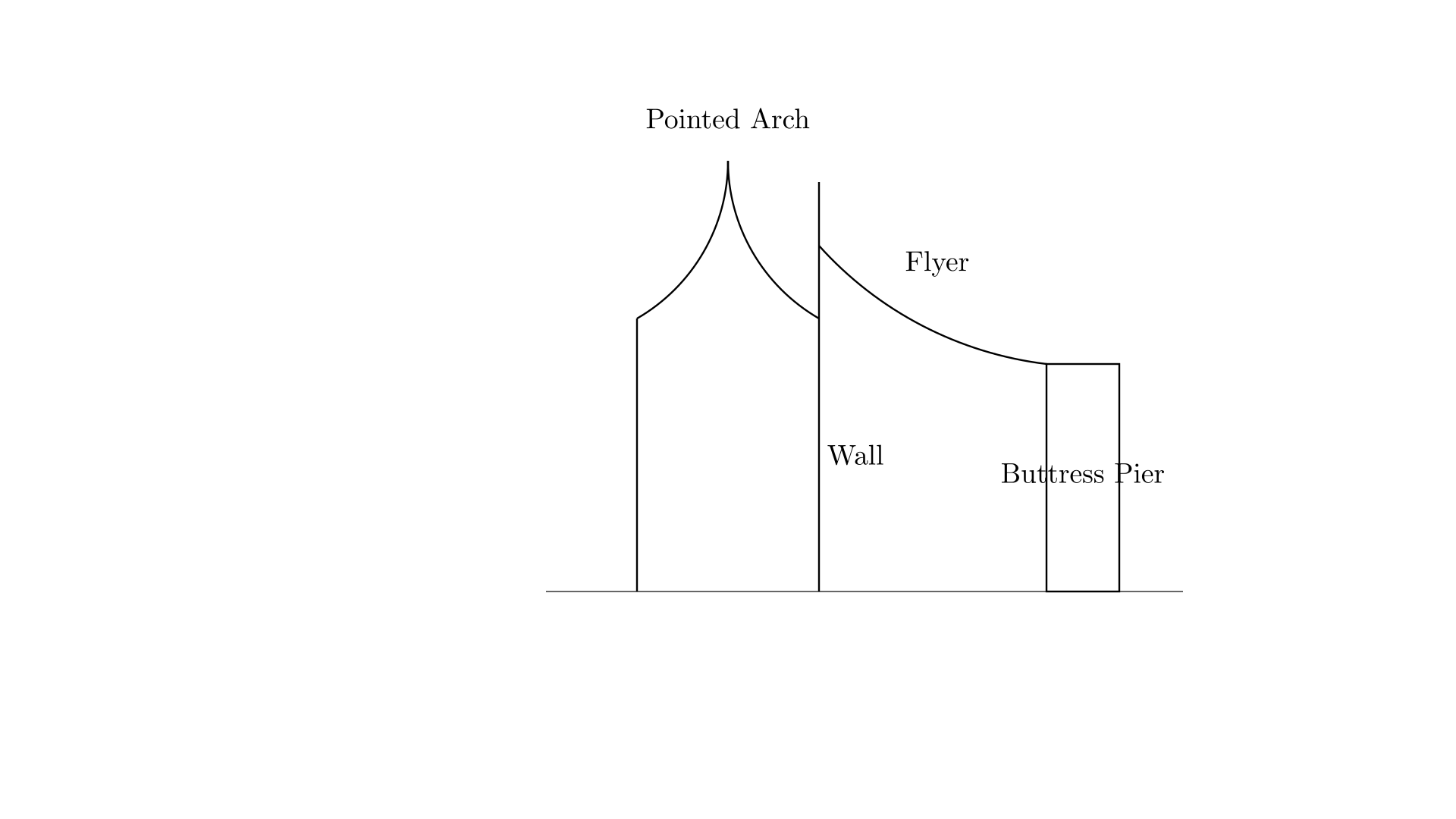
The genius of French Gothic lay in its three core innovations:
- The Pointed Arch: Unlike the rounded arch, which distributes weight outward, the pointed arch directs weight more vertically, allowing for much taller structures.
- The Ribbed Vault: This skeletal framework of stone ribs supported the ceiling, meaning the walls between the ribs no longer had to be load-bearing.
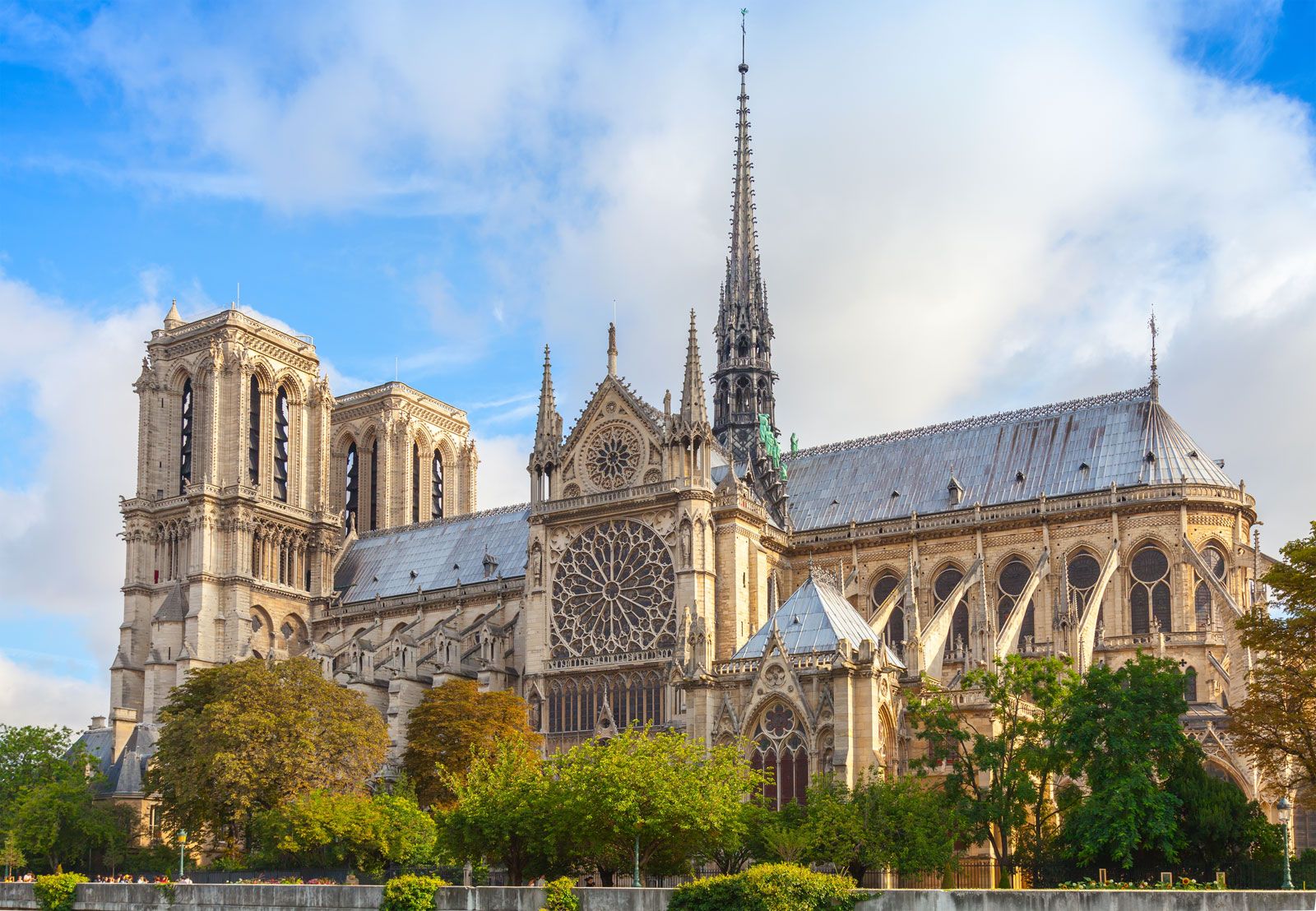
- The Flying Buttress: To counter the outward thrust of these high vaults, architects moved the support structures outside the building. These "flying" arms allowed the walls to be thinned out and replaced with vast expanses of stained glass.
Spiritual Impact and Famous Examples
The emotional impact of a Gothic cathedral like Notre-Dame de Paris or Chartres Cathedral is profound. The verticality draws the eye upward, while the "rose windows" bathe the interior in a kaleidoscope of colored light, creating a space that feels more celestial than terrestrial. These cathedrals were not just places of worship; they were the encyclopedias of the age, with their stone carvings and stained glass telling the stories of the Bible to a largely illiterate populace.
4. Renaissance and Classical French Architecture
By the late 15th century, the cultural winds from Italy began to blow across the Alps. The French Renaissance was characterized by a fascination with the rediscovered principles of Ancient Greece and Rome: symmetry, proportion, and the classical orders (Doric, Ionic, and Corinthian). However, French architects did not merely copy the Italians; they blended these new ideas with their own traditions of verticality and elaborate rooflines.
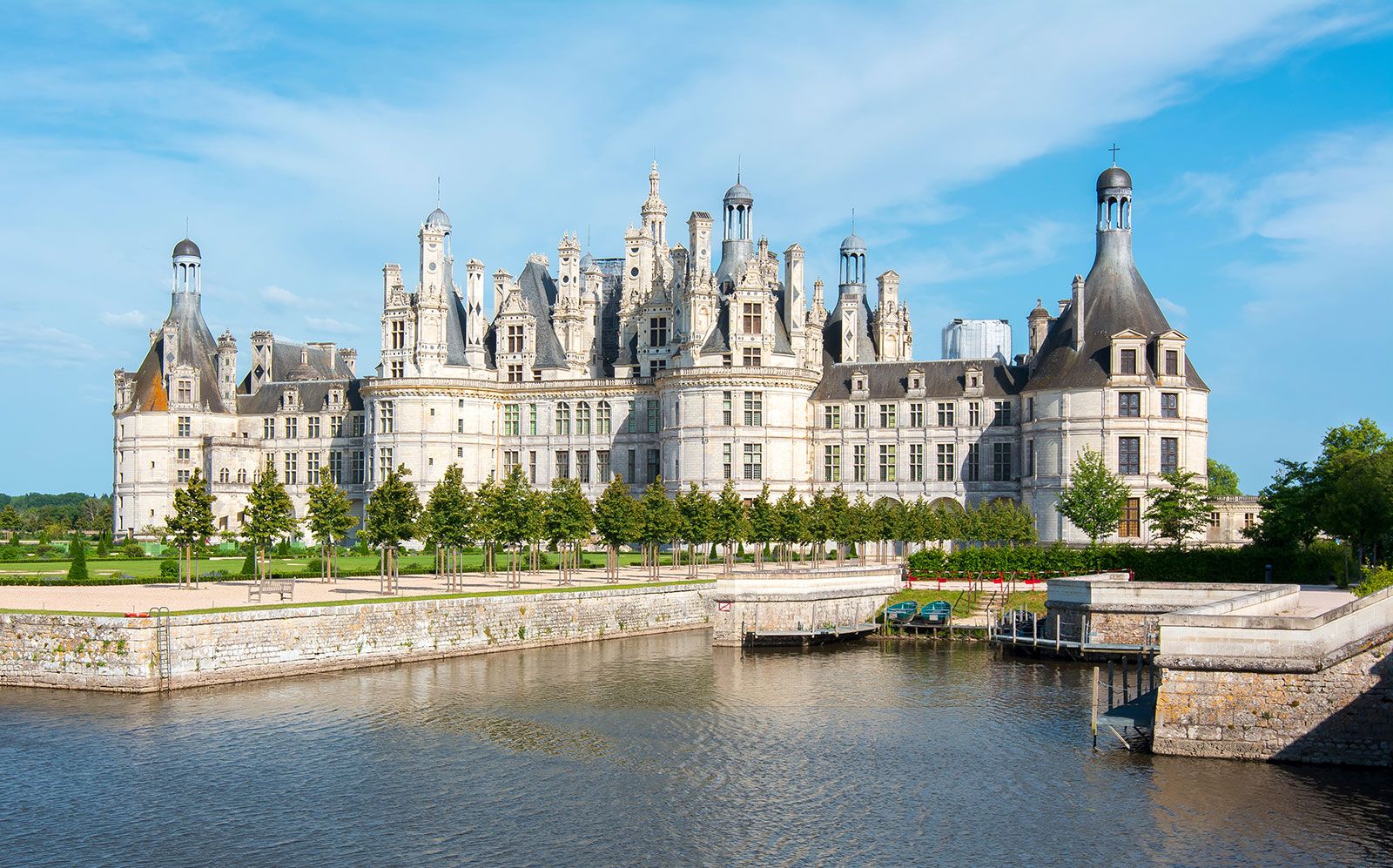
This era saw the rise of the Châteaux of the Loire Valley. The Château de Chambord, with its double-helix staircase (possibly designed by Leonardo da Vinci) and its forest of chimneys and turrets, represents the pinnacle of this period. Architecture shifted from being purely defensive to being a theater for the refined life of the nobility. The focus moved to the cour d'honneur (honor court) and the harmonious integration of the building with its surrounding landscape.
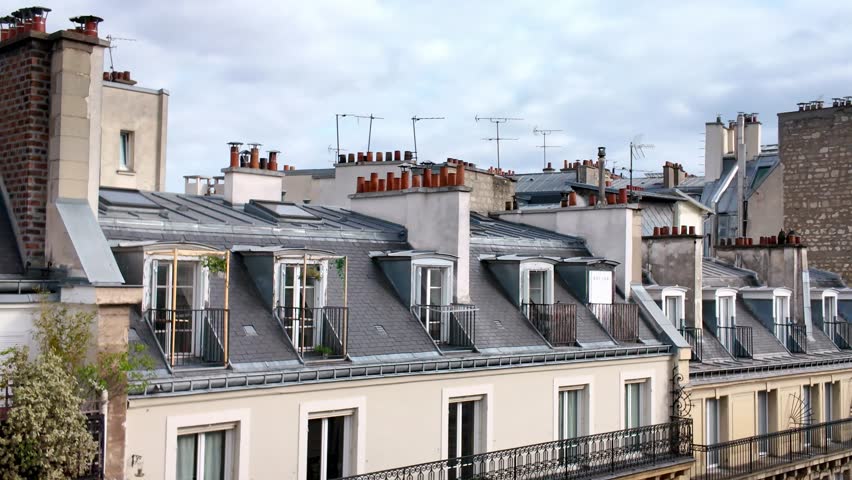
Refinement continued into the 17th century with French Classicism, championed by architects like François Mansart. This style emphasized clarity, order, and mathematical precision, often employing the "Mansard roof"—a four-sided gambrel-style hip roof characterized by two slopes on each of its sides with the lower slope, punctured by dormer windows, at a steeper angle than the upper.
5. Baroque and Royal Architecture: The Sun King’s Vision
Under the reign of Louis XIV, the "Sun King," architecture became the ultimate instrument of political absolutism. The French Baroque style was less about the curvy, undulating walls seen in Italy and more about overwhelming scale, luxury, and strict geometric order. The monarch’s goal was to demonstrate that the King of France was the center of the universe.
The Palace of Versailles
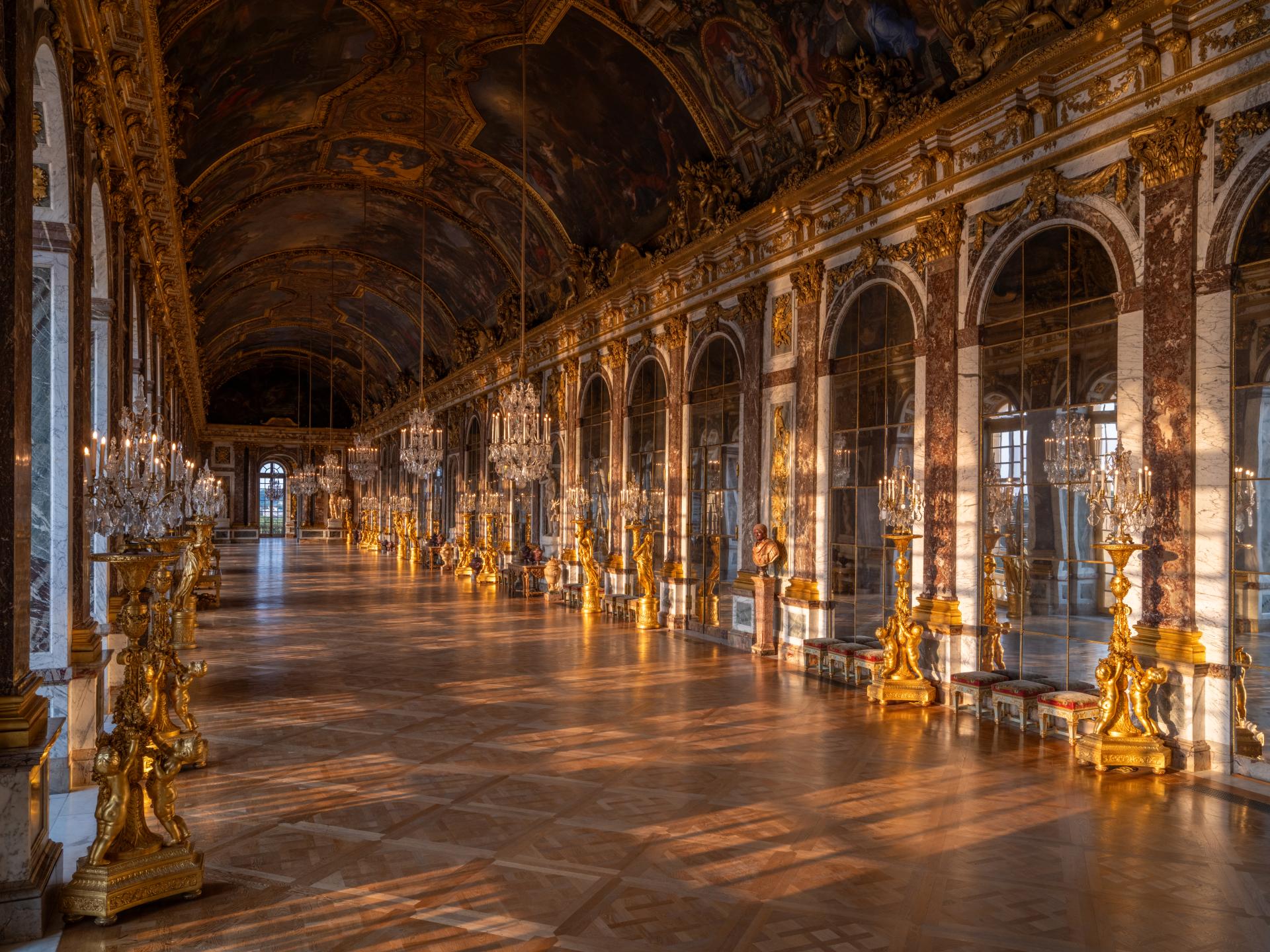
Versailles is the supreme example of this architectural philosophy. Transforming a humble hunting lodge into the largest palace in Europe, architects Louis Le Vau and Jules Hardouin-Mansart created a structure that extended its influence far beyond its walls. The Hall of Mirrors is a masterpiece of spatial drama, using seventeen mirror-clad arches to reflect the massive windows overlooking the gardens, effectively blurring the line between interior opulence and exterior nature.
Royal architecture also dictated the design of the French Formal Garden (jardin à la française), perfected by André Le Nôtre. These gardens used perspective and symmetry to impose human (and royal) order over the wildness of nature, reinforcing the narrative of the King’s divine authority over the land.
6. Urban Planning and the Transformation of Paris
The 19th century witnessed one of the most ambitious urban planning projects in history: the renovation of Paris under Baron Haussmann and Napoleon III. Before 1850, Paris was a medieval maze of narrow, dark, and unhealthy streets. Haussmann’s "creative destruction" carved wide, straight boulevards through the city, improving sanitation, traffic flow, and—notably—the ability of the military to suppress uprisings.
The Haussmann Aesthetic
Haussmannization established a uniform architectural identity for Paris that persists today. The "Haussmann building" is characterized by:
- Cream-colored Lutetian limestone facades.
- A strict hierarchy of floors, with the second floor (the étage noble) featuring the most elaborate balconies.
- Continuous wrought-iron balconies that create a visual rhythm along the street.
- The Mansard roof, which allowed for living space in the attic while maintaining a consistent cornice line.
This approach shifted the focus from the individual monument to the beauty of the entire streetscape. It transformed Paris into a model modern city, where public parks, grand squares, and uniform architecture created a sense of civic cohesion and aesthetic harmony.
7. Modern and Contemporary French Architecture
As the 20th century dawned, French architecture underwent another radical transformation. The Industrial Revolution introduced new materials—iron, steel, and reinforced concrete—that allowed for structures previously unimaginable. The Eiffel Tower, built for the 1889 World’s Fair, was initially loathed by the Parisian elite as a "metal asparagus," but it soon became the global symbol of French engineering prowess.
The Rise of Modernism
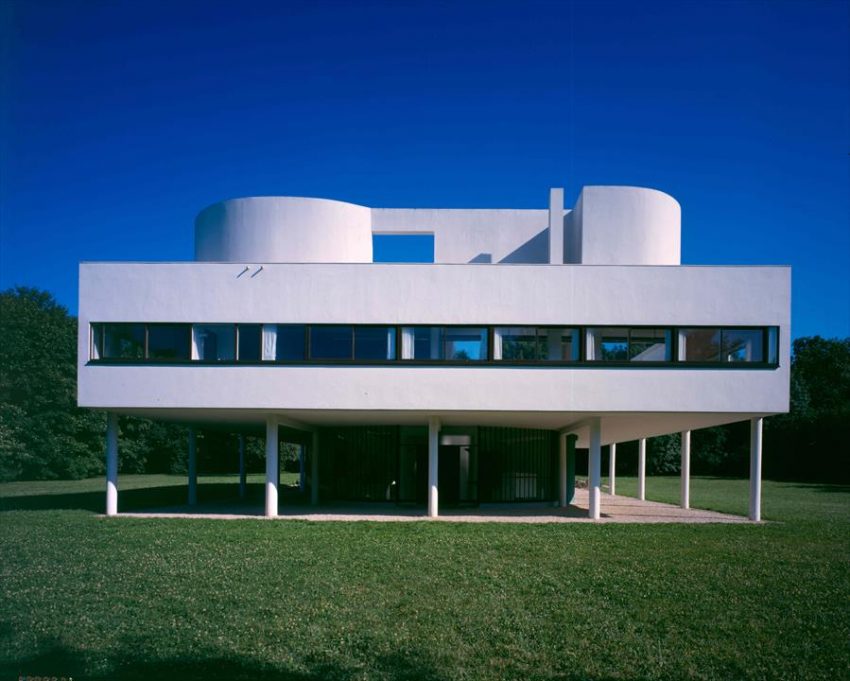
France was central to the Modernist movement, largely through the work of Le Corbusier. His "Five Points of Architecture"—including the use of pilotis (reinforced concrete stilts), the free plan, and the roof garden—revolutionized how we think about domestic space. His Villa Savoye is a manifesto of functionalism, where the house is described as a "machine for living."
The Grand Projets and Contemporary Innovation
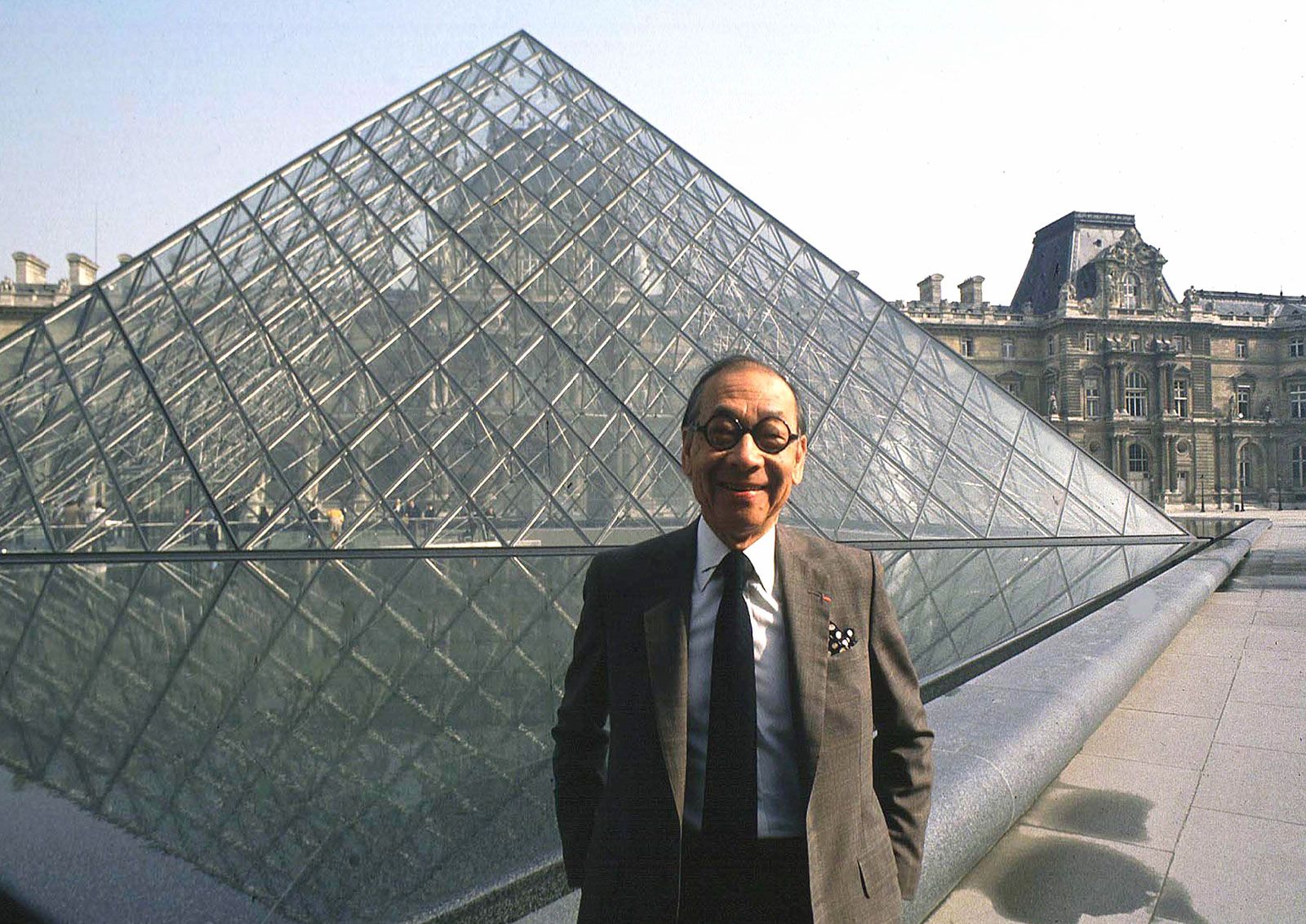
In the late 20th century, French presidents commissioned the "Grands Projets" to leave a lasting architectural legacy. This era produced the Louvre Pyramid by I.M. Pei, a bold glass-and-steel structure that provides a contemporary entrance to the historic palace, and the Centre Pompidou, which famously wears its internal systems (plumbing, electrical, and stairs) on its exterior. Today, French contemporary architecture focuses on sustainability and eco-consciousness, as seen in the vertical gardens of Jean Nouvel’s Musée du Quai Branly.
8. Cultural and Global Influence
The influence of French architecture extends far beyond its borders. The École des Beaux-Arts in Paris was the premier architectural school in the world during the 19th and early 20th centuries, training generations of architects from the United States, Europe, and Asia. The "Beaux-Arts style"—characterized by grand scale, neoclassical details, and ornamental richness—can be seen in landmarks like the New York Public Library and the Grand Central Terminal.
French urban planning also became a global export. The layout of Washington D.C., designed by Pierre Charles L’Enfant, was deeply inspired by the grand axial vistas of Versailles. Today, French architecture remains a core pillar of national identity and a primary driver of tourism. Millions of people travel to France every year not just to see individual buildings, but to experience the unique "atmosphere" created by centuries of thoughtful design and spatial planning.
9. Preservation and Future Challenges
Maintaining such a vast and aged architectural heritage presents significant challenges. The 2019 fire at Notre-Dame de Paris served as a global wake-up call regarding the vulnerability of historical monuments. Restoration is a delicate balance between using traditional craft techniques and modern safety standards.
Beyond fire, French architecture faces the threats of pollution, weathering, and climate change. Acid rain erodes limestone facades, while extreme heat puts stress on ancient stone structures. The modern challenge for France lies in "adaptive reuse"—converting historic buildings into functional modern spaces (like the Musée d'Orsay, a former railway station) without destroying their historical integrity. Preservation is not just about keeping the past alive; it is about ensuring that the "living record" of French civilization remains legible for future generations.
10. Conclusion
The story of French architecture is a story of continuous dialogue—between the old and the new, the stone and the glass, the royal and the civic. It began with the structural pragmatism of the Romans, evolved into the spiritual aspirations of the Gothic builders, and reached a peak of political expression in the Baroque. Through the Haussmannization of Paris and the radical functionalism of the Modernists, France has repeatedly demonstrated that architecture is a vital, living art form.
French architecture is characterized by a unique "engineering brilliance" that never sacrifices beauty for utility. It reminds us that our built environment is a mirror of our collective history and a vessel for our highest ideals. As France continues to navigate the challenges of the 21st century, its architectural heritage stands as an enduring testament to the power of human imagination to transform the world into a more beautiful, structured, and meaningful place. It remains, as it has always been, a living record of civilization.