Generated with Monsha
A Roadside Stand - Lesson Plan
Lesson Plan · XII · English
A Roadside Stand - Lesson Plan
Lesson Overview
This lesson explores Robert Frost's poignant poem, A Roadside Stand. It focuses on the stark contrast between the rural poor and the urban rich, the indifference of the city-dwellers, and the false promises made by those in power. Through a 40-minute session, students in Grade XII will delve into the social commentary and literary brilliance of Frost.
At a Glance
Time | Activity | Description |
|---|---|---|
0 - 5 mins | Hook & Introduction | Brief discussion on the difference between city life and rural life. Introduce Robert Frost as a poet of nature and human struggle. |
5 - 15 mins | Reading & Decoding | Read the poem aloud. Clarify difficult vocabulary (e.g., marred, patronize, requisite) and note initial impressions. |
15 - 30 mins | Deep Dive Analysis | Analyze stanzas focusing on the "childish longing" of the rural people and the "polished traffic" of the city. |
30 - 40 mins | Reflective Discussion | Discuss the oxymoron "greedy good-doers" and the poem's relevance in today's commercialized world. |
Objectives & Learning Outcomes
By the end of this lesson, students will be able to:
- Analyze Themes: Critically examine the theme of social injustice and the widening gap between the rural and urban economies.
- Interpret Imagery: Identify and explain Frost’s use of imagery to depict the poverty and hope of the roadside stand owners.
- Evaluate Literary Devices: Identify figures of speech such as Transferred Epithet ("polished traffic", "selfish cars") and Oxymoron ("greedy good-doers", "beneficent beasts of prey").
- Empathize & Reflect: Develop empathy for the marginalized rural population and understand the psychological toll of unfulfilled promises.
Material & Resources Needed
- Primary Text: Copies of the poem A Roadside Stand by Robert Frost.
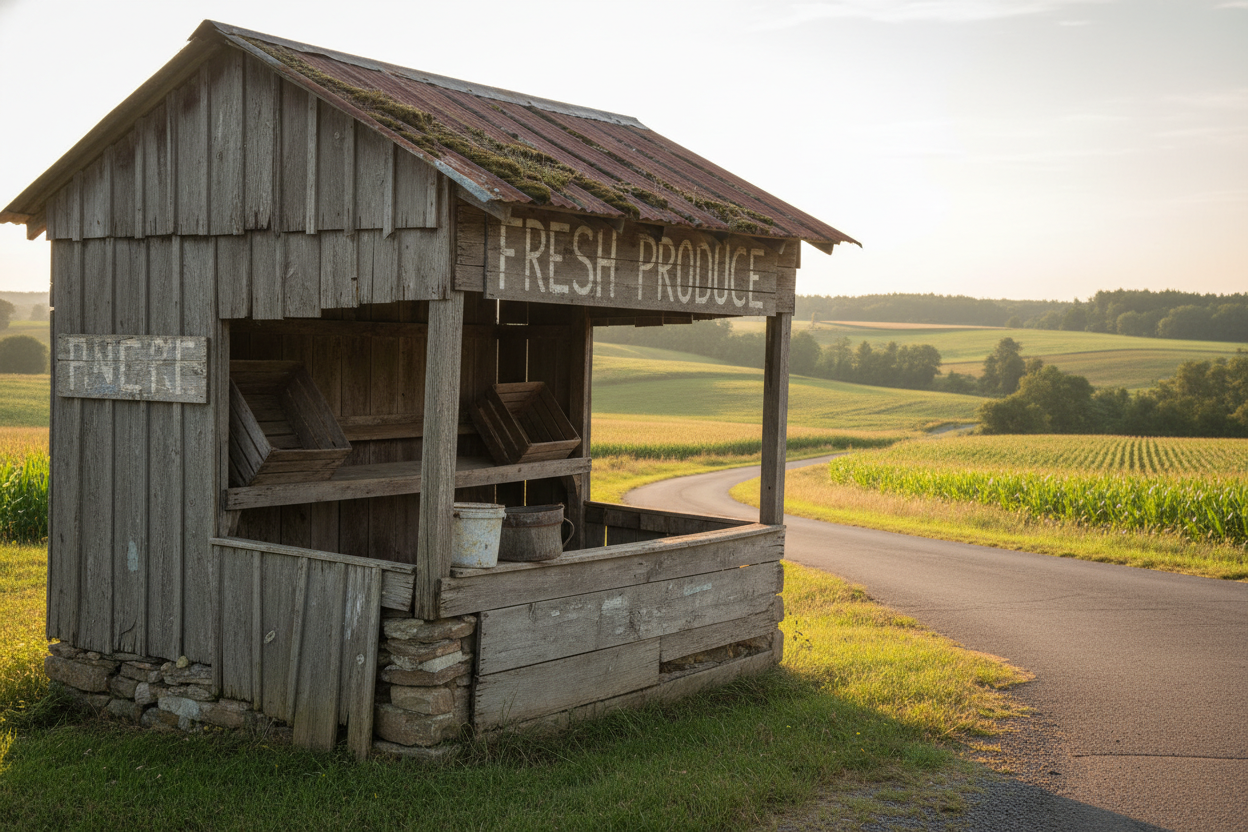
- Audio/Visual: A projector to display the image of a rustic roadside stand to set the atmospheric context.
- Writing Materials: Student notebooks and pens for thematic mapping.
- Reference Guide: A glossary of poetic devices (Transferred Epithet, Personification, Oxymoron).
Key Concepts
- The Rural-Urban Divide: The stand represents the rural people's desire to participate in the city's "flow of money" which supports urban growth but remains out of reach for them.
- The "Childish Longing" in Vain: Frost describes the rural people’s hope for a better life as a pathetic, childish longing because the city cars never stop to buy anything; they only stop to ask for directions or complain about the scenery.
- Indifference of the Elite: The "polished traffic" represents the wealthy urbanites who are so consumed by their own progress that they are oblivious to the poverty surrounding them.
- Political Satire: The poet critiquises politicians and developers as "greedy good-doers" who move rural people to "pitiful kin" clusters only to exploit them and rob them of their ability to think for themselves.
- Pathos and Desire for Relief: The poem ends with a moment of intense pathos where the poet expresses his own desire to put these people out of their pain, only to realize the complexity of their suffering.