Generated with Monsha
Great Chicago Fire and More: Grade 3 CCSS Reading Comprehension Test
Reading Comprehension Questions · Grade 3 · English
Great Chicago Fire and More: Grade 3 CCSS RL.3.1 RI.3.2 RL.3.3 RL.3.4 Reading Comprehension Test
Passage 1: Fiction
The Secret of the Old Oak Tree
1 Lily loved the old oak tree in her backyard. It was her favorite place to read. One sunny Saturday, she noticed something shiny tucked deep inside a hollow near the bottom of the trunk. She leaned in closer to see what it was.
2 It was a small, dusty wooden box with a tiny silver lock. Lily’s heart began to race. Who could have hidden this here? She tried to pull the box out, but it was stuck tight. She reached for a stick and carefully wiggled it until the box slid onto the soft grass.
3 Lily spent the whole afternoon trying to find a way to open the box. She tried using her hair clip, but it didn't work. She looked all around the base of the tree. Just when she was about to give up, she saw a glint of metal near a thick root.
4 There, buried under a pile of dry leaves, was a tiny silver key. Lily wiped it clean on her jeans. She held her breath as she put the key into the lock. Click! The lid popped open.
5 Inside were dozens of old postcards from places far away like Paris, Tokyo, and London. On the back of one, a message read: "To the next explorer of the oak tree, may these stories lead you to your own adventure." Lily smiled, feeling like she had just made a new friend from the past.
Passage 2: Nonfiction
The Night the Sky Turned Red
1 On October 8, 1871, a small fire started in a barn owned by the O’Leary family. No one knows exactly how it began, but it grew quickly. Chicago had not seen rain in weeks, so the wooden buildings and sidewalks were very dry.
2 A strong wind began to blow from the southwest. This wind pushed the flames toward the center of the city. The fire leaped from house to house. In 1871, almost everything in Chicago was made of wood. Even the streets were paved with wood blocks!
3 The fire burned for two days. By the time it stopped, over 17,000 buildings were destroyed. More than 100,000 people lost their homes. However, the people of Chicago did not give up. They began to rebuild right away, using brick and stone instead of wood to make the city safer.
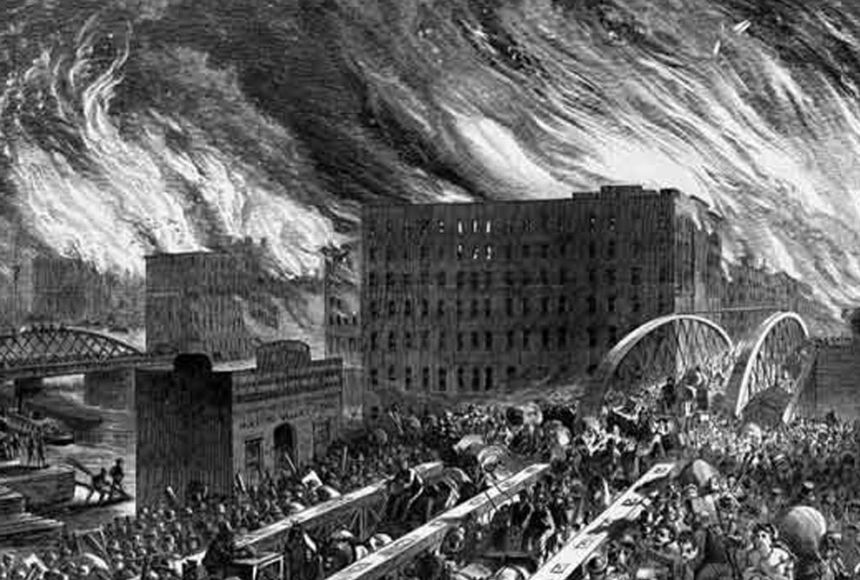
Caption: A drawing showing the city of Chicago burning as people try to escape the flames.
Passage 3: Poem
The Morning Dew
- The sun begins to peek his head,
- Above the hills and sleepy shed.
- The grass is wet with silver beads,
- That sparkle on the tiny seeds.
- They look like diamonds in the light,
- Left behind by stars last night.
- A spider's web is draped in lace,
- Across a quiet, shady place.
- The world is fresh and very still,
- Upon the green and rolling hill.
- Until the sun grows big and bright,
- To drink the dew and end the night.
Reading Comprehension Questions
Questions for Passage 1
- Based on paragraph 2, how does Lily feel when she first finds the wooden box? A. She feels frightened and wants to run away. B. She feels angry that someone left trash in her tree. C. She feels excited and curious about who hid it. D. She feels bored because she wanted to keep reading.
- In paragraph 3, what does the word 'glint' mean? A. A heavy weight B. A loud noise C. A dark shadow D. A small flash of light
- According to the text, what action did Lily take to find the key? A. She used a shovel to dig a deep hole. B. She looked around the base of the tree and under leaves. C. She climbed to the top of the oak tree. D. She asked her parents for help.
Question 4: Short Constructed Response
Describe Lily’s character traits using evidence from the text. How did her actions help her solve her problem?
_
_
_
_
Questions for Passage 2
- What is the main idea of the article 'The Night the Sky Turned Red'? A. Brick and stone are better building materials than wood blocks. B. The O'Leary family was very famous in Chicago. C. Chicago is a city that never sees any rain in the month of October. D. A terrible fire destroyed Chicago because it was dry and windy, but the city rebuilt.
- According to paragraph 2, why did the fire spread so quickly toward the center of the city? A. Strong winds pushed the flames across the wooden buildings. B. The streets were made of water which didn't help. C. The people of Chicago moved the fire on purpose. D. The firefighters were on vacation.
Question 7: Evidence-Based Item
Part A: After the fire, what change did the people of Chicago make to ensure the city was safer?
- A. They stopped building houses in the center of the city.
- B. They moved the O'Leary barn to a different state.
- C. They used brick and stone to rebuild instead of wood.
- D. They built more wooden sidewalks so they could run faster.
Part B: Which sentence from the text best supports the answer to Part A?
- A. "The fire leaped from house to house."
- B. "They began to rebuild right away, using brick and stone instead of wood to make the city safer."
- C. "Chicago had not seen rain in weeks."
- D. "By the time it stopped, over 17,000 buildings were destroyed."
- What is the purpose of the heading 'The Night the Sky Turned Red'? A. To tell the reader that Chicago has beautiful sunsets. B. To explain how to put out a barn fire. C. To list the names of the people who lost their homes. D. To catch the reader's attention and introduce the topic of the fire.
Questions for Passage 3
- In line 1, what does the poet mean by saying the sun 'peeks his head'? A. The sun is literally a person with a face and hair. B. The sun is just beginning to rise over the horizon. C. The sun is hiding behind a cloud and won't come out. D. The sun is looking for something it lost in the grass.
Question 10: Evidence-Based Item
Part A: What is the mood of the poem The Morning Dew?
- A. Scary and dark
- B. Peaceful and quiet
- C. Exciting and loud
- D. Sad and lonely
Part B: Which line from the poem best supports the mood in Part A?
- A. "The world is fresh and very still"
- B. "Until the sun grows big and bright"
- C. "Left behind by stars last night"
- D. "To drink the dew and end the night"
- What does the poet mean in line 12 by saying the sun will 'drink the dew'? A. The heat of the sun causes the dew to evaporate and disappear. B. The sun pours water onto the grass. C. The stars come back to take the dew away. D. The sun is thirsty after a long night.
Question 12: Short Constructed Response
Write a summary of the poem The Morning Dew. Include what happens at the beginning, middle, and end.
_
_
_
_
Answer Sheet
Name: ________________ Date: __________
Passage 1 Questions
- [ ]
- [ ]
- [ ]
- (Write response below) _ _
Passage 2 Questions
5. [ ]
6. [ ]
7. Part A: [ ] Part B: [ ]
8. [ ]
Passage 3 Questions
9. [ ]
10. Part A: [ ] Part B: [ ]
11. [ ]
12. (Write response below)
_
_