Generated with Monsha
Trauma-Informed SEL Scenarios for Year 8
Anything · Year 8 · English
Trauma-Informed SEL Scenarios for Year 8
Understanding Trauma-Informed SEL for Year 8
For a student in Year 8 (ages 12–13), navigating the social and academic landscape can be challenging, particularly when a history of trauma impacts their sense of safety and emotional regulation. These scenarios are designed to help students identify their physiological responses to stress and practice self-advocacy and regulation in a supportive environment.
Scenario 1: Managing Sensory Overload
The Situation:
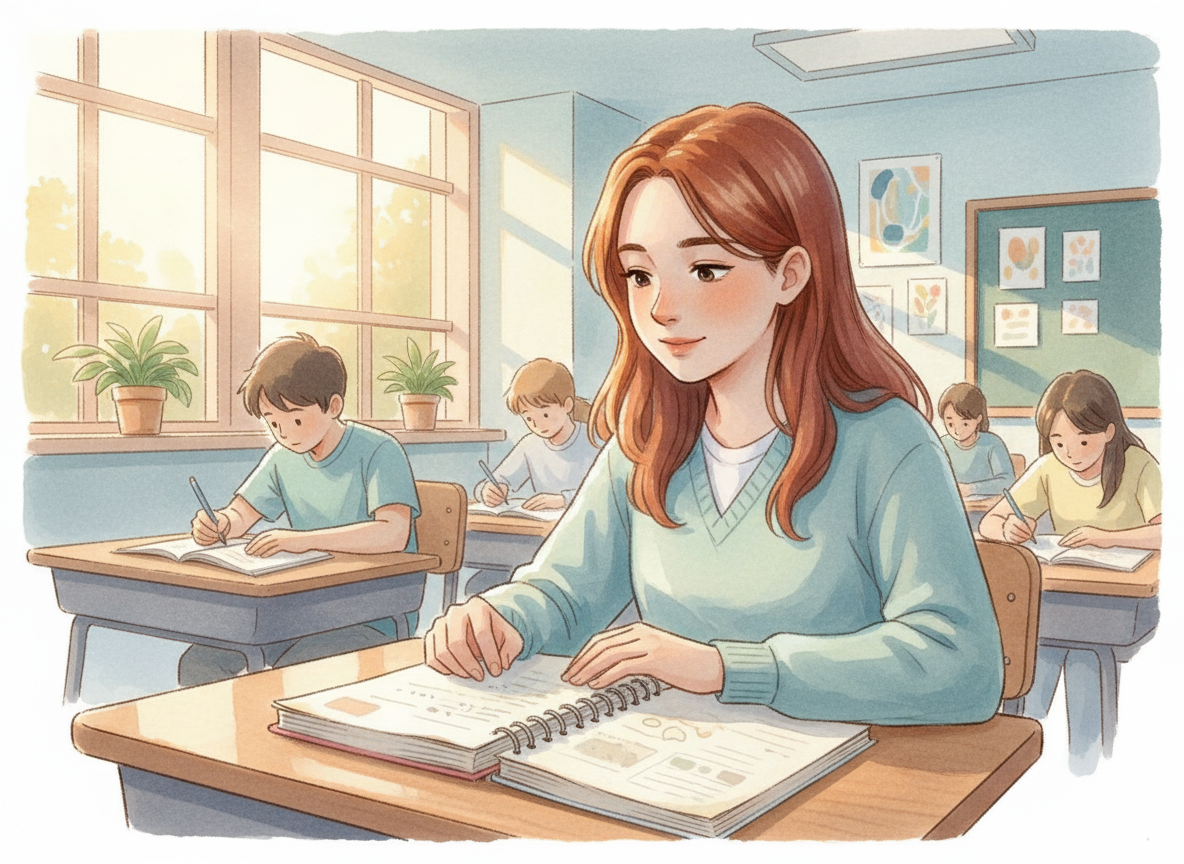
During a busy Science lab, the room becomes very loud and chaotic. Maya feels her heart racing and her breathing becoming shallow. She starts to feel "flooded" and has the urge to hide or run out of the classroom.
Trauma-Informed Response:
- Grounding Technique: Maya uses the "5-4-3-2-1" method to bring herself back to the present moment: 5 things she can see, 4 things she can touch, 3 things she can hear, 2 things she can smell, and 1 thing she can taste.
- The "Peace Pass": Maya has a pre-arranged agreement with her teacher. She quietly places a specific card on her desk and moves to the designated "Calm Zone" in the library for five minutes without needing to explain herself in front of her peers.
Discussion Point: Why is it helpful to have a plan before you feel overwhelmed? How does focusing on your senses help calm your nervous system?
Scenario 2: Establishing Personal Boundaries
The Situation:
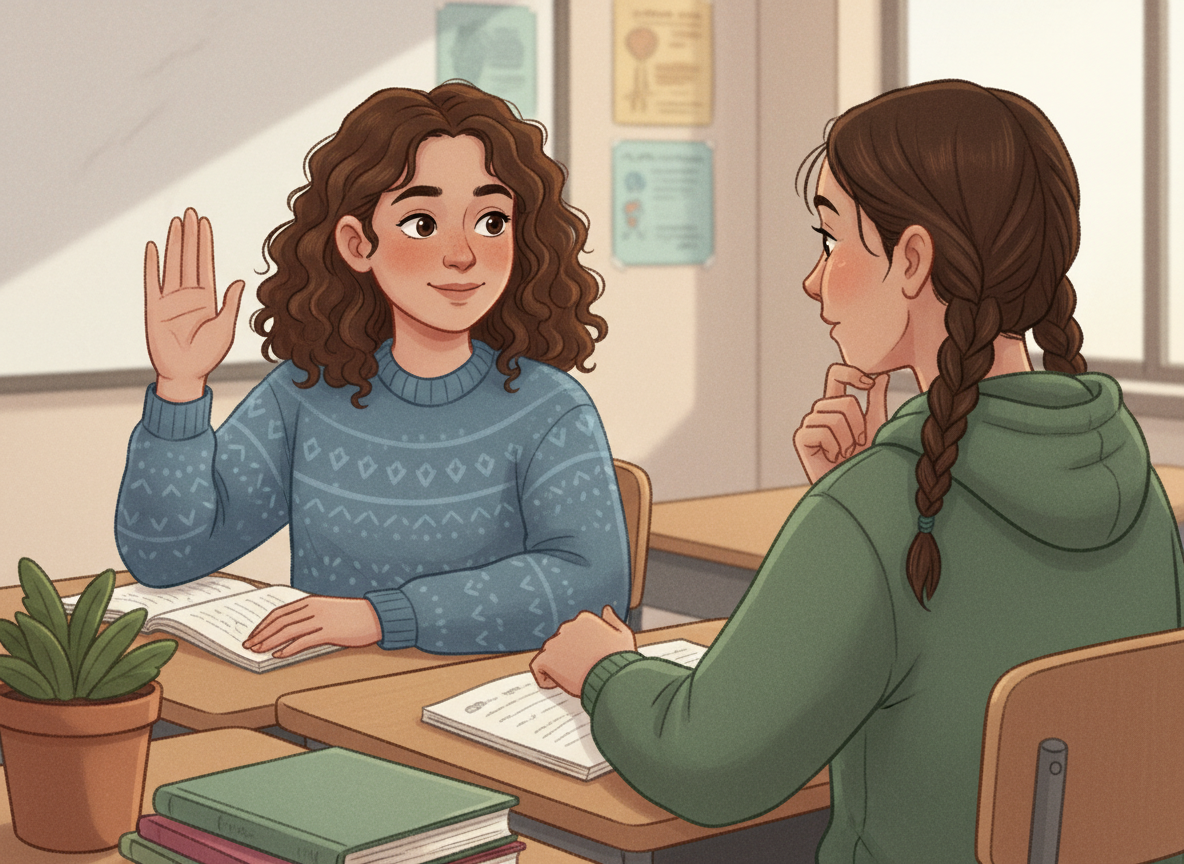
Maya is working on a group project. A classmate keeps leaning over her shoulder and looking through her personal sketchbook without asking. Maya feels a "fawn" response—she wants to stay quiet to avoid conflict, even though she feels uncomfortable and exposed.
Trauma-Informed Response:
- Scripted Assertiveness: Maya practices a neutral, calm phrase she has rehearsed: "I need a little more physical space to focus right now, please." Or, "I’d prefer if you asked before looking through my sketchbook."
- Recognizing the Signal: Maya acknowledges that the uncomfortable feeling in her stomach is a signal that a boundary is being crossed, and that it is okay to protect her personal space.
Discussion Point: Is it "mean" to ask for personal space? How can we communicate our needs clearly while staying calm?
Scenario 3: Navigating Academic Stress & Feedback
The Situation:
Maya receives her English essay back with several red-ink corrections and a lower grade than she expected. To her, this feedback feels like a personal attack or a sign that she is "failing" at safety. She feels an immediate surge of anger and wants to tear up the paper.
Trauma-Informed Response:
- Co-Regulation: Maya’s teacher notices her reaction and approaches quietly. Instead of correcting her behavior, the teacher says, "I can see this feels overwhelming. Let's take a minute. Would you like to look at this together later, or would you prefer to write down your questions for me?"
- The Stress Bucket: Maya visualizes her "Stress Bucket." She realizes that a bad night's sleep and a loud bus ride already filled her bucket, and the essay feedback was simply the drop that made it overflow. She uses a fidget tool to help regulate her energy before looking at the comments again.
Discussion Point: How can we separate our self-worth from a grade on a piece of paper? What are some "taps" we can use to drain our stress bucket?
Scenario 4: Digital Citizenship and Social Boundaries
The Situation:
Maya is added to a new group chat with several girls from her year. The conversation starts to turn toward gossiping about another student. Maya feels anxious; she doesn't want to participate, but she's afraid that leaving the group will make her a target.
Trauma-Informed Response:
- Digital Agency: Maya reminds herself that she has the right to control her digital environment. She chooses to "Mute" the notifications so the constant pings don't trigger her anxiety.
- The "Slow Exit": She decides to leave the group chat later in the evening when activity is low, or she simply stops engaging with the negative content, choosing to focus on one-on-one friendships instead.
Discussion Point: Why does trauma make us feel like we must stay in situations that feel unsafe? How can we practice being a good friend to ourselves online?
Scenario 5: Managing Transitions and Unpredictability
The Situation:
The school schedule is suddenly changed for a surprise assembly. Maya finds the lack of predictability very stressful. The crowded, noisy hallways during the transition between classes feel threatening and chaotic.
Trauma-Informed Response:
- Predicting the Shift: Maya’s mentor gives her a "heads up" five minutes before the bell, allowing her to leave class a minute early to avoid the height of the hallway rush.
- Visual Schedule: Maya keeps a small, laminated version of her daily routine in her planner. When things change, she uses a dry-erase marker to update it, which helps her feel a sense of control over her day.
Discussion Point: Why does knowing "what comes next" help us feel safe? What are some ways you can create your own sense of order when things around you feel chaotic?
Your Regulation Toolkit
When you feel your "Window of Tolerance" closing—meaning you are becoming either too anxious (hyper-aroused) or too shut down (hypo-aroused)—try these strategies:
If you feel Anxious/Angry (Hyper) | If you feel Numb/Withdrawn (Hypo) |
|---|---|
Deep, "square" breathing (In 4, Hold 4, Out 4, Hold 4) | Gently tapping your cold water bottle against your wrists |
Using a heavy lap pad or a weighted vest | Stretching your arms wide and taking a deep breath |
Pushing your hands against a wall to release energy | Listening to an upbeat song with headphones |
Focusing on a single, rhythmic sound | Looking for five specific colors in the room |