Generated with Monsha
Board Games: Mechanics, Metrics, and the Quest for the 'Best'
Lesson Plan · Grade 12 · English
Board Games: Mechanics, Metrics, and the Quest for the 'Best'
1. Objectives & Learning Outcomes
By the end of this lesson, Grade 12 students will be able to:
- Analyze the evolution of board games from ancient social-status markers to modern, complex cultural artifacts.
- Identify and categorize key board game mechanics such as worker placement, deck building, and engine building.
- Evaluate the subjectivity of "the best" game by comparing quantitative metrics (e.g., BoardGameGeek ratings) against qualitative criteria (e.g., user experience, theme, and innovation).
- Synthesize the relationship between game complexity ("weight") and player enjoyment as shown in industry-standard data.
2. Standards Addressed
- CCSS.ELA-LITERACY.RI.11-12.1: Cite strong and thorough textual evidence to support analysis of what the text says explicitly as well as inferences drawn from the text.
- CCSS.ELA-LITERACY.RI.11-12.7: Integrate and evaluate multiple sources of information presented in different media or formats (e.g., visually, quantitatively) as well as in words in order to address a question or solve a problem.
- C3 Framework for Social Studies State Standards (D2.His.1.9-12): Evaluate how historical events and developments were shaped by unique circumstances of time and place as well as broader historical contexts (applied to the evolution of leisure and game design).
3. Key Concepts
The Evolution of Play
Board games are not merely toys; they are reflections of the societies that created them. From Senet in ancient Egypt (representing the soul's journey) to Chess in India (a simulation of military strategy), games have historically served as educational and social tools. The late 20th century saw a shift toward "Eurogames"—mechanics-driven games like Catan that focus on economic competition rather than direct player elimination.
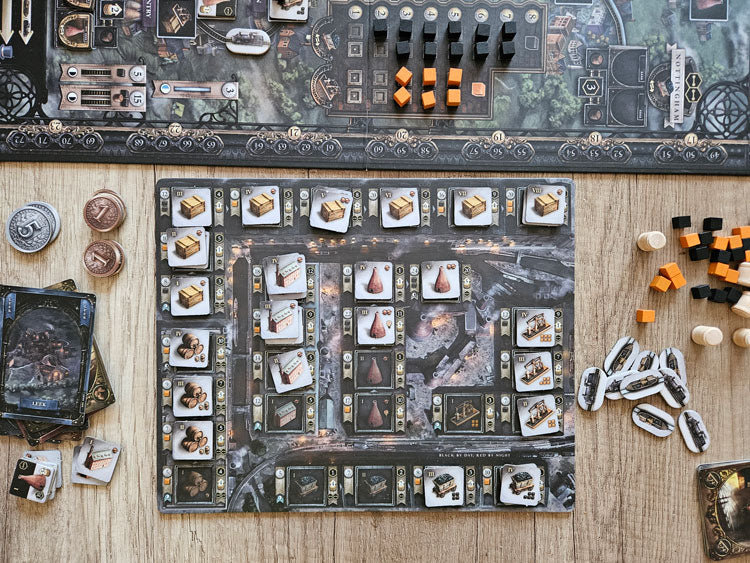
Modern Game Mechanics
To determine what makes a game "best," one must understand the systems that drive them:
- Worker Placement: Players compete for limited actions on a board (e.g., Agricola).
- Deck Building: Starting with basic resources and "purchasing" more powerful actions over time (e.g., Dominion).
- Social Deduction: Information asymmetry where players must figure out hidden roles (e.g., The Resistance).
- Engine Building: Creating efficient systems where early actions amplify later turns (e.g., Wingspan).
Evaluating "The Best"
What defines the "best" board game? The industry relies on two primary methods of evaluation:
- Quantitative Metrics: BoardGameGeek (BGG) uses a Bayesian average to rank games based on user ratings and complexity ratings (1–5 scale).
- Qualitative Awards: The Spiel des Jahres (Game of the Year) focuses on accessibility, rule clarity, and innovation.
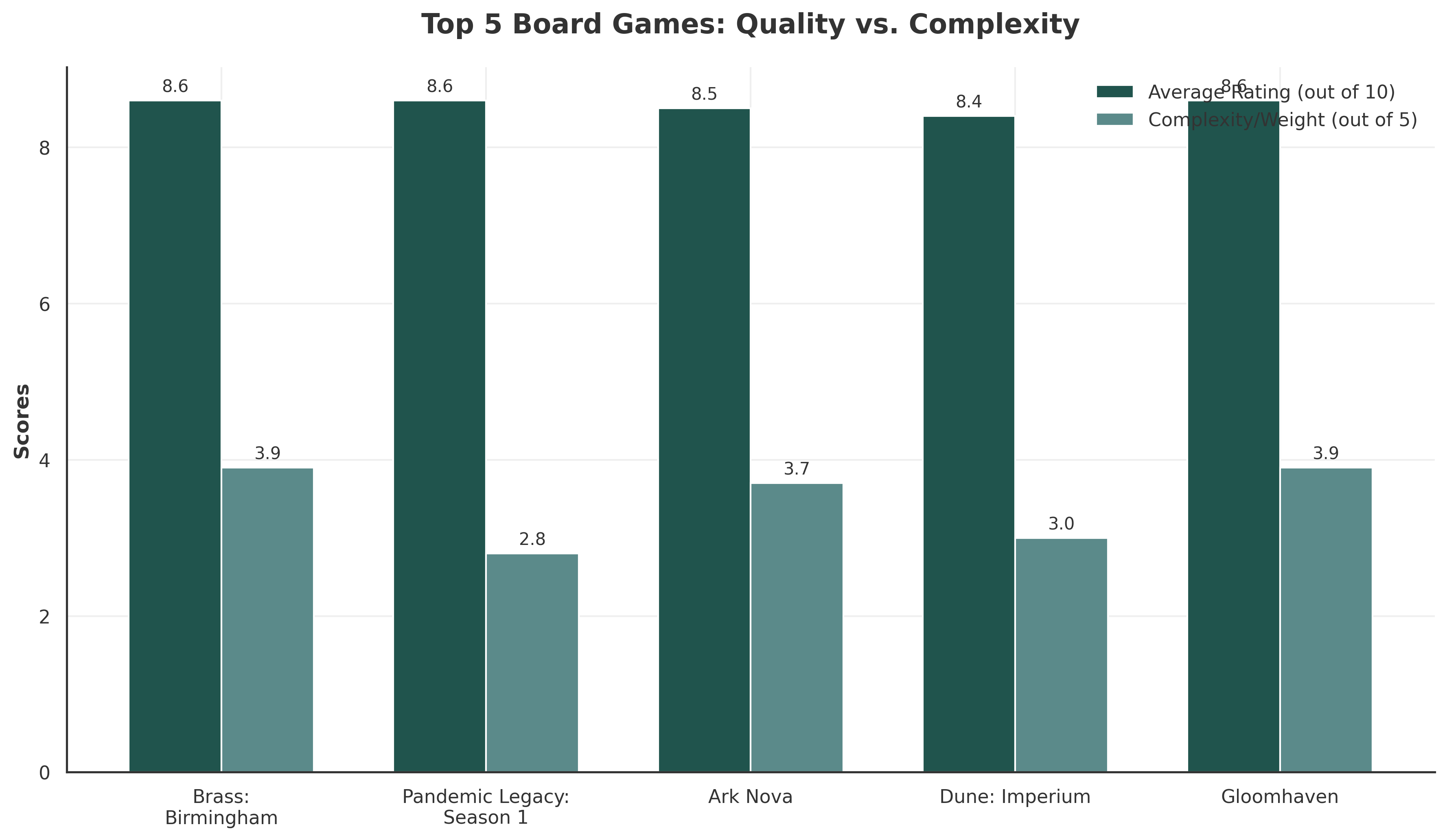
Comparison Data Summary:
- Brass: Birmingham: Rating , Weight
- Pandemic Legacy (Season 1): Rating , Weight
- Ark Nova: Rating , Weight
4. Differentiation Strategy
- For Advanced Learners (GT): Have students analyze the "Bayesian Average" formula to understand how BGG prevents niche games with few reviews from skewing the rankings. Challenge them to design a small "micro-game" that uses at least two conflicting mechanics.
- For English Language Learners (ELL): Provide a visual glossary of game mechanics with icons. Focus on games with low "linguistic dependence" (games that rely on symbols rather than text), such as Azul or Splendor.
- For Students with IEP/504 Needs: Provide a scaffolded graphic organizer for the "Best Game" debate, including sentence stems like "One reason a game might be considered the best is..." or "While the rating is high, the complexity might be a barrier because...". Allow for verbal presentation of their preferred game choice.
- For Visual/Kinesthetic Learners: Use the provided images and charts to facilitate a gallery walk where students rank games based solely on visual components before revealing the professional ratings.