Generated with Monsha
Exploring Magnets Worksheet
Worksheet · Class 6 · English
Exploring Magnets Worksheet
Exploring Magnets
Grade Level: Class 6 | Subject: Science
Section A: Multiple Choice Questions
Circle the correct option for each question.
1. According to legend, who was the first person to discover natural magnets while herding sheep?
A) Isaac Newton
B) Magnes
C) Albert Einstein
D) Galileo Galilei
Answer: ____________________
2. Which of the following materials is attracted to a magnet?
A) A plastic ruler
B) A wooden pencil
C) An iron nail
D) A piece of paper
Answer: ____________________
3. Look at the image below. Which part of the magnet has the strongest magnetic pull?
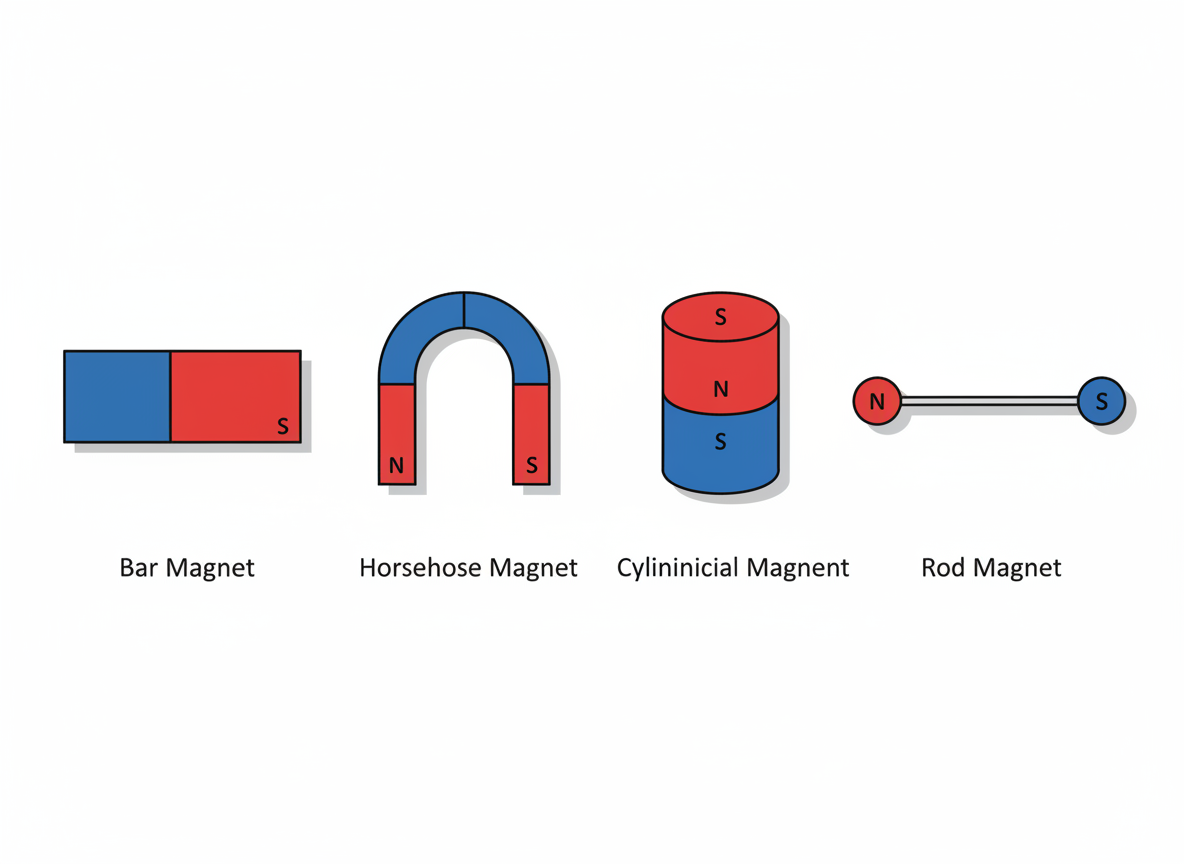
A) The center of the magnet
B) The entire surface equally
C) The poles (ends) of the magnet
D) Only the North pole
Answer: ____________________
4. A magnetic compass is used for finding directions because its needle always points towards which direction?
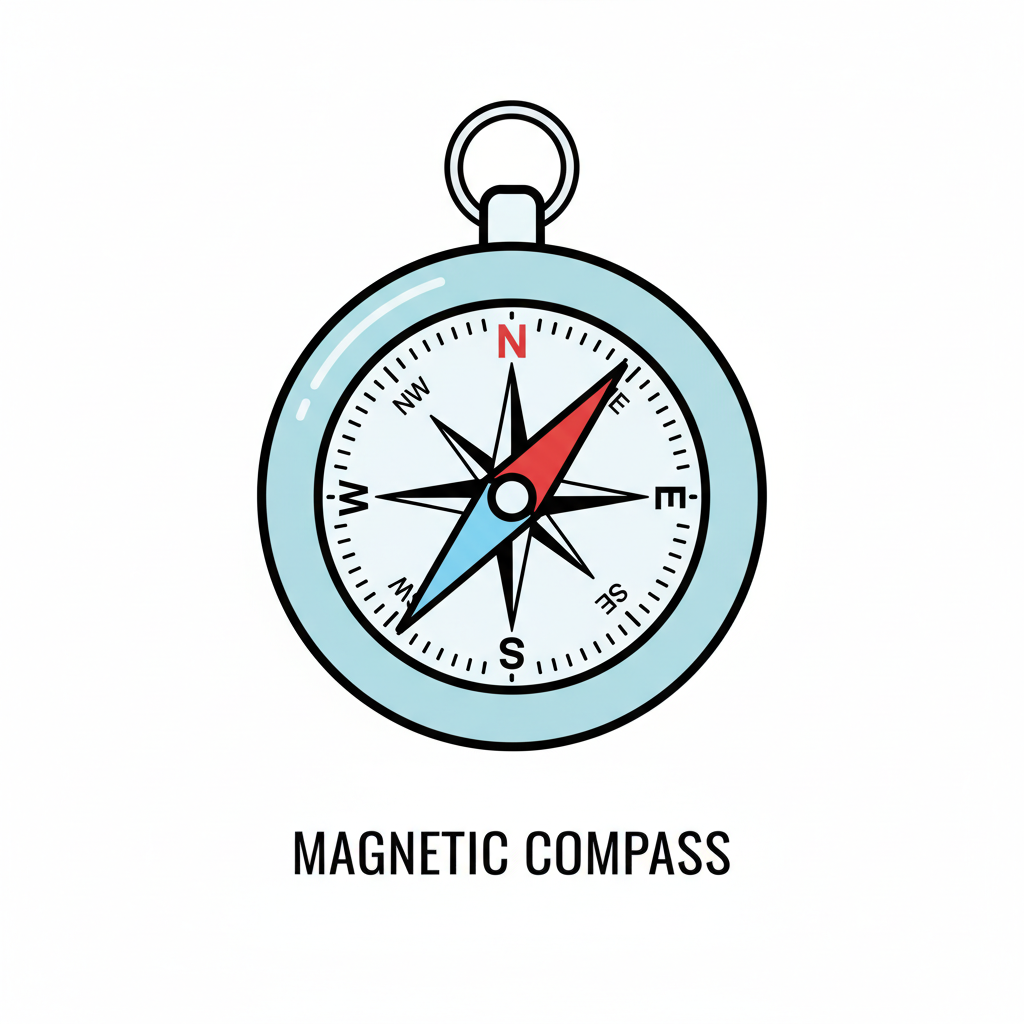
A) East-West
B) North-South
C) North-East
D) South-West
Answer: ____________________
Section B: True or False
Write 'True' if the statement is correct and 'False' if it is incorrect.
5. Magnetite is a natural magnet also known as lodestone.
Answer: ____________________
6. If you break a bar magnet into two pieces, one piece will have only a North pole and the other will have only a South pole.
Answer: ____________________
7. Like poles (e.g., North and North) attract each other.
Answer: ____________________
8. Magnets should be kept away from electronic devices like mobile phones and televisions to prevent damage.
Answer: ____________________
Section C: Fill-in-the-Gaps and Labeling
Complete the following tasks by filling in the blanks or labeling the diagram.
9. Materials that are not attracted towards a magnet are called ________________________ materials.
10. A freely suspended bar magnet always comes to rest in the ________________________ direction.
11. The property of magnets where opposite poles pull toward each other is called ________________________.
12. Label the poles of the magnets in the diagram below. Write 'N' for North and 'S' for South in the corresponding boxes labeled 1, 2, 3, and 4.
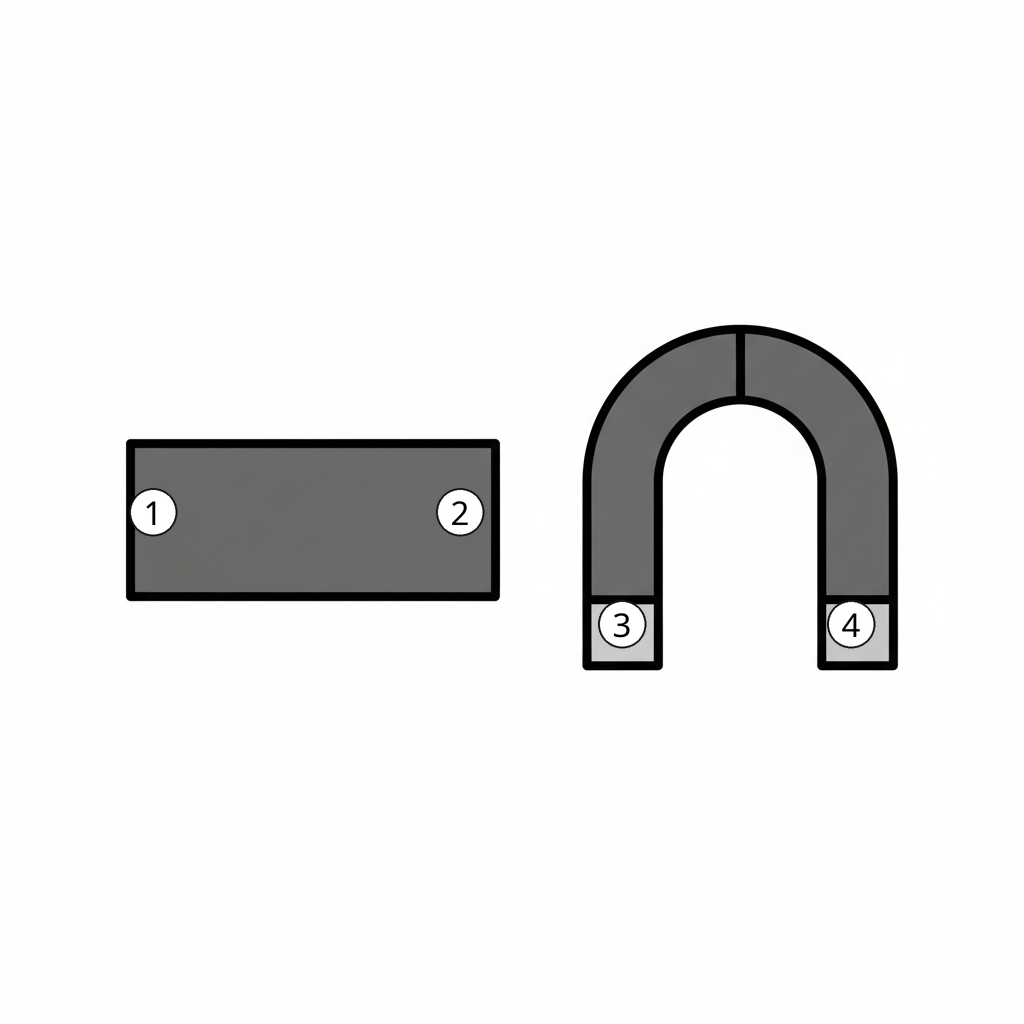
- Box 1: ________________
- Box 2: ________________
- Box 3: ________________
- Box 4: ________________
Section D: Matching Questions
Match the items in Column A with their correct description in Column B by writing the letter in the space provided.
Activity | Column A | Column B | Answer |
|---|---|---|---|
13. | Bar Magnet | (a) A natural magnet | 13 - [ ] |
14. | Lodestone | (b) Used by sailors for navigation | 14 - [ ] |
15. | Rubber | (c) Artificial magnet with a rectangular shape | 15 - [ ] |
16. | Compass | (d) A non-magnetic material | 16 - [ ] |
Section E: Critical Thinking Questions
Answer the following questions in 2-3 sentences.
17. Imagine you dropped a box of iron pins into a heap of dry sand. Describe a quick way to separate all the pins from the sand.
18. You are given a bar magnet whose poles are not marked. How can you find out which end is the North pole using only a piece of thread?
19. Why is it recommended to store bar magnets in pairs with their opposite poles on the same side and separated by a piece of wood?
20. Observe the diagram below showing two magnets. Based on the pole labels, will these magnets attract or repel each other? Explain why.