Generated with Monsha
Fact Families and the Commutative Property
Lesson Plan · Grade 1 · English
Fact Families and the Commutative Property
Lesson Plan: Fact Families and the Commutative Property
Duration: 45 Minutes | Grade Level: 1 | Standard: CCSS.MATH.CONTENT.1.OA.B.3
Lesson Objective
Students will be able to apply the commutative property of addition and understand the inverse relationship between addition and subtraction by generating four related facts for a given fact family (two addition and two subtraction equations).
Materials
- Large fact-family triangle on the board or chart paper.
- Counters or Unifix cubes (for support tiers).
- Fact Family Worksheet (provided below).
- Exit Tickets.
1. Hook (5 Minutes)
Draw a large triangle on the board with the numbers 3, 4, and 7 at the points.
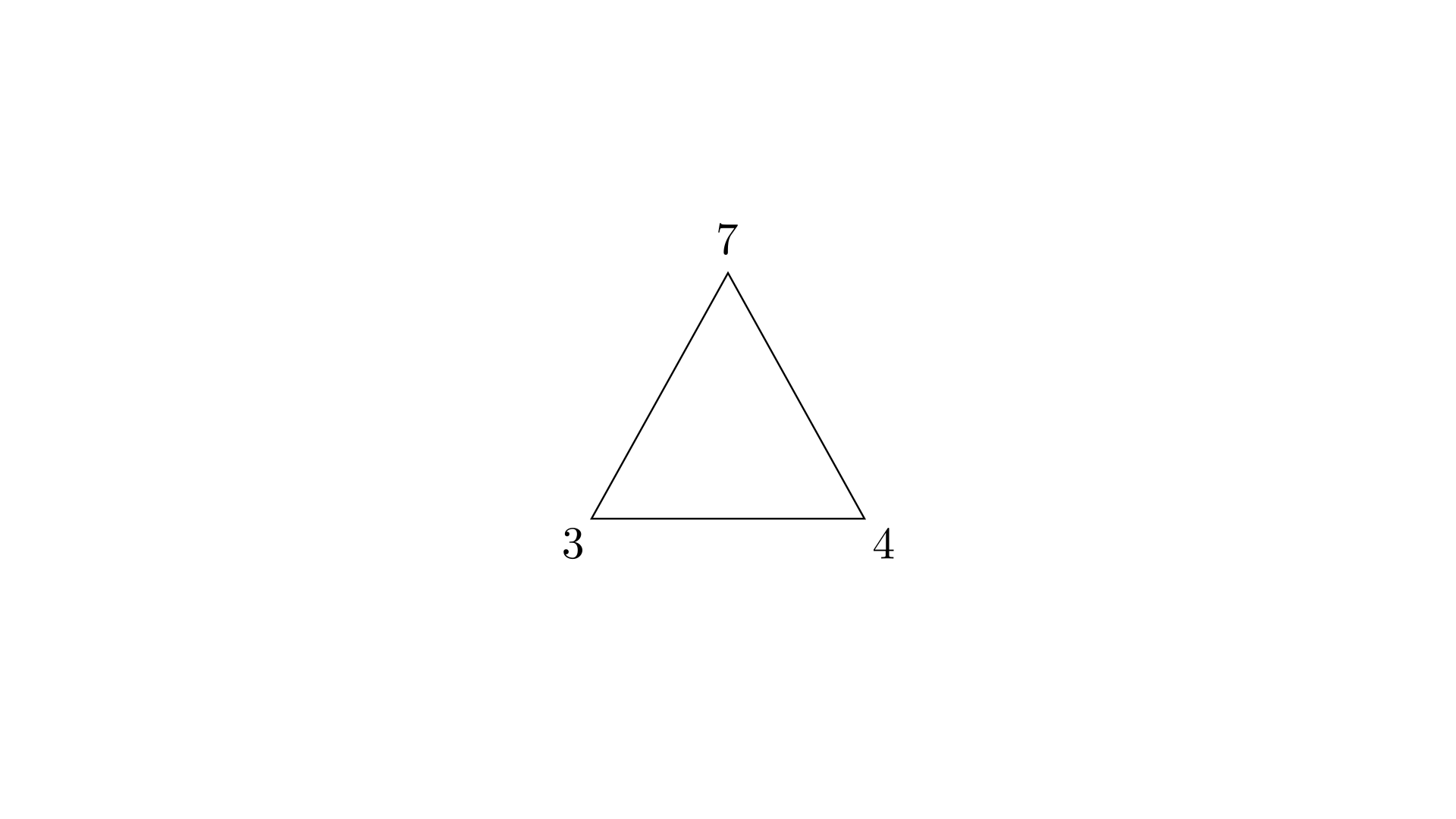
Teacher Prompt: "Look at this triangle. We have a 3, a 4, and a 7. How are these numbers related? If I have 3 stickers and I get 4 more, how many do I have? What if I have 7 and I give 3 away? Today, we are going to learn how these numbers live together in a 'Fact Family' house!"
2. I-Do: Direct Instruction (10 Minutes)
- Model the Commutative Property: Show the class that . Now, swap the 3 and 4. Ask: "What is?" Explain that in addition, the order of the numbers doesn't change the total. This is the Commutative Property.
- Model the Inverse Relationship: Explain that because the numbers are a family, we can also subtract. Show that if we start with the 'big' number (7) and take away one 'small' number (3), we get the other small number (4).
- Write the 4 Facts:
-
-
-
-
3. We-Do: Guided Practice (10 Minutes)
- Use a new set of numbers: 2, 5, and 7.
- Have students use their fingers or counters to show .
- Call on students to come to the board and write one of the four related equations.
- Check for Understanding: Ask, "Can we say ?" (No, in first grade, we explain that for subtraction, the biggest number—the 'total'—must come first).
4. You-Do: Independent Practice (10 Minutes)
Students will complete the Fact Family Worksheet. They will look at the three numbers in each 'house' and write the four matching equations.
5. Differentiation Tiers & Scaffolds
- Tier 1 (Support): Provide students with physical 'Fact Family' cards and 10-frames or Unifix cubes to build the sums and differences visually before writing them.
- Tier 2 (Target): Complete the worksheet as designed.
- Tier 3 (Extension): Provide a challenge problem with a missing number in a larger fact family (e.g., __, 5, 15).
- EL Scaffold: Use sentence frames for oral practice: "___ plus ___ equals ." and " take away ___ leaves ___."
6. Exit Ticket (5 Minutes)
Task: Write the 4 facts for the family: 6, 4, 10.
- ____ + ____ = ____
- ____ + ____ = ____
- ____ - ____ = ____
- ____ - ____ = ____
Fact Family Worksheet
Name:
Date:
Fact Family Houses
Use the three numbers in each roof to write the four related facts.