Generated with Monsha
K-3rd Grade Squat Handout- Sophia LaRe
Handout · Grade 1 · English
K-3rd Grade Squat Handout- Sophia LaRe
Squat Form and Movement Guide
What Is a Squat?
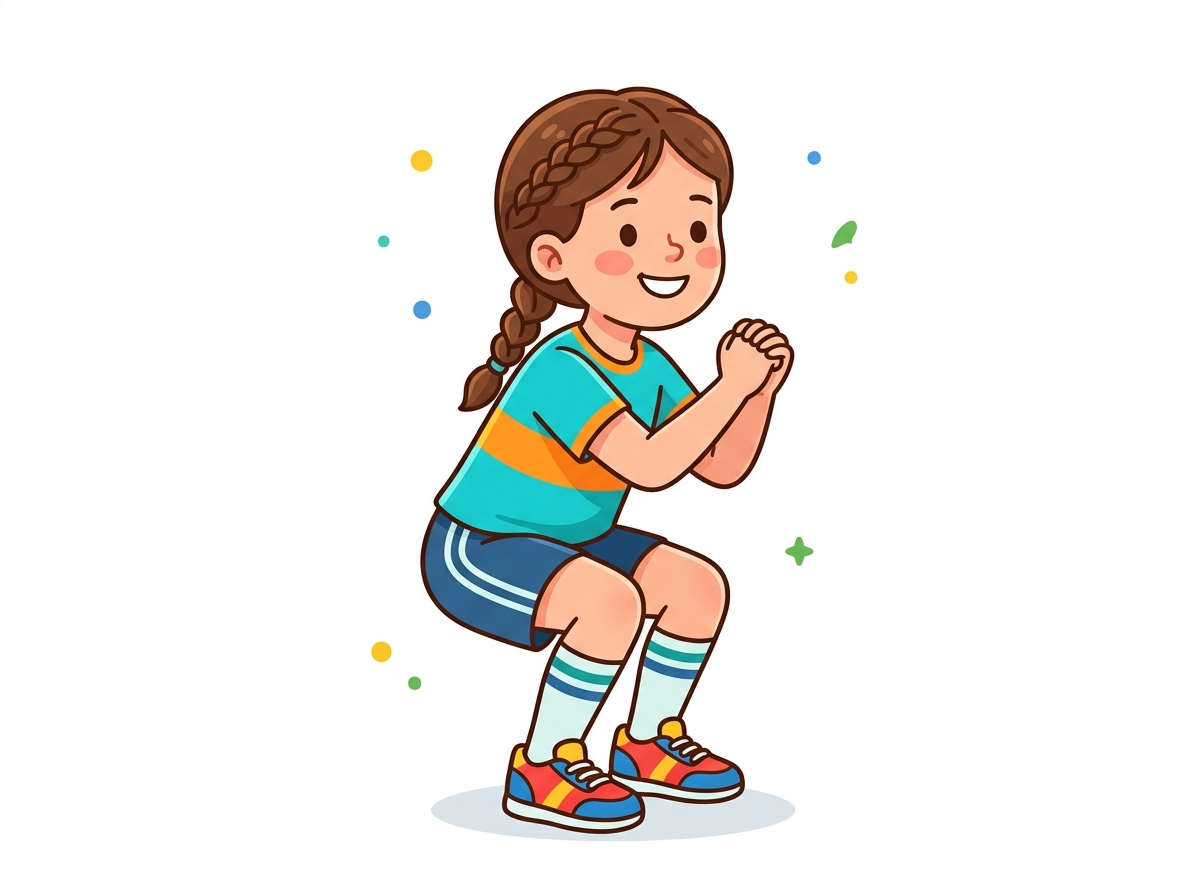
A squat is a movement where you bend your knees and hips to lower your body, then push through your feet to stand back up. Check out Figure 1 to see how to practice great squat form!
4 Things to Remember
- Keep Your Feet Down: Keep your whole foot on the floor—toes, heels, and everything in between!
- Keep Your Back Strong: Keep your chest up tall and your back in a strong, natural position.
- Knees Follow Toes: Your knees should always point in the exact same direction as your toes.
- Sit Down Low: Lower your body smoothly, just like you are sitting back into a chair.
3 Squat Cues
- 👣 “Feet flat!” — Keep your whole foot pressed firmly into the floor.
- 🦵 “Knees follow toes!” — Never let your knees collapse inward.
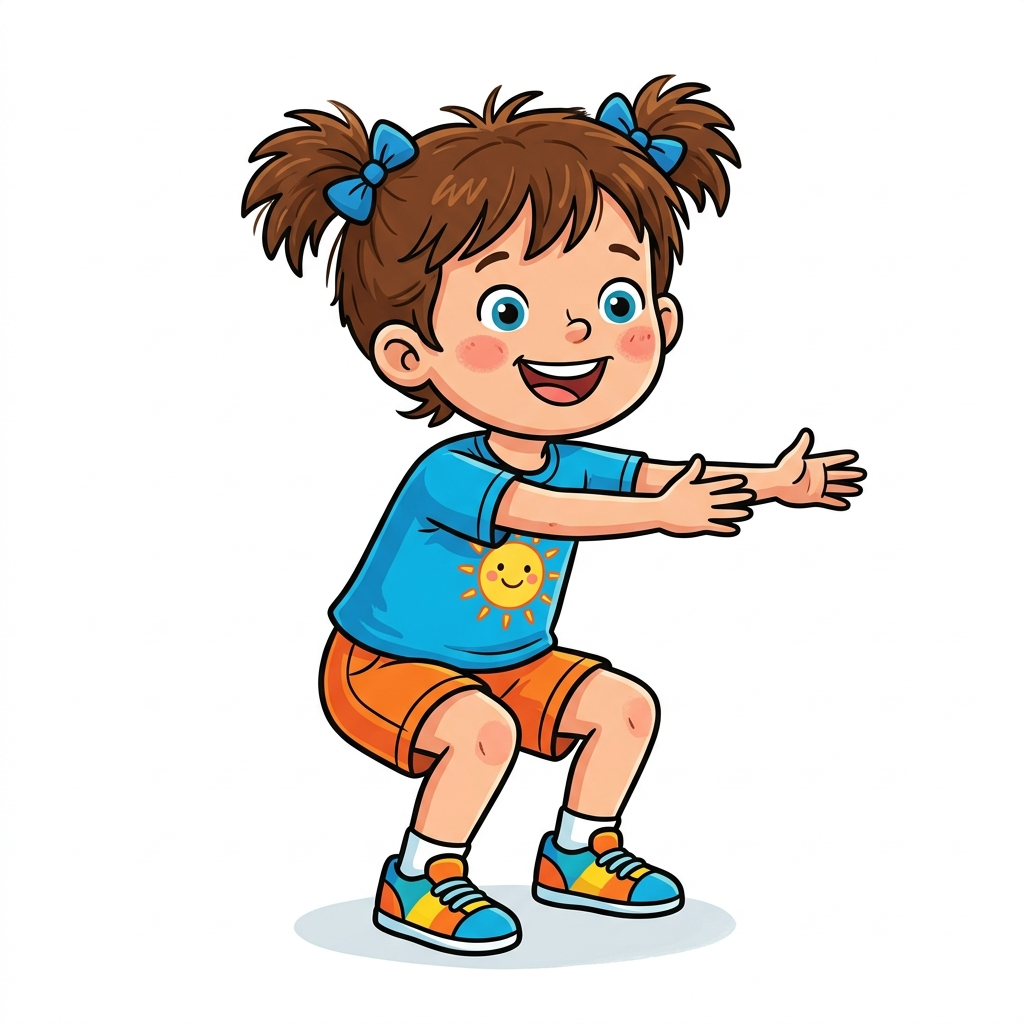
- 🪑 “Sit down, stand tall!” — Lower your body with control, then drive up tall (as shown in Figure 2).
Common Mistakes and Corrections
Common Fault | How to Fix It |
|---|---|
Heels lift off the floor | Say: “Keep your whole foot flat!” |
Knees fall inward | Say: “Knees follow your toes!” |
Back rounds or slouches | Say: “Chest up and strong back!” |
How the Body Moves
- Going Down: Hips and knees bend. Muscles lengthen under control (eccentric action).
- At the Bottom: Hold balance with feet flat and back strong (isometric stability).
- Going Up: Straighten hips and knees by pushing into the ground (concentric action).
- Plane of Motion: Movement takes place mainly in the sagittal plane.
Muscles Used:
- Quadriceps (thighs): Straighten the knees.
- Gluteus Maximus (glutes): Extend the hips to help you stand up.
- Hamstrings (back of thighs): Assist hip movement and control descent.
- Core Muscles (torso): Keep your trunk steady and upright.
"I Can" Checklist
- I can keep my whole foot flat on the floor.
- I can keep my knees pointing toward my toes.
- I can keep my chest up and back strong.
- I can squat down smoothly with control.
- I can push through my feet to stand back up tall.
Squat Form and Movement Guide
Squat Form and Movement Guide
What Is a Squat?
A squat is a movement where you bend your knees and hips to lower your body, then push through your feet to stand back up. Check out Figure 1 to see how to practice great squat form!
4 Things to Remember
- Keep Your Feet Down: Keep your whole foot on the floor—toes, heels, and everything in between!
- Keep Your Back Strong: Keep your chest up tall and your back in a strong, natural position.
- Knees Follow Toes: Your knees should always point in the exact same direction as your toes.
- Sit Down Low: Lower your body smoothly, just like you are sitting back into a chair.
3 Squat Cues
- 👣 “Feet flat!” — Keep your whole foot pressed firmly into the floor.
- 🦵 “Knees follow toes!” — Never let your knees collapse inward.
- 🪑 “Sit down, stand tall!” — Lower your body with control, then drive up tall (as shown in Figure 2).
Common Mistakes and Corrections
Common Fault | How to Fix It |
|---|---|
Heels lift off the floor | Say: “Keep your whole foot flat!” |
Knees fall inward | Say: “Knees follow your toes!” |
Back rounds or slouches | Say: “Chest up and strong back!” |
How the Body Moves
- Going Down: Hips and knees bend. Muscles lengthen under control (eccentric action).
- At the Bottom: Hold balance with feet flat and back strong (isometric stability).
- Going Up: Straighten hips and knees by pushing into the ground (concentric action).
- Plane of Motion: Movement takes place mainly in the sagittal plane.
Muscles Used:
- Quadriceps (thighs): Straighten the knees.
- Gluteus Maximus (glutes): Extend the hips to help you stand up.
- Hamstrings (back of thighs): Assist hip movement and control descent.
- Core Muscles (torso): Keep your trunk steady and upright.
"I Can" Checklist
- I can keep my whole foot flat on the floor.
- I can keep my knees pointing toward my toes.
- I can keep my chest up and back strong.
- I can squat down smoothly with control.
- I can push through my feet to stand back up tall.
K-3 Squat Handout
Squat Form and Movement Guide
What Is a Squat?
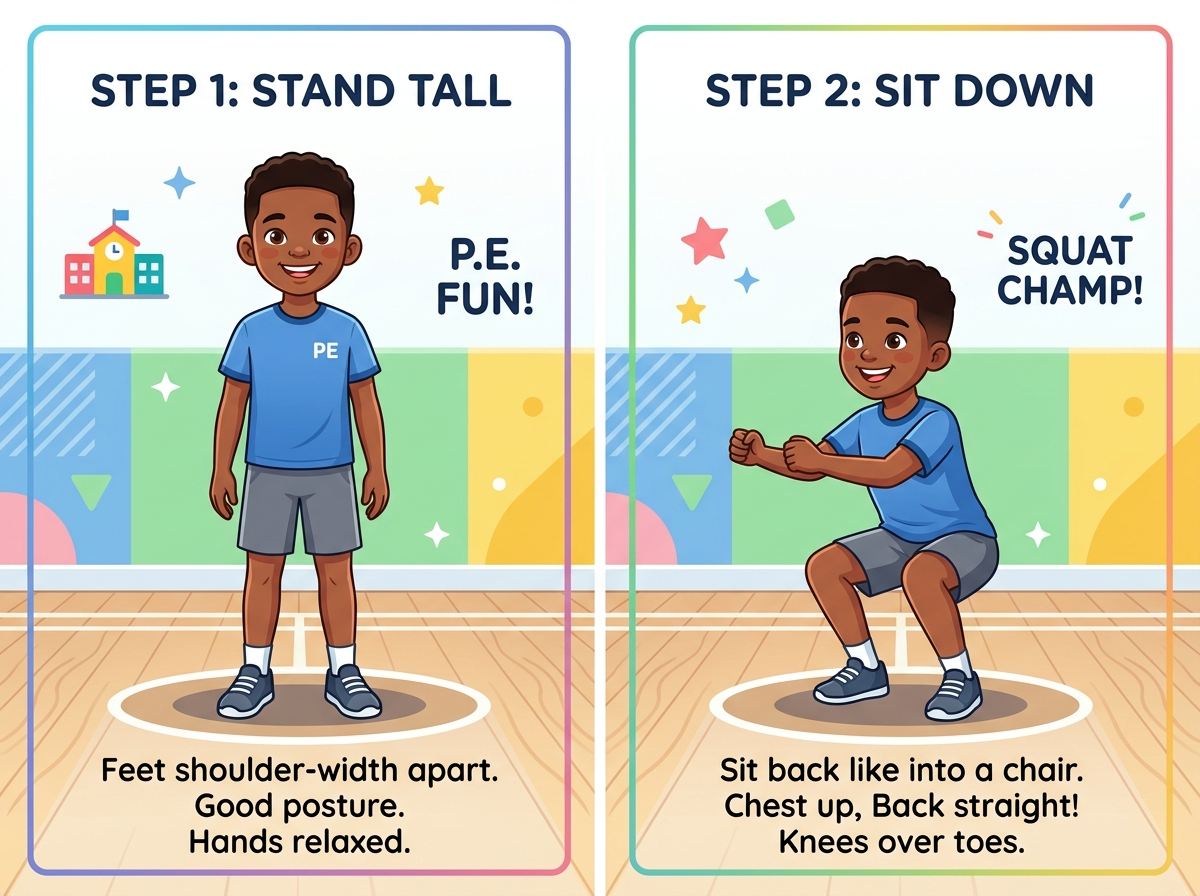
A squat is a movement where you bend your knees and hips to lower your body, then push through your feet to stand back up. Check out Figure 1 to see how to practice great squat form!
4 Things to Remember
- Keep Your Feet Down: Keep your whole foot on the floor—toes, heels, and everything in between!
- Keep Your Back Strong: Keep your chest up tall and your back in a strong, natural position.
- Knees Follow Toes: Your knees should always point in the exact same direction as your toes.
- Sit Down Low: Lower your body smoothly, just like you are sitting back into a chair.
3 Squat Cues
- “Make dinosaur feet!”— Keep your whole foot pressed firmly into the floor.
- “Knees follow toes!” — Never let your knees collapse inward.
- “Down like a ninja, up like a superhero!” — Lower your body with control, then drive up tall (as shown in Figure 2).
Common Mistakes and Corrections
Common Fault | How to Fix It |
|---|---|
Heels lift off the floor | Say: “Keep your whole foot flat!” |
Knees fall inward | Say: “Knees follow your toes!” |
Back rounds or slouches | Say: “Chest up and strong back!” |
How the Body Moves
- Going Down: Hips and knees bend. Muscles lengthen under control (eccentric action).
- At the Bottom: Hold balance with feet flat and back strong (isometric stability).
- Going Up: Straighten hips and knees by pushing into the ground (concentric action).
- Plane of Motion: Movement takes place mainly in the sagittal plane.
Muscles Used:
- Quadriceps (thighs): Straighten the knees.
- Gluteus Maximus (glutes): Extend the hips to help you stand up.
- Hamstrings (back of thighs): Assist hip movement and control descent.
- Core Muscles (torso): Keep your trunk steady and upright.
"I Can" Checklist
- I can keep my whole foot flat on the floor.
- I can keep my knees pointing toward my toes.
- I can keep my chest up and back strong.
- I can squat down smoothly with control.
- I can push through my feet to stand back up tall.