Save this resource to edit, expand, or export it, or create more resources for free.
2-Week Daily Reading Spiral Review Journal
Questions · Grade 5 · English
2-Week Daily Reading Spiral Review Journal
Questions
Grade 5
English
2-Week Daily Reading Spiral Review Journal
Daily Reading Spiral Review Journal
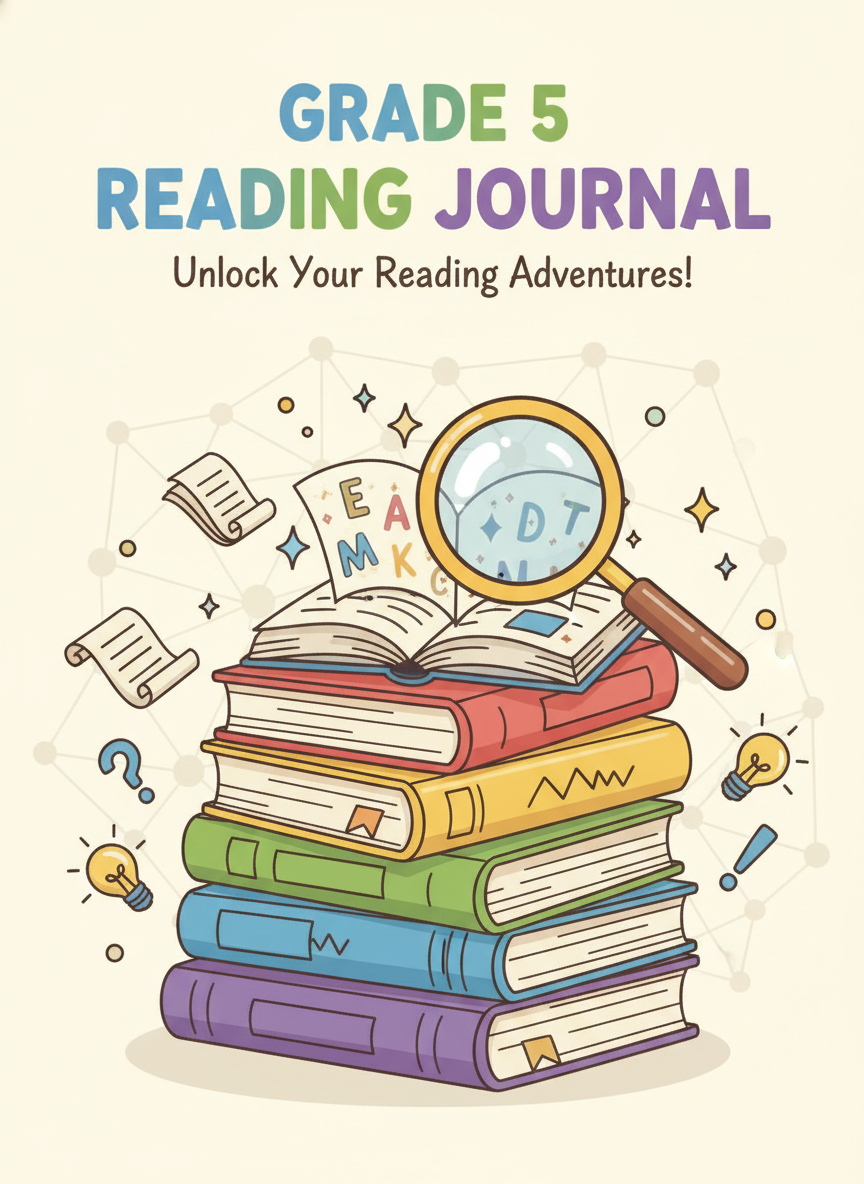
fig 1: An engaging cover illustration for a Grade 5 Reading Journal featuring a stack of books and a magnifying glass to inspire curiosity and investigation.
Class: _______________________ Date Started: _________________
📖 Skill Quick-Reference Guide
Use this guide to help you answer your daily questions. Remember to always look back at the text for evidence!
Skill
What to Look For
Strategy
Main Idea
What the text is mostly about.
Look at the first and last sentences.
Inference
An educated guess based on clues.
Text Clues + What I Know = Inference.
Cause & Effect
Why something happened (Cause) and what happened (Effect).
Look for words like because, so, or therefore.
Context Clues
The meaning of a hard word.
Read the sentences before and after the word.
Author's Purpose
Why the author wrote it.
Is it to Persuade, Inform, or Entertain (P.I.E.)?
Character Traits
A character's personality.
Look at what the character says, does, or thinks.
Restating the Question
Using part of the question in your answer.
Turn the question into a statement to start your sentence.
📅 Week 1: Journal Layout (4-Days-Per-Page)
Monday: Main Idea
Honeybees are amazing creatures that live in colonies. They work together to build a honeycomb and care for their queen. Most importantly, honeybees fly from flower to flower to collect nectar. While they do this, they spread pollen. This process, called pollination, helps plants grow fruit and seeds. Without honeybees, many of the foods we eat would not grow.
What is the main idea of this passage?A. Honeybees live in large colonies with a queen.B. Honeybees collect nectar from flowers to make honey.C. Pollination is a process that only involves bees and flowers.D. Honeybees are essential because they help plants grow through pollination.
Question 2: What is one detail from the text that supports the main idea? Restate the question in your answer.
Tuesday: Cause & Effect
Most volcanoes form near the edges of tectonic plates. When these plates move, they can create cracks in the Earth's crust. Magma, which is molten rock from deep underground, rises through these cracks. If the pressure becomes too high, the volcano erupts, sending lava and ash into the air. This eruption can change the surrounding landscape by creating new land or destroying forests.
Question 1: According to the text, why does a volcano erupt?
What is one effect of a volcanic eruption mentioned in the text?A. It causes tectonic plates to stop moving.B. It turns lava into magma underground.C. It can destroy forests or create new land.D. It creates cracks in the Earth's crust.
Wednesday: Inference
Sarah walked into the kitchen and saw flour all over the floor. The oven was warm, and a sweet smell filled the air. On the counter, there was a plate of small, round, brown objects. Her little brother, Tommy, was sitting at the table with a smudge of chocolate on his chin and a big smile on his face. "Did you have fun?" Sarah asked.
Based on the text, what can you infer that Tommy did?A. Tommy was painting a picture of cookies.B. Tommy helped bake or eat chocolate cookies.C. Tommy was playing with his toys in the kitchen.D. Tommy made a mess while trying to clean the kitchen.
Question 2: What specific evidence from the story supports your inference? Restate the question in your answer.
Thursday: Author's Purpose
Every year, millions of tons of plastic end up in our oceans. This plastic harms sea turtles, fish, and birds. You can help by using a reusable water bottle instead of buying plastic ones. Recycling is easy and protects our planet for future generations. Next time you go to throw a bottle in the trash, think about the ocean and put it in the recycling bin instead!
Question 1: What is the author's primary purpose for writing this passage?
How does the author try to achieve their purpose?A. By encouraging the reader to recycle and use reusable bottles.B. By giving facts about how plastic is made.C. By listing every type of animal that lives in the ocean.D. By telling a funny story about a sea turtle.
📅 Week 2: Journal Layout (4-Days-Per-Page)
Monday: Main Idea
The Great Wall of China is a massive structure that stretches over 13,000 miles. It was built over many centuries to protect the Chinese Empire from invasions. Soldiers stood guard on the wall, using smoke signals to communicate across long distances. Although it was built for defense, today it serves as a symbol of China’s rich history and is a popular destination for tourists from around the world.
Which sentence best states the main idea of the passage?A. The Great Wall of China is a historic structure built for protection that is now a famous landmark.B. Invasions were common in the Chinese Empire many centuries ago.C. Soldiers used smoke signals to communicate on the wall.D. The wall stretches for exactly 13,000 miles across China.
Question 2: Write a one-sentence summary of this passage. Restate the question in your answer.
Tuesday: Context Clues
In the deepest parts of the ocean, where sunlight never reaches, many creatures are bioluminescent. This means they have the ability to produce their own light through chemical reactions in their bodies. This glowing light is not just for decoration; it is essential for survival. Some fish use it to attract prey, while others use it to startle predators and make a quick escape in the darkness.
Based on the passage, what does the word 'bioluminescent' mean?A. A chemical reaction that happens in the sun.B. A way for fish to hunt for food.C. The ability of an animal to glow or produce light.D. Living in the deepest part of the ocean.
Question 2: Which specific phrase from the text helped you understand the meaning of "bioluminescent"? Restate the question in your answer.
Wednesday: Inference
The classroom was silent as the students stared at the empty cage. The door was swung wide open, and a trail of sunflower seeds led toward the open window. Mrs. Miller sighed and put her head in her hands. "He was supposed to be the star of our science presentation today," she whispered. Outside, a small gray squirrel chattered loudly from a nearby oak tree, but there was no sign of Barnaby.
Question 1: Who or what is Barnaby?
What can you infer happened to Barnaby?A. He escaped from his cage and went out the window.B. He is hiding inside the classroom under a desk.C. He was stolen by a student before the presentation.D. Mrs. Miller forgot to bring him to school today.
Thursday: Character Traits
Leo stared at the towering rock wall. His fingers were sore, and his legs felt like jelly. He had tried to reach the top three times already, and each time he had slipped just a few feet from the summit. His friends had already moved on to the next trail, but Leo stayed behind. He took a deep breath, chalked his hands, and reached for the first grip again. He wasn't leaving until he conquered this climb.
Which trait best describes Leo?A. ImpatientB. FearfulC. ForgetfulD. Persistent
Question 2: Use evidence from the text to explain why Leo has this trait. Restate the question in your answer.
🌟 Friday Bonus Puzzles
Week 1: Figurative Language Match
Match the figurative language term to the correct example from the list below.
Terms:
Simile (Comparison using 'like' or 'as')
Metaphor (Comparison saying one thing IS another)
Personification (Giving human traits to non-human things)
Look at the box below and answer the questions about its text features.
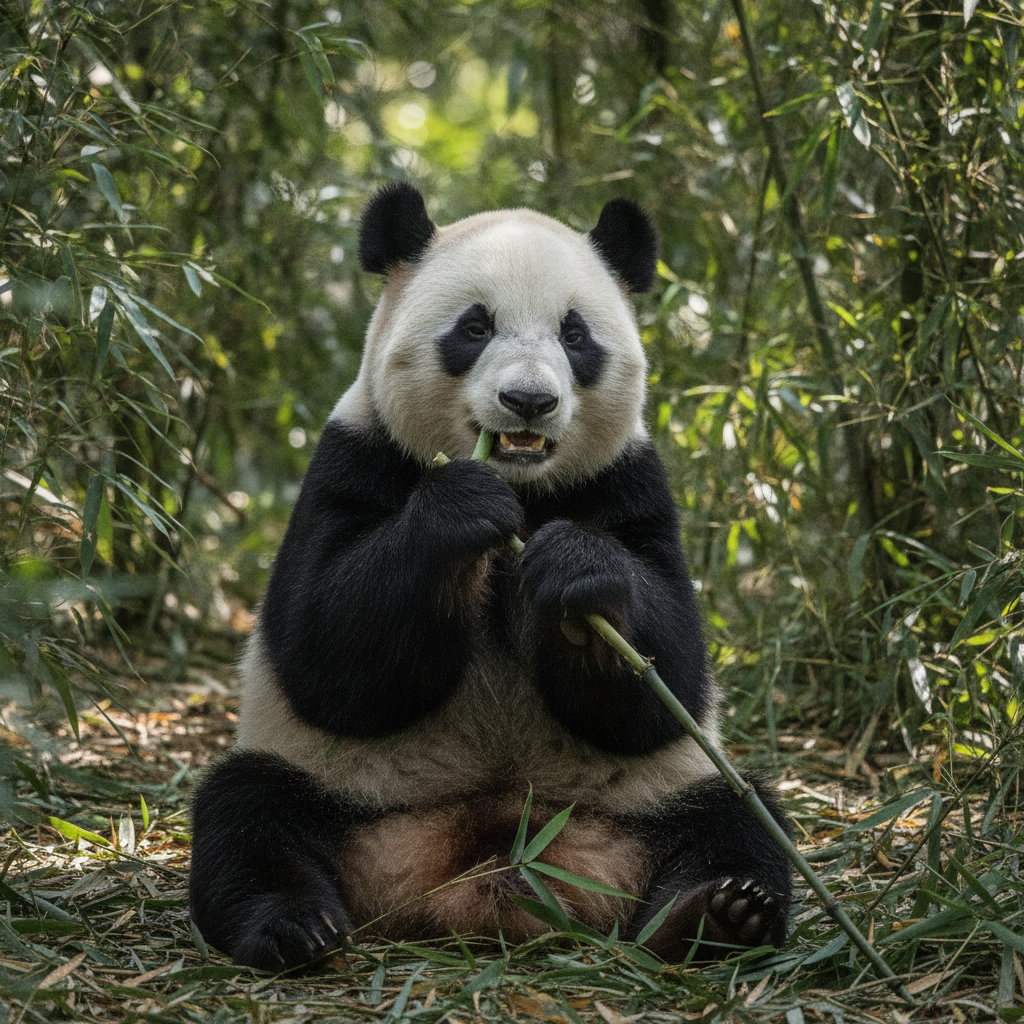
The Giant PandaPandas live in the bamboo forests of China. They spend most of their day eating.
fig 2: A panda eating bamboo.
Pandas can eat up to 28 pounds of bamboo in one day.Conservation Status: Endangered
What is the Heading of this section?
What information does the Caption (under the image) provide?
Why is the word Conservation Status in bold?
📄 One-Day-Per-Page Layout
Use this section if you prefer to print one day at a time.
Week 1, Monday: Main Idea
Passage: Honeybees are amazing creatures that live in colonies. They work together to build a honeycomb and care for their queen. Most importantly, honeybees fly from flower to flower to collect nectar. While they do this, they spread pollen. This process, called pollination, helps plants grow fruit and seeds. Without honeybees, many of the foods we eat would not grow.
What is the main idea of this passage?A. Honeybees collect nectar from flowers to make honey.B. Honeybees are essential because they help plants grow through pollination.C. Pollination is a process that only involves bees and flowers.D. Honeybees live in large colonies with a queen.Question 2: What is one detail from the text that supports the main idea? Restate the question in your answer.
Week 1, Tuesday: Cause & Effect
Passage: Most volcanoes form near the edges of tectonic plates. When these plates move, they can create cracks in the Earth's crust. Magma, which is molten rock from deep underground, rises through these cracks. If the pressure becomes too high, the volcano erupts, sending lava and ash into the air. This eruption can change the surrounding landscape by creating new land or destroying forests.
Question 1: According to the text, why does a volcano erupt?
What is one effect of a volcanic eruption mentioned in the text?A. It creates cracks in the Earth's crust.B. It can destroy forests or create new land.C. It causes tectonic plates to stop moving.D. It turns lava into magma underground.
Week 1, Wednesday: Inference
Passage: Sarah walked into the kitchen and saw flour all over the floor. The oven was warm, and a sweet smell filled the air. On the counter, there was a plate of small, round, brown objects. Her little brother, Tommy, was sitting at the table with a smudge of chocolate on his chin and a big smile on his face. "Did you have fun?" Sarah asked.
Based on the text, what can you infer that Tommy did?A. Tommy helped bake or eat chocolate cookies.B. Tommy was painting a picture of cookies.C. Tommy made a mess while trying to clean the kitchen.D. Tommy was playing with his toys in the kitchen.Question 2: What specific evidence from the story supports your inference? Restate the question in your answer.
Week 1, Thursday: Author's Purpose
Passage: Every year, millions of tons of plastic end up in our oceans. This plastic harms sea turtles, fish, and birds. You can help by using a reusable water bottle instead of buying plastic ones. Recycling is easy and protects our planet for future generations. Next time you go to throw a bottle in the trash, think about the ocean and put it in the recycling bin instead!
Question 1: What is the author's primary purpose for writing this passage?
How does the author try to achieve their purpose?A. By telling a funny story about a sea turtle.B. By encouraging the reader to recycle and use reusable bottles.C. By giving facts about how plastic is made.D. By listing every type of animal that lives in the ocean.
Week 2, Monday: Main Idea
Passage: The Great Wall of China is a massive structure that stretches over 13,000 miles. It was built over many centuries to protect the Chinese Empire from invasions. Soldiers stood guard on the wall, using smoke signals to communicate across long distances. Although it was built for defense, today it serves as a symbol of China’s rich history and is a popular destination for tourists from around the world.
Which sentence best states the main idea of the passage?A. Invasions were common in the Chinese Empire many centuries ago.B. The wall stretches for exactly 13,000 miles across China.C. Soldiers used smoke signals to communicate on the wall.D. The Great Wall of China is a historic structure built for protection that is now a famous landmark.Question 2: Write a one-sentence summary of this passage. Restate the question in your answer.
Week 2, Tuesday: Context Clues
Passage: In the deepest parts of the ocean, where sunlight never reaches, many creatures are bioluminescent. This means they have the ability to produce their own light through chemical reactions in their bodies. This glowing light is not just for decoration; it is essential for survival. Some fish use it to attract prey, while others use it to startle predators and make a quick escape in the darkness.
Based on the passage, what does the word 'bioluminescent' mean?A. A chemical reaction that happens in the sun.B. The ability of an animal to glow or produce light.C. Living in the deepest part of the ocean.D. A way for fish to hunt for food.Question 2: Which specific phrase from the text helped you understand the meaning of "bioluminescent"? Restate the question in your answer.
Week 2, Wednesday: Inference
Passage: The classroom was silent as the students stared at the empty cage. The door was swung wide open, and a trail of sunflower seeds led toward the open window. Mrs. Miller sighed and put her head in her hands. "He was supposed to be the star of our science presentation today," she whispered. Outside, a small gray squirrel chattered loudly from a nearby oak tree, but there was no sign of Barnaby.
Question 1: Who or what is Barnaby?
What can you infer happened to Barnaby?A. He was stolen by a student before the presentation.B. He is hiding inside the classroom under a desk.C. He escaped from his cage and went out the window.D. Mrs. Miller forgot to bring him to school today.
Week 2, Thursday: Character Traits
Passage: Leo stared at the towering rock wall. His fingers were sore, and his legs felt like jelly. He had tried to reach the top three times already, and each time he had slipped just a few feet from the summit. His friends had already moved on to the next trail, but Leo stayed behind. He took a deep breath, chalked his hands, and reached for the first grip again. He wasn't leaving until he conquered this climb.
Which trait best describes Leo?A. ForgetfulB. PersistentC. ImpatientD. FearfulQuestion 2: Use evidence from the text to explain why Leo has this trait. Restate the question in your answer.