Generated with Monsha
Save this resource to edit, expand, or export it, or create more resources for free.
Thermal Power Plants and Electricity Generation
Lesson Plan
Age 14–15
English
Thermal Power Plants and Electricity Generation
Instructional Sequence: Towards Green Energy (Lecture 1)
Total Duration: 50 Minutes
1. Introduction & The Hook (5 Minutes)
- Objective: Relate electricity to daily life and pique interest.
- Activity: Briefly discuss the role of electricity in our daily routines (phones, laptops, fans, internet).
- Key Question: "What happens if the power goes out?"
- Transition: Introduce the concept that we are dependent on electricity, and today we will learn how it is produced at a large scale using Thermal Power Plants.
2. Scientific Foundation: Electromagnetic Induction (10 Minutes)
- Objective: Understand the core principle behind the electric generator.
- Key Concept:
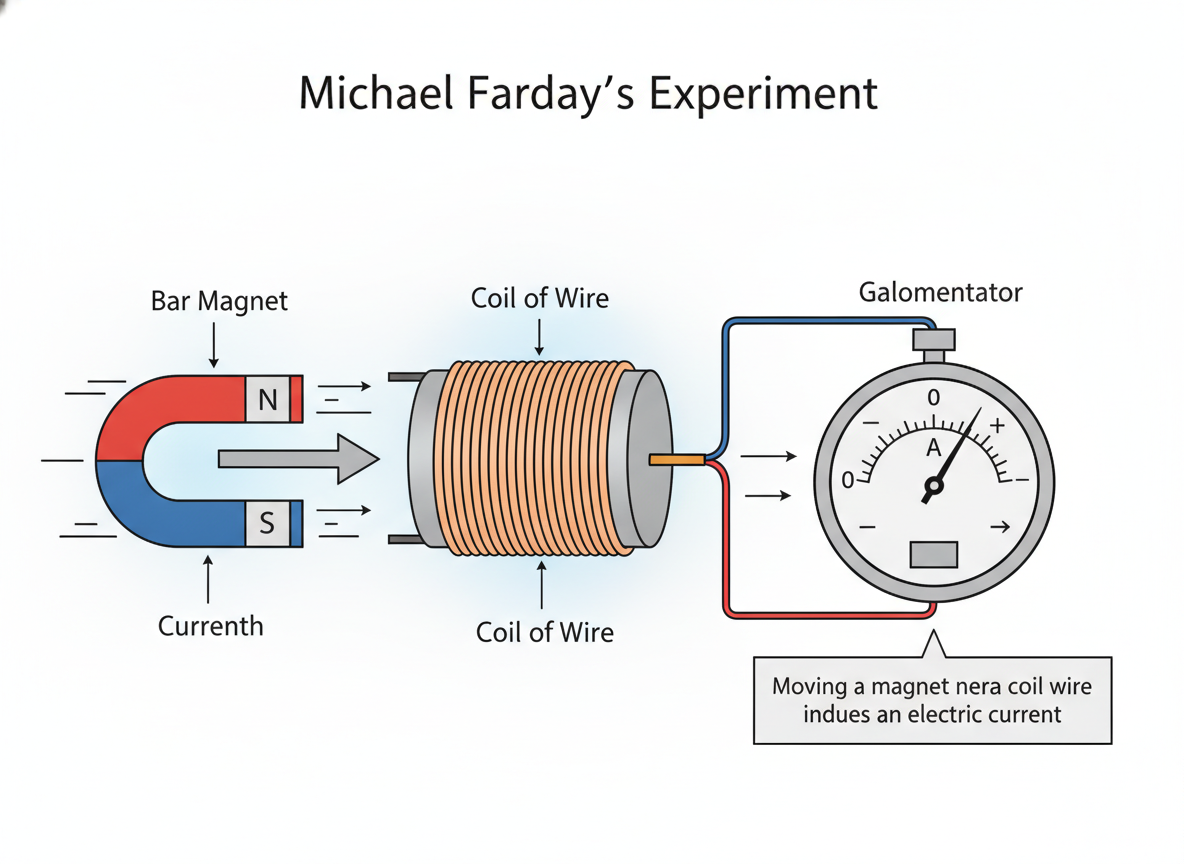
- Michael Faraday's Discovery: Moving a magnet inside a coil (or moving a coil around a magnet) changes the magnetic field, which induces an electric current in the wire.
- The Generator: A device that converts mechanical energy into electrical energy using this principle.
3. Components of a Thermal Power Plant (15 Minutes)
- Objective: Identify the main parts of a power plant and their functions.
- Key Components:
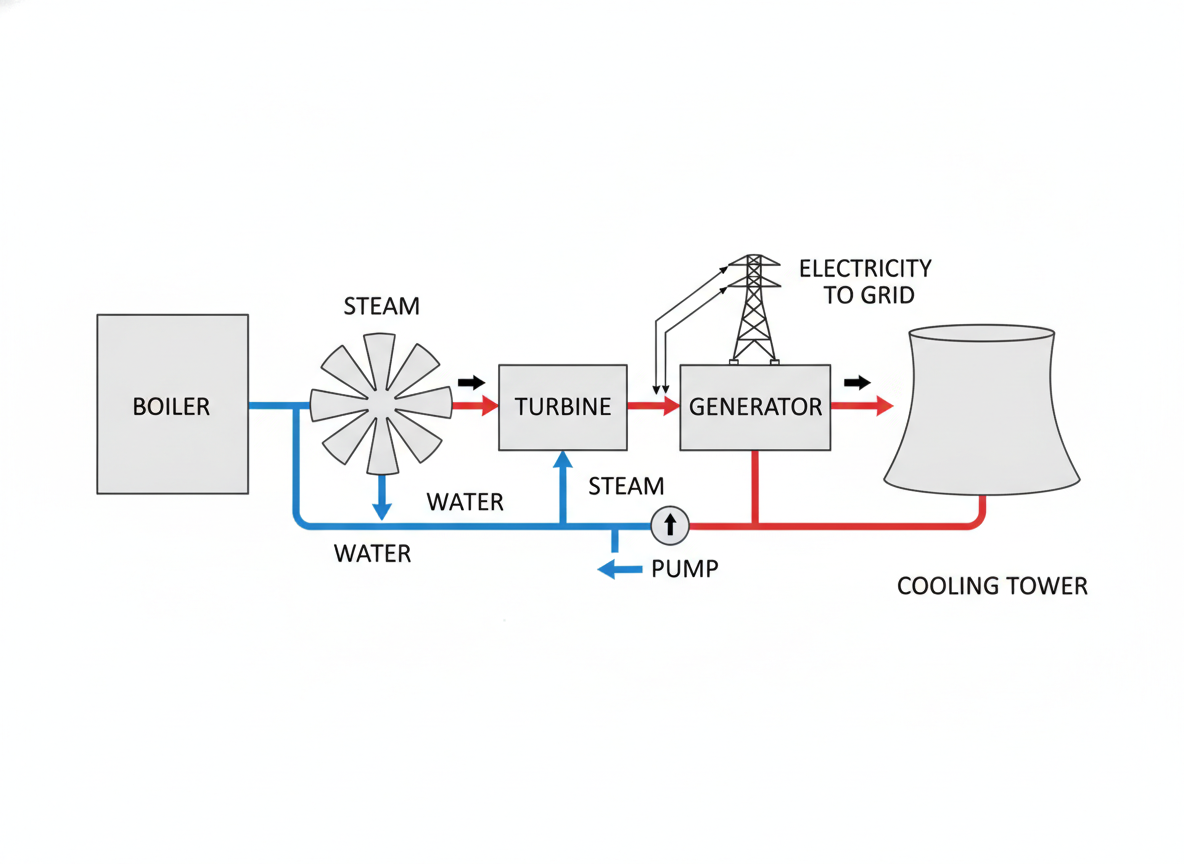
- Boiler: Where coal is burned to heat water and convert it into high-pressure steam.
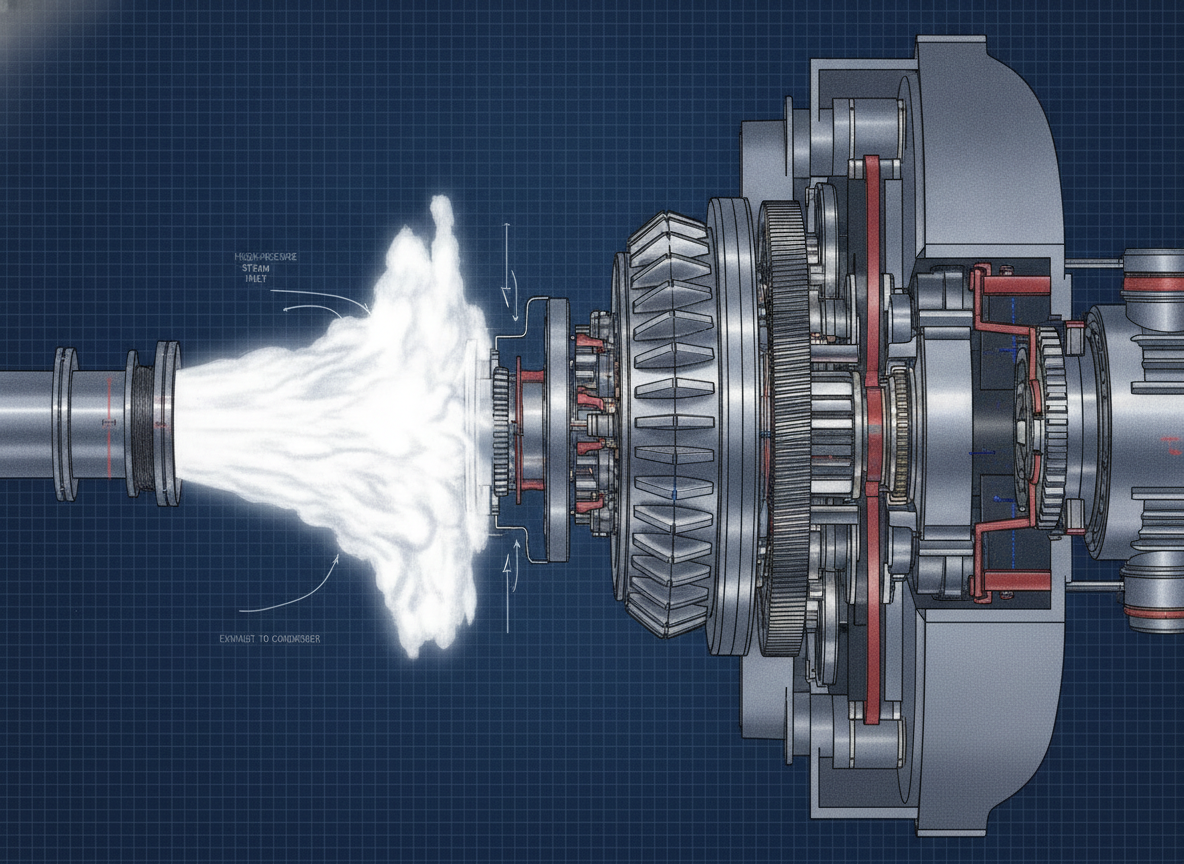
- Turbine: High-pressure steam hits the blades, causing them to rotate (mechanical energy).
- Generator: Connected to the turbine; it rotates and produces electricity via electromagnetic induction.
- Condenser & Cooling Tower: Used to cool the steam back into water so it can be reused in the boiler.
- Pump: Circulates water back to the boiler.
4. Energy Transformation Flow (10 Minutes)
- Objective: Map the conversion of energy from fuel to electricity.
- Energy Chain:
- Chemical Energy (in Coal)
- Thermal Energy (produced by burning coal)
- Kinetic Energy (in high-pressure steam)
- Kinetic Energy (rotation of the turbine)
- Electrical Energy (output from the generator)
Visual Aid: Create a flow-chart on the board showing:
Coal (Chemical) -> Burning (Thermal) -> Steam (Kinetic) -> Turbine (Kinetic) -> Generator (Electrical)
5. Environmental Impacts & Conclusion (10 Minutes)
- Objective: Analyze the drawbacks of thermal power and the need for "Green Energy."
- Key Discussion Points:
- Air Pollution: Burning coal releases Carbon Dioxide ($CO_2$), Sulfur Dioxide ($SO_2$), and Nitrogen Oxides ($NO_x$).
- Health Issues: Release of soot particles leads to respiratory diseases like asthma and bronchitis.
- Sustainability: Coal is a fossil fuel and its reserves are limited; they may run out in 150-200 years.
- Conclusion: While thermal power is a major source of energy today, its environmental cost is high, leading us toward the search for cleaner, "Green Energy" alternatives.

Thermal Power Plants: Process and Energy Transformation
Instructional Sequence: Towards Green Energy (Lecture 1)
Total Duration: 50 Minutes
This sequence follows the specific teaching flow of the Maharashtra State Board Science 2 lecture on Thermal Power Plants.
1. Energy in Our Daily Lives (5 Minutes)
- Concept: Electricity is as essential today as food, clothing, and shelter ("Roti, Kapda, Makaan").
- Discussion: Ask students to identify electrical appliances they depend on (phones, WiFi routers, laptops, fans, AC). Discuss what happens to these devices when the power fails and the battery eventually dies.
- Conclusion: We are completely dependent on electricity, and we must understand how it is produced at a large scale.
2. Scientific Principle: Michael Faraday's Discovery (10 Minutes)
- The Principle: Electricity is produced using the principle of Electromagnetic Induction.
- The Mechanism: Moving a magnet in the vicinity of a copper coil (or vice versa) creates a change in the magnetic field, which induces an electric current in the coil. This process was discovered by Michael Faraday.
- The Generator: A device that uses this principle to convert mechanical energy into electrical energy.
3. Types of Generators & The Turbine (10 Minutes)
- Two Configurations:
- Stationary Magnet + Rotating Coil.
- Stationary Coil + Rotating Magnet.
- Mechanism of Rotation: To make a generator work at a power plant, we need a way to rotate the internal shaft. We use a Turbine for this.
- Steam Turbine: A turbine has blades. When a high-velocity fluid (like steam) hits these blades, the turbine rotates. This rotating turbine is connected to the generator's shaft to produce electricity.
4. Working of a Thermal Power Plant (15 Minutes)
- The Process:
- Fuel: Coal is used as the primary fuel.
- Boiler: Coal is burned to heat water, converting it into high-pressure, high-velocity steam.
- Turbine: The steam hits the turbine blades, causing mechanical rotation.
- Generator: The rotating turbine spins the generator, producing electrical energy.
- Condenser & Cooling Tower: After passing through the turbine, the steam is cooled back into water in the condenser using cold water from the cooling tower.
- Recycling: The condensed water is pumped back into the boiler to repeat the cycle.
5. Essential Flowcharts for Examinations (5 Minutes)
- Process Flowchart: Understanding the sequence of components.

-
- Energy Transformation Flowchart: Tracking how energy changes forms.

-
6. Environmental Impacts & Problems (5 Minutes)
- Air Pollution: Burning coal releases harmful gases into the environment, including Carbon Dioxide , Sulfur Dioxide, and Nitrogen Oxides.
- Health Hazards: Release of soot (carbon) particles can cause serious respiratory problems like asthma and bronchitis.
- Resource Scarcity: Coal is a fossil fuel and is limited. At current consumption rates, global coal reserves may be exhausted within 150 to 200 years.