Generated with Monsha
Year 9 Science: The Cycle of Life - Mitosis
Lesson Plan · Year 9 · English
Year 9 Science: The Cycle of Life - Mitosis
At a Glance
This lesson introduces Year 9 students to the fundamental process of mitosis, the mechanism by which eukaryotic cells divide for growth, repair, and asexual reproduction. Students will explore how a single parent cell produces two genetically identical daughter cells, maintaining the genetic stability necessary for life.
- Grade Level: Year 9 (Australia)
- Duration: 50 minutes
- Subject: Biological Sciences
- Learning Objectives:
- Define mitosis and identify its primary functions (growth and repair).
- Describe the stages of the cell cycle, specifically the four phases of mitosis (PMAT).
- Understand the concept of diploid cells and genetic consistency.
- Curriculum Alignment (ACARA v9.0): AC9S9U02 — Describing mitosis as cell division for growth and repair and as a means of asexual reproduction.
- Materials Needed: Whiteboard, modeling materials (e.g., pipe cleaners or string), and printed diagrams of the cell cycle.
Instructional Sequence (50 Minutes)
1. The Hook & Introduction (0–8 Minutes)
- The Joke: Start the class with a quick laugh: "My biology teacher stubbed his toe this morning and screamed at the top of his lungs... MITOSIS!"
- Opening Question: Ask students to consider a time they scraped their knee. Ask: "Where did the new skin cells come from? Did the existing cells just grow larger, or did they multiply?"
- Definition: Briefly define mitosis as the division of somatic cells (body cells) that results in two identical daughter cells.
2. Direct Instruction: The Cell Cycle (8–20 Minutes)
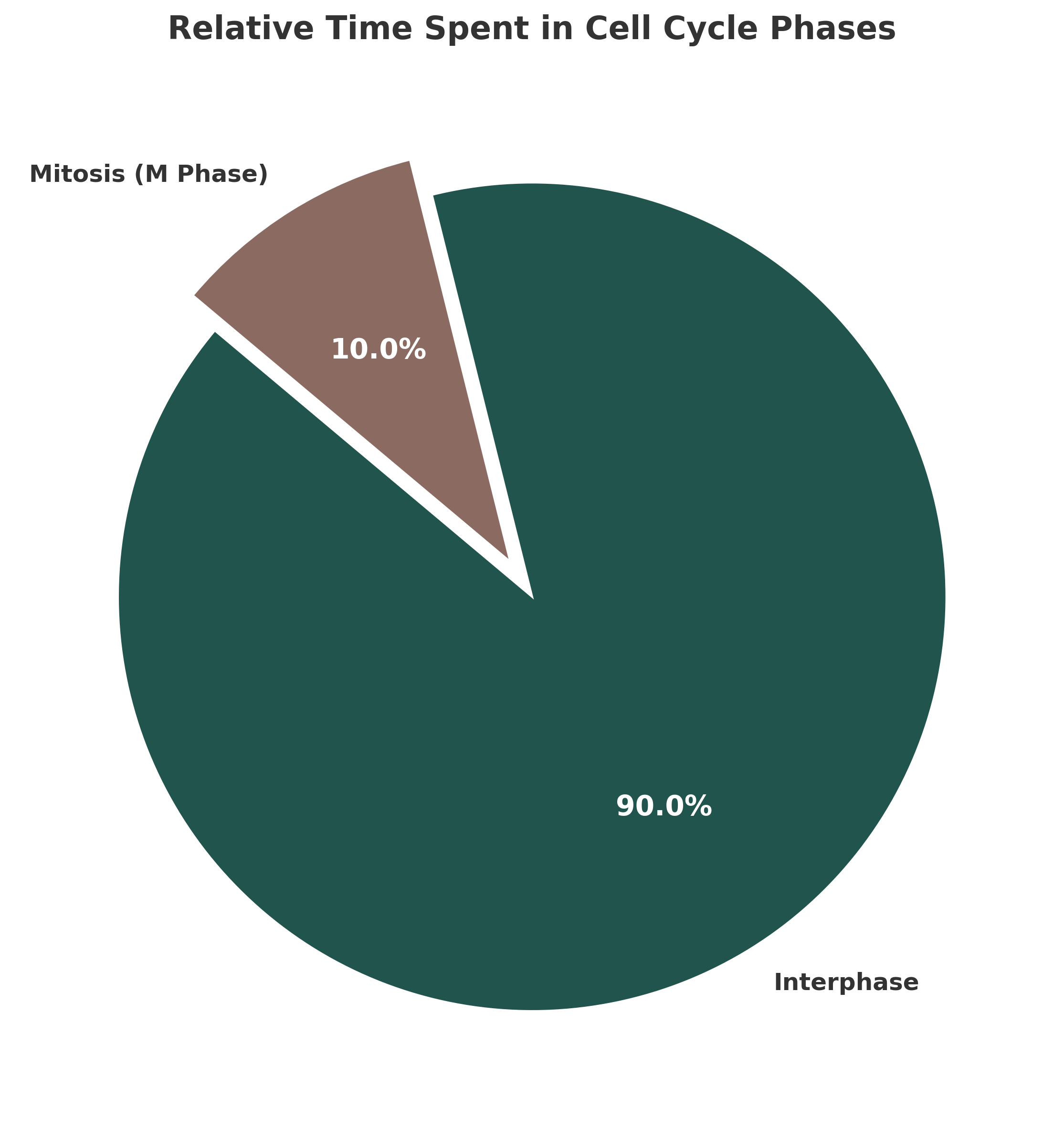
- Interphase vs. Mitosis: Explain that cells spend most of their lives preparing for division.
- Visual Aid: Refer to
-
- . Explain that while mitosis is the most visual part, Interphase is when DNA replication occurs.
- The PMAT Phases: Walk through the four stages using the acronym PMAT:
- Prophase: Chromosomes condense and the nucleus begins to disappear.
- Metaphase: Chromosomes line up in the middle of the cell.
- Anaphase: Sister chromatids are pulled apart to opposite ends.
- Telophase: Two new nuclei form.
3. Visual Analysis & Stage Identification (20–30 Minutes)
- Use the following diagram to help students visualize the movement of genetic material:
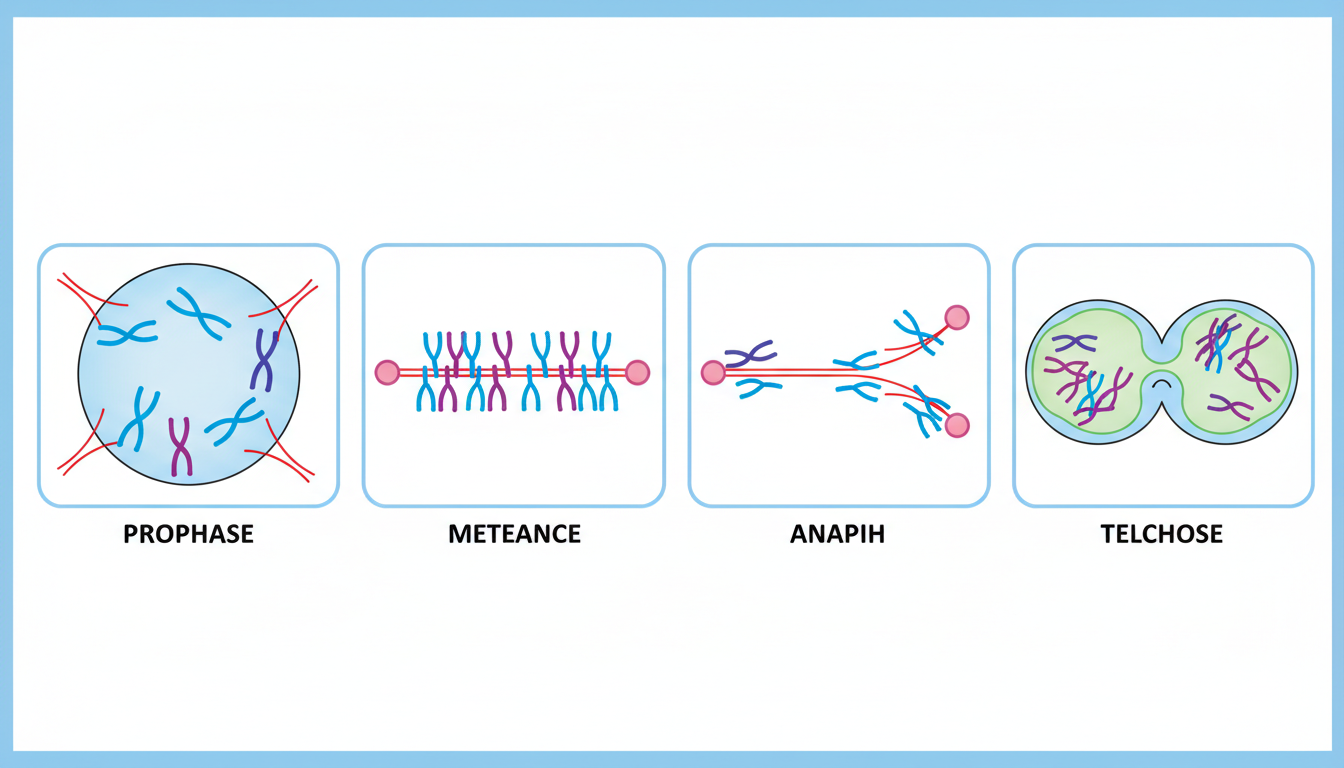
- Discussion Point: Ask students to identify which stage shows the chromosomes lining up in the center and why this is crucial for ensuring each daughter cell gets the correct DNA.
4. Active Learning: Modeling Mitosis (30–45 Minutes)
- Activity: In pairs, students use pipe cleaners (representing chromosomes) to act out the PMAT stages on their desks.
- Task: They must start with 4 "chromatids" (2 pairs) and show how they replicate and then separate to ensure the final two "cells" both have 4 chromatids.
5. Wrap-up & Exit Ticket (45–50 Minutes)
- Summary: Reiterate that mitosis produces diploid cells (), meaning they have a full set of chromosomes.
- Exit Ticket: Students must write down the name of the phase where chromosomes pull apart (Anaphase) before leaving the room.
21st Century Skills / College & Career Readiness
- Critical Thinking: Students analyze the mechanical movement of chromosomes to predict the outcome of errors in division (e.g., what happens if anaphase fails?).
- Scientific Communication: By using specialized vocabulary like centromere, chromatid, and spindle fibers, students practice the precision required in health and biological sciences careers.
- Collaboration: The "Modeling Mitosis" activity requires students to negotiate and communicate complex biological processes through physical representation.
Key Concepts
- Genetic Stability: Because the daughter cells are clones of the parent, mitosis ensures that every cell in an organism's body has the same genetic instructions.
- Somatic Cells: Mitosis occurs in body cells (skin, liver, bone), not in the production of gametes (sperm/eggs), which occurs through meiosis.
- Chromosome Number: Mitosis is an equational division. If the parent cell is diploid (), the daughter cells are also diploid ().
- Growth and Repair: This process allows a single-celled zygote to grow into a complex multicellular organism and replaces damaged or aged cells throughout life.
Three Mitosis Jokes
- The Identity Crisis: Why was the mitosis experiment so successful? Because the cells really multiplied their efforts!
- The Relationship Trouble: Why did the cell break up with its partner? Because it just couldn't handle the division.
- The Split Personality: What did the cell say to his twin during prophase? "I think we're starting to have a split personality!"