Generated with Monsha
A Manifesto of Character: An Analysis of the 'Letter to His Son’s Teacher'
Anything · Year 13 · English
A Manifesto of Character: An Analysis of the 'Letter to His Son’s Teacher'
Introduction to Abraham Lincoln
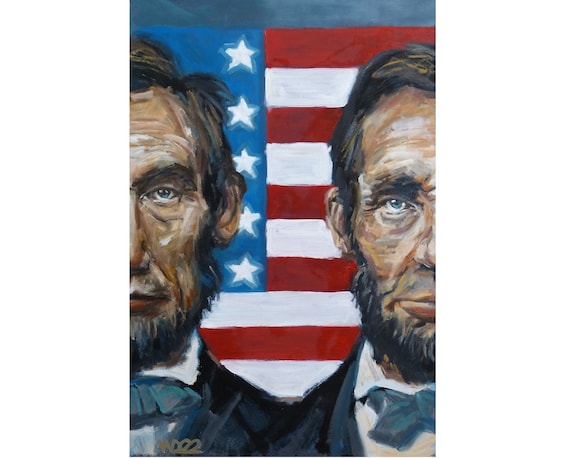
Abraham Lincoln, the sixteenth President of the United States, stands as a towering figure in the annals of global history, not merely for his political acumen or his leadership during the American Civil War, but for his profound moral compass and his deep understanding of the human condition. Born in a humble log cabin in Kentucky, Lincoln’s journey from a self-educated frontier lawyer to the savior of the Union is a testament to the power of resilience, intellect, and integrity. He was a man who navigated the darkest period of his nation’s history with a unique blend of melancholy and humor, firmness and mercy. Beyond his roles as a statesman and emancipator, Lincoln was a devoted, albeit often grieving, father who cared deeply about the moral and intellectual development of his children. His life was defined by a search for truth and a commitment to justice, qualities that shine through in the various writings and speeches attributed to him. Whether he was delivering the Gettysburg Address or drafting personal correspondence, his words carried a weight of wisdom that transcended the immediate context of the mid-nineteenth century. It is this legacy of character—of a man who could lead a nation through fire while maintaining the gentleness of a father—that makes any document associated with his name a subject of intense study and admiration.
Background of the Letter
The "Letter to His Son’s Teacher" is one of the most cherished pieces of literature in the realm of educational philosophy, often cited as the ultimate guide for a holistic upbringing. Historically, the letter’s origins are shrouded in a degree of mystery that adds to its academic intrigue. While popularly attributed to Abraham Lincoln, many modern scholars and historians at institutions such as the Abraham Lincoln Presidential Library and Museum note that there is no extant manuscript in Lincoln’s own hand, nor is it found in his definitive collected works. Despite this debate over its authenticity, the letter has become a cornerstone of "Lincolnian" thought, representing the ideals the world believes Lincoln stood for. It is most frequently associated with the education of his son, Thomas "Tad" Lincoln, who was known for his boisterous personality and his struggle with formal schooling. The letter serves as a bridge between the domestic concerns of a father and the universal goals of education. Written in a period where schooling was often rigid and focused on rote memorization, this letter pleads for a different kind of learning—one that prioritizes the soul over the syllabus. It has gained international fame, particularly in South Asian educational systems, where it is taught as a standard text to inspire students toward civic virtue and personal integrity.
Full Detailed Summary
The letter is a poignant appeal from a father to his son’s teacher, asking for a balanced education that prepares a child not just for examinations, but for the complexities of life itself. It begins with a sobering acknowledgment of reality: the teacher must teach the boy that not all men are just and not all men are true. However, it immediately counterbalances this cynicism with hope, asking the teacher to show the boy that for every scoundrel there is a hero, and for every selfish politician, there is a dedicated leader. This duality sets the stage for a curriculum of the heart. The father requests that the teacher instill the value of hard work, famously stating that a dollar earned is of far more value than five found. He asks that the child be taught how to lose gracefully and how to enjoy winning without arrogance. The letter delves into the importance of emotional intelligence, suggesting that the boy should learn the secret of quiet laughter and the strength found in tears. It moves into the realm of intellectual independence, urging the teacher to guide the boy to listen to all men but to filter what he hears through a "screen of truth," taking only the good that comes through. The final sections of the letter focus on the boy’s relationship with society and himself. The father asks the teacher to give his son the strength not to follow the crowd when everyone else is doing so, and to have sublime faith in his own ideas, even if everyone tells him they are wrong. The letter concludes with a plea for gentleness—to treat the boy kindly but not to cuddle him, for only the test of fire makes fine steel.
Explanation of Each Value Mentioned
The letter is a rich tapestry of values, each explained with deep pedagogical intent. The first value is Integrity in the Face of Adversity. By teaching that for every enemy there is a friend, the father prepares the son for the inevitable disappointments of life without allowing him to become a misanthrope. Second is the Dignity of Labor. The comparison between a single earned dollar and five found ones is a profound lesson in self-respect and the meritocratic ideal; it suggests that wealth without effort is hollow. Third is Resilience and Sportmanship. Learning to lose is perhaps the most difficult lesson for a child, yet the letter identifies it as essential for long-term success. Fourth is Intellectual Discernment. In an age where information can be overwhelming, the "screen of truth" mentioned in the letter is a metaphor for critical thinking, an essential tool for any student. Fifth is Individualism and Courage. The letter warns against the "herd mentality," urging the boy to stand alone if necessary. This is the value of having the courage of one’s convictions, even when they are unpopular. Finally, the value of Fortitude is presented through the metaphor of "fine steel." This suggests that challenges and hardships are not things to be avoided at all costs, but are the very tools that temper a person’s character and make them strong.
Moral Lessons from the Letter
The moral lessons contained within this letter are both profound and practical. One primary lesson is the Ethics of Honesty. By asking the teacher to teach the boy that it is far more honorable to fail than to cheat, the letter establishes a moral hierarchy where character is placed above achievement. This is a crucial lesson for any student who feels the pressure to succeed at any cost. Another lesson is the Balance of Temperament. The father asks that the son be taught to be "gentle with the gentle" and "tough with the tough." This moral flexibility is not a sign of inconsistency but of wisdom—it is the ability to adapt one’s response to the nature of the situation while maintaining one's core principles. Furthermore, the letter teaches the Value of Emotional Expression. In a society that often demands a stoic suppression of feelings, especially for men, the letter’s insistence that "there is no shame in tears" is a revolutionary moral lesson in vulnerability and authenticity. It suggests that being a "man" or a "hero" is not about lacking emotions, but about having the emotional depth to feel both joy and sorrow deeply. These lessons collectively aim to produce a person who is not only a good citizen but a well-integrated and self-aware individual.
Importance of Character Building
Character building is the silent heartbeat of this letter. It argues that the true purpose of education is not merely to produce scholars, but to produce people of character. In the context of a school project, this highlights the distinction between "schooling" and "education." Schooling involves the acquisition of facts, formulas, and dates; education, as envisioned in this letter, is the development of the soul. The letter suggests that a teacher’s greatest responsibility is to act as a moral guide. Character building is shown to be a gradual process—like the tempering of steel or the filtering of water through a screen. It requires a teacher who can balance the "test of fire" with a "gentle hand." The importance of this cannot be overstated, as a person with high intelligence but low character is a danger to society, whereas a person with strong character can always acquire knowledge. The letter emphasizes that character is what remains when everything else is forgotten. By focusing on values like faith in one’s own ideas and the ability to ignore the "howling mob," the letter posits that character is the internal anchor that keeps a person steady in the turbulent seas of life. It is the foundation upon which all other academic and professional successes must be built if they are to have any lasting meaning.
Relevance in Modern Education
Despite being written—or at least set—in the nineteenth century, the letter’s relevance to modern education is staggering. In the contemporary world, students are often bombarded with social media influences and the pressure to conform, making the letter’s advice to "not follow the crowd" more pertinent than ever. The concept of filtering information through a "screen of truth" is a perfect 19th-century metaphor for what we now call digital literacy and media awareness. In an era of "fake news" and information overload, the ability to discern truth from falsehood is a survival skill. Furthermore, the letter’s emphasis on resilience and learning to lose gracefully speaks directly to modern concerns about the mental health of students. In a competitive academic environment where "failure" is often seen as a catastrophe, the letter’s perspective that failure is more honorable than cheating provides a much-needed ethical framework. Modern education systems are increasingly incorporating Social-Emotional Learning (SEL) into their curricula, and this letter serves as an excellent foundational text for such programs. It reminds educators and students alike that the ultimate goal of the classroom is to foster a sense of humanity, empathy, and ethical responsibility in an increasingly complex and technological world.
Personal Reflection as a Student
As a student in Year 13, reflecting on this letter feels like looking into a mirror that reveals both my strengths and my insecurities. In the rush to complete assignments, prepare for university, and maintain a social life, it is easy to forget the very values that this letter champions. I find the section on "having faith in one’s own ideas" particularly resonant. At this stage of my education, I am often expected to synthesize the ideas of others, but Lincoln—or the author of this letter—reminds me that my own voice has value. It is a frightening but empowering thought to stand by one's convictions even when the "mob" is howling. Moreover, the idea that a dollar earned is worth more than five found strikes a chord in our modern culture of instant gratification. It makes me realize that the process of learning, the struggle of mastering a difficult subject, is more valuable than the final grade itself. This letter serves as a reminder that my education is not just a path to a career, but a path to becoming a better version of myself. It challenges me to be more resilient when I face setbacks and more mindful of the kind of person I am becoming behind the grades and the accolades. It inspires me to look at my teachers not just as instructors, but as partners in my moral development.
Conclusion
In conclusion, the "Letter to His Son’s Teacher" remains a timeless masterpiece of pedagogical and parental wisdom. Whether or not it was penned by the hand of Abraham Lincoln, it captures the essence of the values he personified and the hopes that every parent harbors for their child. It is a document that transcends time, geography, and culture because it speaks to the universal desire for a life lived with integrity, courage, and purpose. The letter beautifully illustrates that the true aim of education is to harmonize the intellect with the heart. It provides a blueprint for character building that is as applicable in a modern digital classroom as it would have been in a nineteenth-century schoolhouse. By emphasizing the dignity of work, the importance of individual thought, and the necessity of resilience, the letter offers a holistic vision of what it means to be a truly educated human being. As we move forward into an uncertain future, the lessons of this letter serve as a guiding light, reminding us that while we must teach our children how to make a living, we must first and foremost teach them how to live. It is a profound legacy of thought that continues to inspire students and teachers across the globe to strive for a higher standard of character and a deeper commitment to truth.