Generated with Monsha
One-Punch Man: A Scholarly Handout on Deconstructed Heroism and Existential Power
Handout · University (Grade 16) · English
One-Punch Man: A Scholarly Handout on Deconstructed Heroism and Existential Power
Introduction: The Anomalous Hero
One-Punch Man (OPM), originally a webcomic created by the artist known as ONE in 2009, and later adapted into a manga illustrated by Yusuke Murata and an anime series, stands as a unique cultural phenomenon that has profoundly impacted the superhero genre. Far from a conventional hero's journey, OPM presents a protagonist, Saitama, who has achieved absolute power—the ability to defeat any opponent with a single punch. This premise immediately subverts traditional superhero narratives, which typically revolve around the struggle for power, the overcoming of formidable villains, and the moral dilemmas associated with immense strength. Instead, OPM explores the existential void that arises when such struggles become obsolete. This handout aims to provide a comprehensive analysis of One-Punch Man, delving into its core themes, character dynamics, world-building, and its significant contribution to contemporary popular culture. We will examine how the series uses satire and deconstruction to critique superhero tropes, explore the psychological impact of unparalleled strength on its protagonist, and analyze the intricate societal structures that underpin its unique world, offering insights relevant to discussions of heroism, power, and meaning in modern storytelling.
The narrative of OPM is deceptively simple: Saitama, a bald, average-looking man in a yellow jumpsuit, became a hero for fun after a chance encounter with a crab-like monster motivated him to train rigorously. His training—100 push-ups, 100 sit-ups, 100 squats, and a 10 km run every day—led to unimaginable strength, but at the cost of his hair and, more significantly, his sense of purpose. The core conflict of the series is not whether Saitama can win (he always can), but rather his internal struggle with boredom and apathy in a world constantly threatened by powerful monsters and villains. This inverted conflict allows the series to focus on character development for those around Saitama, the intricate bureaucracy of the Hero Association, and the broader philosophical implications of heroism itself. One-Punch Man serves as both a parody and a thoughtful commentary on the genre it inhabits, inviting audiences to reconsider what it truly means to be a hero when the ultimate challenge is no longer external, but internal.
Saitama: The Zenith of Strength and Its Existential Cost
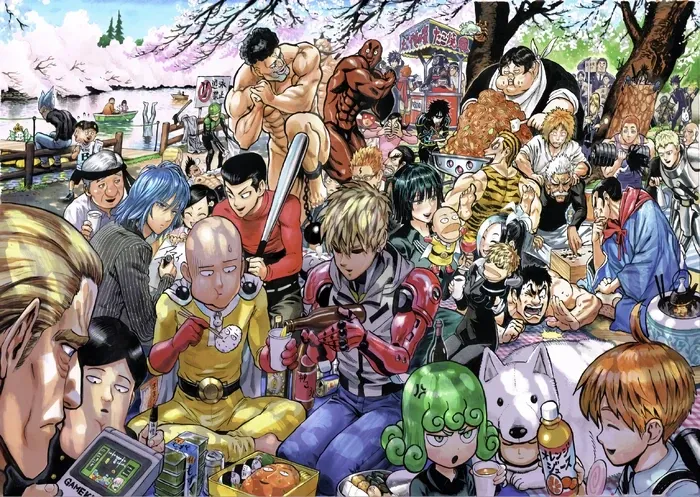
Saitama's character is the lynchpin of One-Punch Man's deconstructive approach. Unlike most protagonists who strive to overcome overwhelming odds, Saitama begins the series having already surpassed all conceivable challenges. His unparalleled strength, while initially a source of satisfaction, quickly transforms into an existential burden. The thrill of battle, the tension of a life-or-death struggle, and the joy of victory are all denied to him, leading to a profound sense of ennui. This central paradox—the strongest being the most unfulfilled—serves as a powerful commentary on the nature of ambition and purpose. For Saitama, heroism is no longer a path to self-discovery or glory, but a monotonous chore. He struggles not against villains, but against the crushing weight of his own boredom, often lamenting the lack of a challenging opponent or even the simple pleasure of a good fight.
This psychological state is further exacerbated by the public's perception, or lack thereof, of his abilities. Due to his unassuming appearance and the speed with which he dispatches threats, Saitama rarely receives the recognition he deserves. Instead, glory often falls to less powerful, but more charismatic, heroes who are better at PR. This aspect highlights a cynical view of modern heroism, suggesting that public image and perception can often outweigh genuine effectiveness. Saitama's indifference to fame and fortune, while admirable, also contributes to his isolation; he is a hero not for accolades, but because he believes it is the right thing to do, even if it means being misunderstood or forgotten. His interactions with other heroes, particularly Genos, his cyborg disciple, reveal his underlying desire for connection and understanding, even as his immense power sets him apart. Saitama's journey is not about becoming stronger, but about finding meaning in a life where strength is no longer a variable. His quest, if one could call it that, is for a genuine challenge, a feeling of excitement, or simply a good deal at the supermarket. This makes him a uniquely relatable character despite his fantastical abilities, as his struggles with apathy, routine, and the search for purpose resonate with universal human experiences. He embodies the idea that true strength might not be about how many punches you can throw, but about how you cope with the consequences of being able to throw just one.
The Hero Association: Bureaucracy, Hierarchy, and Public Perception
Central to the world-building of One-Punch Man is the Hero Association, a professional organization established to combat the ever-increasing threat of monsters and villains. This institution introduces a structured, often bureaucratic, layer to heroism that stands in stark contrast to Saitama's individualistic and unassuming approach. The Hero Association categorizes heroes into classes—C, B, A, and S—based on their abilities, contributions, and popularity. This hierarchical system is a direct satire of real-world organizational structures, highlighting issues of meritocracy, public relations, and the often-flawed nature of institutional power. Heroes are ranked, funded, and deployed based on these classifications, creating internal rivalries, status anxiety, and a focus on public image that can sometimes overshadow the actual act of saving lives.
The class system is particularly effective in demonstrating the challenges faced by Saitama. As a C-class hero initially, despite his overwhelming power, he is constantly underestimated and overlooked. His rapid ascent through the ranks is often due to the intervention of others or sheer coincidence, rather than strategic placement by the Association. This satirizes the difficulty of acknowledging true genius or unparalleled skill when it doesn't fit neatly into established metrics or public expectations. The Association's reliance on public polls, media coverage, and easily quantifiable feats means that heroes who perform spectacular, visible actions are often favored over those who quietly eliminate threats with minimal fanfare, even if the latter are more effective. This creates a fascinating dynamic where heroes like King, who is incredibly weak but has an intimidating reputation, can rise to S-class, while Saitama, the strongest, struggles with lower ranks.
Furthermore, the Hero Association often grapples with its own internal corruption, incompetence, and the sheer scale of the threats it faces. Its leaders and executives are sometimes portrayed as detached or overly concerned with their own interests, further complicating the idea of organized heroism. The existence of the Hero Association also raises questions about societal responsibility and the privatization of public safety. It suggests a world where individuals are expected to step up and perform heroic deeds, often at great personal risk, under the banner of a centralized, fallible organization. This institutional framework provides a rich backdrop for exploring themes of collective action, individual responsibility, and the complex relationship between heroes and the society they protect, adding depth beyond mere monster-of-the-week battles.
Villainy and Monstrosity: The Foils to Saitama's Power
In One-Punch Man, the antagonists are broadly categorized as 'monsters' or 'villains,' often emerging from environmental pollution, scientific experiments gone awry, or sheer spontaneous mutation. These threats range from giant sentient crabs and ancient beings to organized criminal syndicates and, most notably, the Monster Association. The sheer diversity and often absurd nature of these villains serve multiple narrative purposes. Firstly, they provide the necessary external conflict that allows the other heroes to shine and demonstrate their unique abilities, compensating for Saitama's overwhelming presence. Secondly, they are crucial for setting the stage for Saitama's one-punch victories, which remain central to the series' comedic and deconstructive core.
The Monster Association, in particular, represents a significant development in the series' world-building. It is an organized entity of powerful monsters, mirroring the Hero Association in its structure and ambition. This parallel organization allows One-Punch Man to explore themes of societal conflict, the nature of evil, and the origins of monstrosity. Many monsters, particularly the more intelligent ones, have tragic backstories or philosophical motivations that challenge simplistic notions of good versus evil. Some are former humans transformed by obsession or desperation, raising questions about what truly defines a 'monster'—is it their appearance, their actions, or their loss of humanity? This nuanced portrayal adds a layer of depth to the antagonists, making them more than just fodder for Saitama's punches.
Furthermore, the escalating power levels of the monsters serve to continuously raise the stakes for everyone except Saitama. While other heroes struggle desperately against threats that could devastate cities, Saitama dispatches them with nonchalant ease, further emphasizing his unique position. This dynamic allows the series to maintain a sense of danger and excitement for the supporting cast, while simultaneously reinforcing Saitama's unshakeable power. The villains, therefore, are not just obstacles; they are narrative devices that highlight the series' central themes: the psychological cost of absolute power, the complexities of heroism, and the often-absurd nature of conflict when one character transcends all conventional limitations. Their varied designs and motivations ensure that while Saitama's fights may be short, the implications of their existence and defeat are far-reaching within the narrative.
Themes and Philosophical Underpinnings
One-Punch Man is rich with thematic depth, using its comedic and action-packed façade to explore profound philosophical questions. At its core, the series is a deconstruction of the superhero genre, challenging established tropes and expectations. It asks: what happens after the hero achieves ultimate power? What defines heroism beyond feats of strength? And what is the meaning of life when all struggle is removed?
One of the most prominent themes is the existential crisis of absolute power. Saitama's ennui is not merely boredom; it's a deep-seated lack of purpose stemming from the absence of challenge. This mirrors philosophical concepts like absurdism, where individuals seek meaning in a universe that offers none. Saitama's relentless pursuit of a worthy opponent is his attempt to inject meaning back into his existence, even if he rarely succeeds. This theme resonates with contemporary anxieties about satisfaction, achievement, and the search for purpose in an increasingly comfortable yet often isolating world.
Another crucial theme is the nature of true heroism. The series frequently contrasts Saitama's selfless, anonymous acts with the more public, image-conscious heroism of the Hero Association. Saitama saves people not for recognition or reward, but because it's 'what a hero does.' This highlights a purer, more altruistic form of heroism, one that prioritizes the act of helping over the glory received. The series critiques the commodification of heroism, where public perception and rank can overshadow genuine effectiveness and moral integrity. Characters like Mumen Rider, a C-class hero who, despite his weakness, always puts himself on the line, further exemplify this theme, showcasing that heroism is often defined more by courage and selflessness than by raw power.
Societal critique and bureaucracy are also central. The Hero Association, with its rigid class system, internal politics, and susceptibility to public opinion, serves as a satirical mirror to real-world institutions. It exposes the flaws in systems that prioritize appearance over substance, and how easily genuine contributions can be overlooked or misattributed. This aspect of the narrative encourages viewers to question authority and the criteria by which society judges success and value.
Finally, One-Punch Man delves into identity and self-worth. Many characters, heroes and villains alike, are defined by their powers, their appearance, or their public role. Saitama, however, constantly struggles with feeling like an 'ordinary guy' despite his extraordinary abilities. His journey is, in a way, about reconciling his internal sense of self with his external reality, and finding worth beyond his destructive capabilities. The series thus becomes a nuanced exploration of what it means to be powerful, what it means to be a hero, and ultimately, what it means to be human in a world that constantly demands more.
Artistic Evolution and Narrative Craft
The journey of One-Punch Man from webcomic to global phenomenon is a testament to its unique artistic evolution and masterful narrative craft. The series originated as a digital webcomic by ONE, characterized by its simplistic, often crude, art style. Despite the rudimentary visuals, ONE's genius for comedic timing, character development, and intricate plotlines shone through, quickly garnering a massive following in Japan. The raw, unrefined art surprisingly enhanced the humor, particularly in depicting Saitama's deadpan expressions and the sudden, anticlimactic nature of his victories. This initial iteration established the core narrative and characters that would become beloved worldwide.
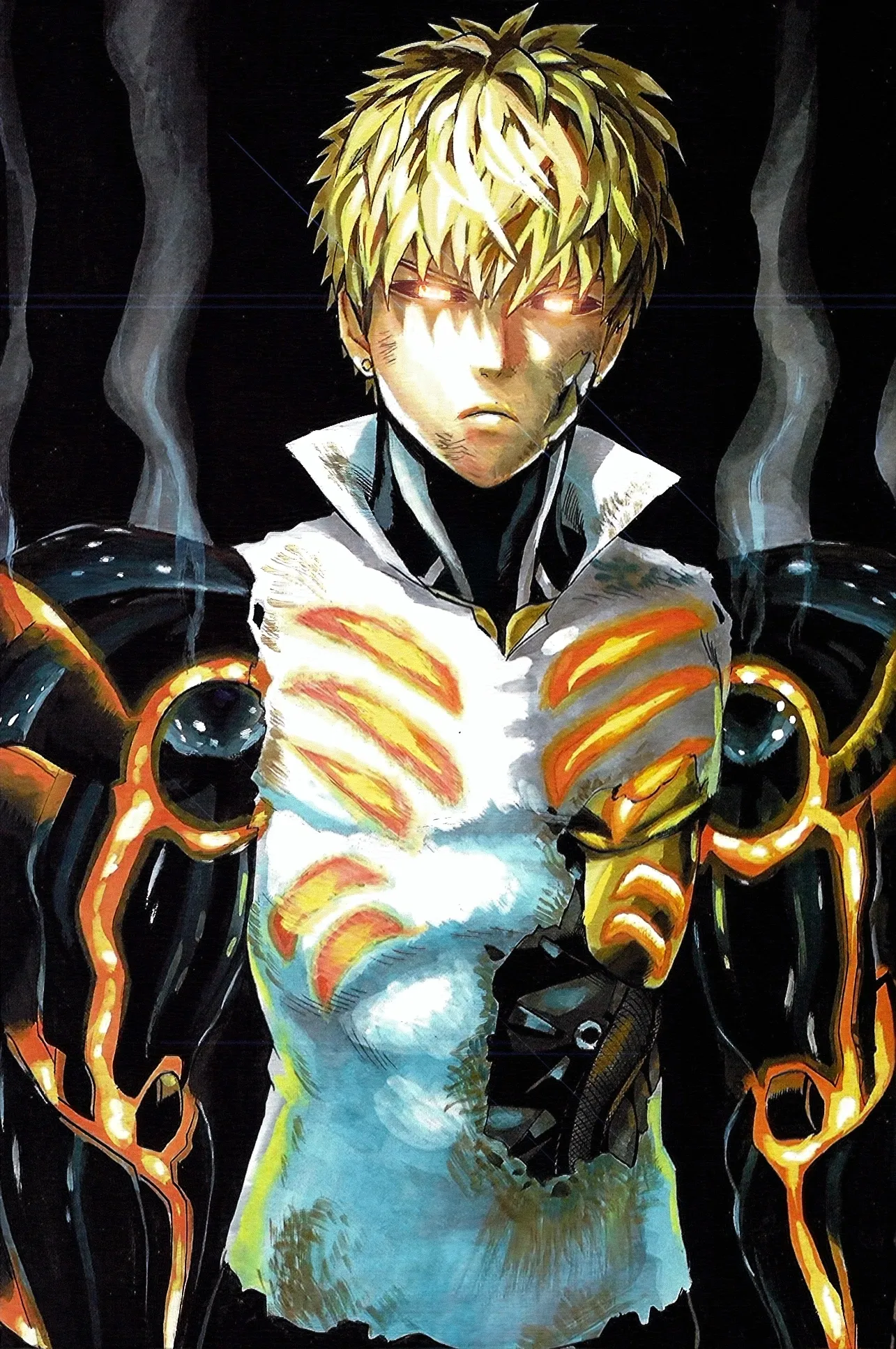
The series gained significant traction when Yusuke Murata, an acclaimed manga artist known for his detailed and dynamic artwork in Eyeshield 21, approached ONE with a proposal to redraw the series for publication. Murata's redraw transformed One-Punch Man into a visual spectacle without losing the essence of ONE's original vision. Murata's art is renowned for its incredible detail, fluid action sequences, and breathtaking panel layouts that convey speed, impact, and scale. His ability to render intricate mechanical designs (like Genos) and monstrous forms with terrifying realism, while simultaneously preserving ONE's comedic sensibilities, is a key factor in the manga's success. The contrast between Murata's hyper-detailed art and Saitama's deliberately simplistic design often serves as a visual punchline, amplifying the series' humor.
The narrative craft of One-Punch Man is equally sophisticated. ONE's writing excels in subverting expectations, building tension only to release it through Saitama's effortless victories, and developing a vast ensemble cast. Each character, from the arrogant S-class heroes to the lowliest C-class heroes and even many villains, is given distinct personalities, motivations, and often surprising moments of depth. The pacing masterfully balances intense action with character-driven moments and comedic interludes. The series also employs a unique narrative structure where Saitama often arrives late to major conflicts, allowing other heroes to demonstrate their struggles and growth before he delivers the decisive, anti-climactic blow. This structure highlights the themes of collective effort versus individual power and allows for a broader exploration of the world and its inhabitants.
The anime adaptation further elevates the series, bringing Murata's dynamic art to life with exceptional animation, particularly in its fight choreography. The sound design and voice acting perfectly capture the comedic timing and dramatic weight of the story, making One-Punch Man a multi-platform success that demonstrates how collaboration and artistic synergy can transform a simple concept into a rich, layered narrative experience.
Cultural Impact and Reception
Since its inception, One-Punch Man has achieved widespread critical acclaim and immense popularity, leaving a significant mark on global popular culture. Its unique premise and execution resonated deeply with audiences, propelling it beyond the niche confines of webcomics and into the mainstream consciousness as a successful manga and anime franchise. The series' appeal lies in its ingenious blend of high-octane action, sharp comedic timing, and profound thematic exploration, making it accessible and enjoyable for a diverse demographic, from casual viewers to seasoned anime and manga enthusiasts.
The anime adaptation, in particular, was lauded for its exceptional animation quality, especially during its first season. The fluid fight sequences, dynamic camera work, and faithful adaptation of Murata's intricate artwork set a new standard for action animation, drawing in a global audience and garnering numerous awards and nominations. This visual excellence, combined with the compelling narrative, contributed to its rapid rise in popularity, making Saitama a recognizable figure even among those unfamiliar with anime.
One-Punch Man has had a notable impact on the superhero genre itself. It popularized the concept of 'deconstructed heroism,' inspiring other creators to explore similar themes of overpowered protagonists and the psychological burdens of strength. It challenged traditional notions of what makes a compelling superhero story, proving that a protagonist who can't lose can still lead to exciting and thought-provoking narratives. The series' satirical elements have also encouraged a re-evaluation of common superhero tropes, prompting discussions about character motivation, plot progression, and the role of struggle in storytelling.
Beyond its genre influence, One-Punch Man has fostered a vibrant and dedicated fanbase. Online communities actively discuss theories, character arcs, and the philosophical implications of Saitama's powers. Merchandise, fan art, and cosplay abound, testifying to the series' deep cultural penetration. Its catchphrases, like Saitama's often-bored expressions or his famous 'OK,' have become iconic within internet culture. The series continues to be a benchmark for quality in both manga and anime, influencing new generations of creators and solidifying its place as a modern classic that masterfully blends action, comedy, and profound commentary on the human (and superhuman) condition. Its ongoing success underscores a timeless appeal for stories that dare to question the status quo and explore the unexpected consequences of ultimate power.
Conclusion: Beyond the Punch
One-Punch Man stands as a masterclass in deconstructive storytelling, offering far more than just spectacular battles and comedic relief. Through Saitama's existential ennui, the bureaucratic complexities of the Hero Association, and the nuanced portrayal of its monstrous antagonists, the series meticulously unpacks and critiques the very foundations of the superhero genre. It forces its audience to ponder the true essence of heroism—is it the power to win, or the unwavering will to protect? Is it public acclaim, or quiet selflessness? The narrative consistently challenges our preconceived notions of what makes a hero compelling, suggesting that true struggle often lies not in overcoming external foes, but in confronting internal voids.
The series' enduring appeal lies in its ability to balance profound philosophical inquiry with accessible humor and breathtaking action. ONE's ingenious writing, amplified by Yusuke Murata's stunning artwork and the anime's dynamic animation, creates a multifaceted experience that is both entertaining and intellectually stimulating. One-Punch Man serves as a mirror, reflecting contemporary anxieties about purpose, recognition, and the societal structures that shape our understanding of value. It reminds us that even with absolute power, the human quest for meaning and connection remains the most formidable challenge of all, cementing its legacy as a significant and thought-provoking contribution to modern popular culture.