Generated with Monsha
Mastering Dilations and Similarity Transformations
Smart Worksheet · Grade 8 · English
Mastering Dilations and Similarity Transformations
Activity 1: Calculating the Scale Factor (Apply)
In the figure below, triangle
has been dilated from center point
to create image triangle
.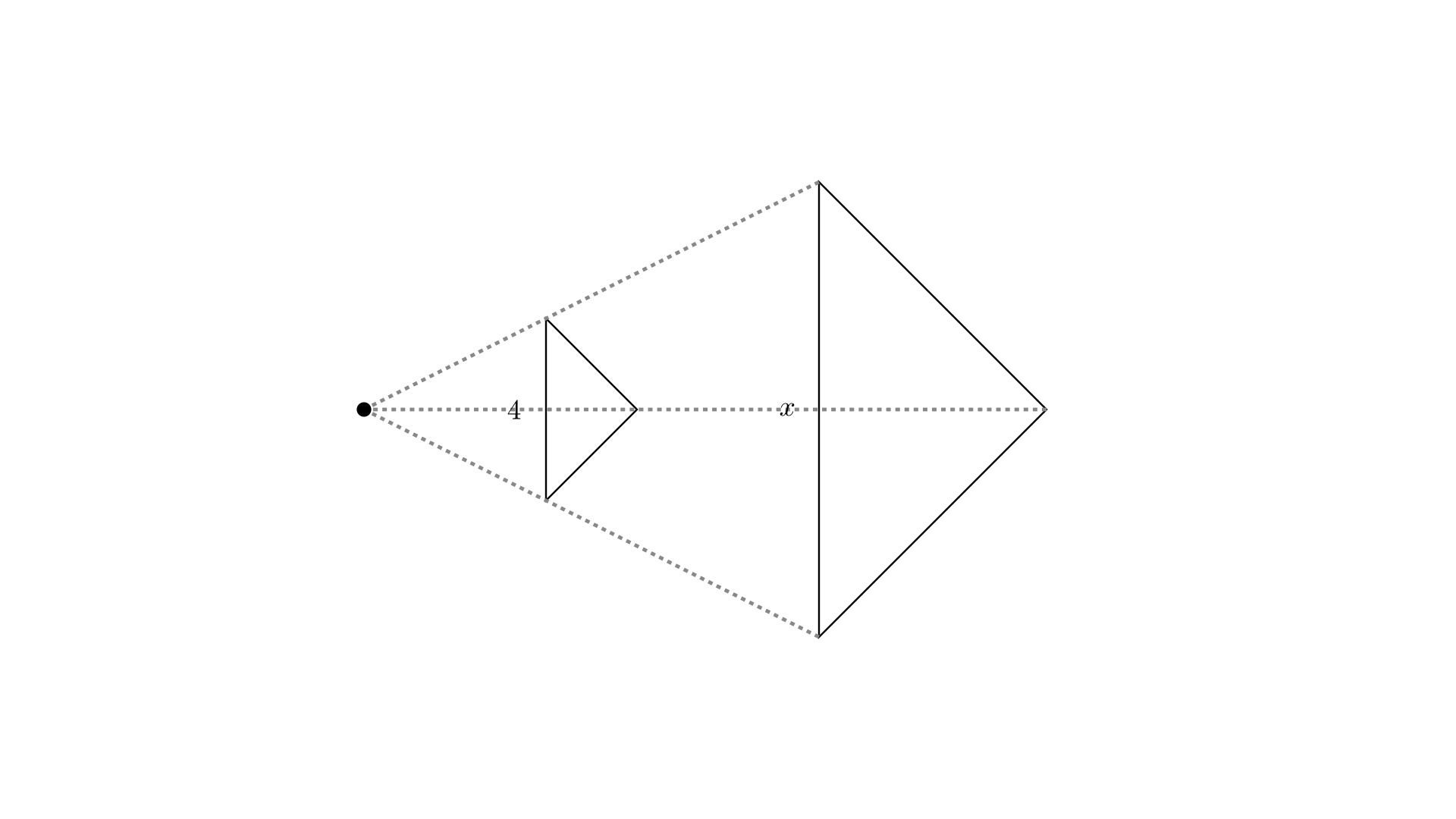
1. If the length of side
is 4 units and the length of side
(labeled
) is 10 units, what is the scale factor (
) of the dilation?2. Is this dilation an enlargement or a reduction? Justify your answer.
Activity 2: Anatomy of a Dilation (Apply)
Examine the diagram showing a geometric dilation. Identify and label the specific parts indicated by the numbered boxes.
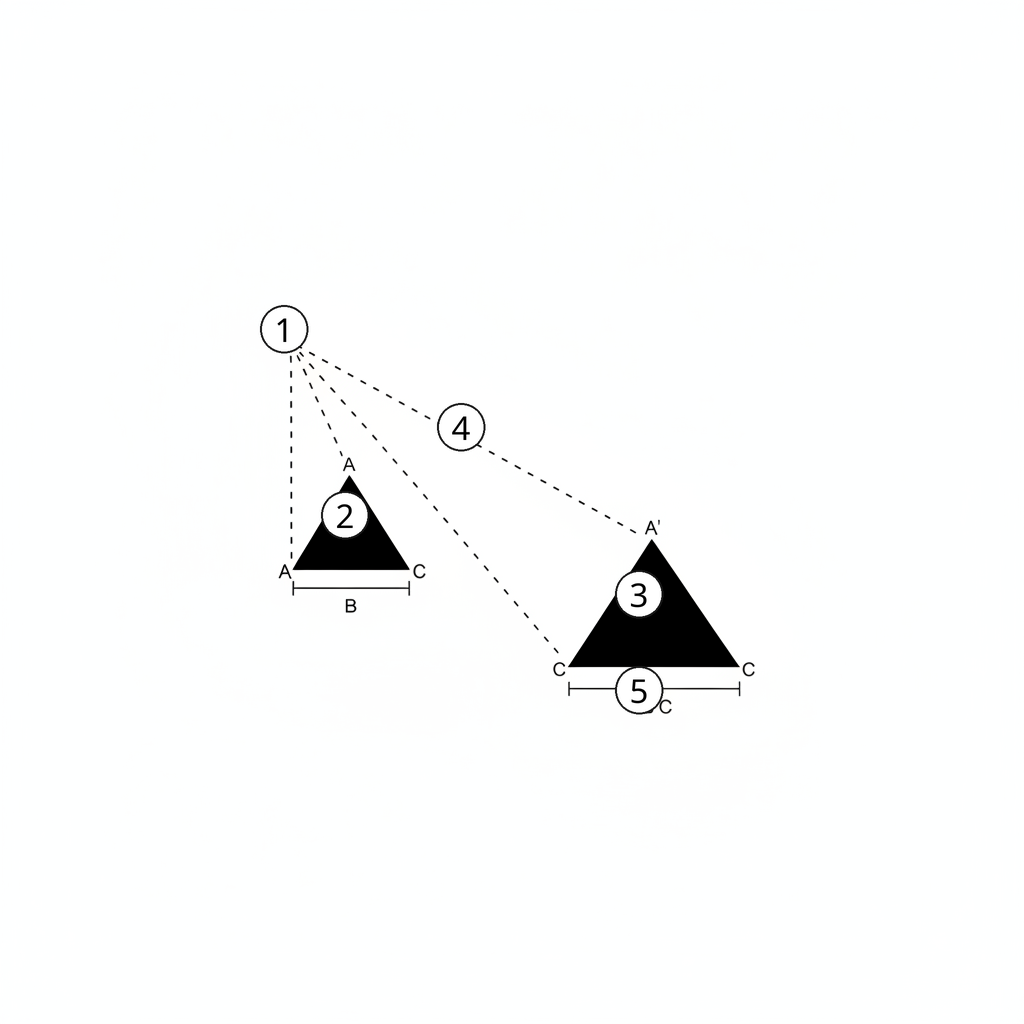
Word Bank (Use each once):
- Pre-image (Original Figure)
- Image (Transformed Figure)
- Center of Dilation (P)
- Ray of Dilation
- Scale Factor (k)
Labels:
-
-
-
-
-
Activity 3: Coordinate Plane Analysis (Evaluate)
The graph below shows a square
(solid line) and its image
(dashed line) after a dilation from the origin
.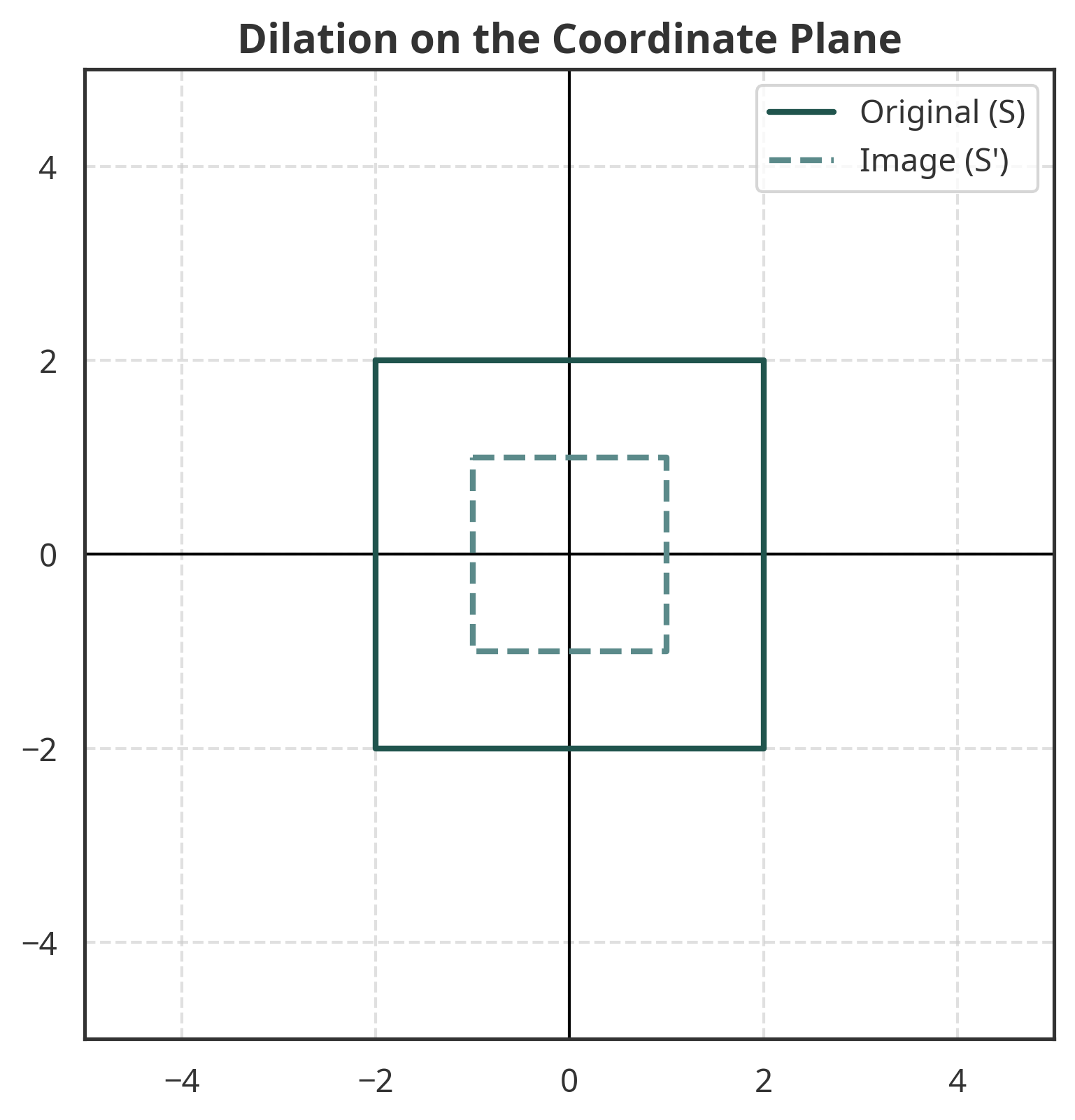
1. Determine the scale factor (
) of this transformation.
____________2. Write the algebraic rule that describes this dilation.
(____________ , ____________)3. If a point on the original square
was
, what would be the coordinates of its corresponding point on
?
Activity 4: Using Logic for Similarity (Apply)
Use the flowchart below to determine if the following two figures are similar.
Figures:
- Rectangle A: Length = 4 cm, Width = 6 cm
- Rectangle B: Length = 8 cm, Width = 10 cm
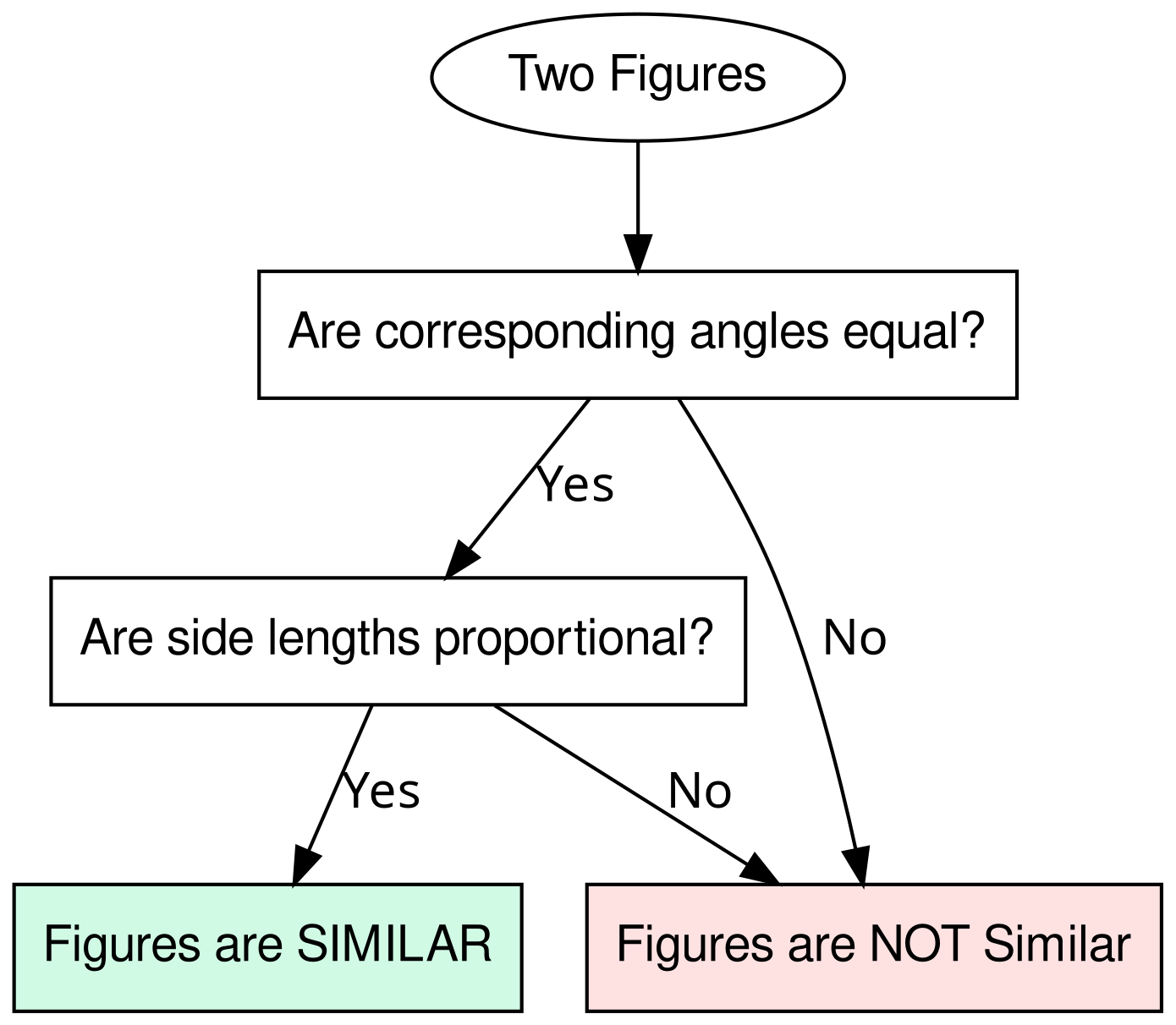
Step 1: Are the corresponding angles equal? (Explain why for rectangles):
Step 2: Are the side lengths proportional? (Show your calculation):
Final Conclusion: Are the figures similar?
Activity 5: Scale Factor Assessment (Evaluate)
Which of the following scale factors would result in an image that is smaller than the pre-image and inverted (facing the opposite direction) across the center of dilation?
-
-
-
-
Activity 6: Advanced Spatial Reasoning (Very Difficult)
A rectangular prism (3D shape) has a volume of
. It is dilated by a scale factor of
.1. What is the ratio of the surface area of the image to the surface area of the original prism?
2. What is the new volume of the dilated prism? (Hint: The volume changes by
).
Activity 7: Similarity Statement Mappings (Evaluate)
Given the statement
, which of the following is a false statement regarding their relationship?-
-
-
-
Activity 8: Real-World Proportions (Apply)
An architect creates a scale model of a skyscraper using a scale factor of
.1. If the model's base is
wide, how wide is the actual building's base in meters?2. If the actual building is
tall, how tall is the architect's model in centimeters?
Activity 9: Sequences of Transformations (Very Difficult)
Triangle
has a vertex
at
. The triangle undergoes the following sequence of transformations:- A dilation from the origin with a scale factor of .
- A translation 5 units right and 3 units down.
What are the final coordinates of vertex
after both transformations?
Activity 10: Synthesis Graphic Organizer
Complete the T-Chart below to compare the properties of congruent figures and similar figures.
Name:
Date:
Mastering Dilations and Similarity Transformations
Activity 1: Calculating the Scale Factor (Apply)
In the figure below, triangle
has been dilated from center point
to create image triangle
.
1. If the length of side
is 4 units and the length of side
(labeled
) is 10 units, what is the scale factor (
) of the dilation?2. Is this dilation an enlargement or a reduction? Justify your answer.
Activity 2: Anatomy of a Dilation (Apply)
Examine the diagram showing a geometric dilation. Identify and label the specific parts indicated by the numbered boxes.
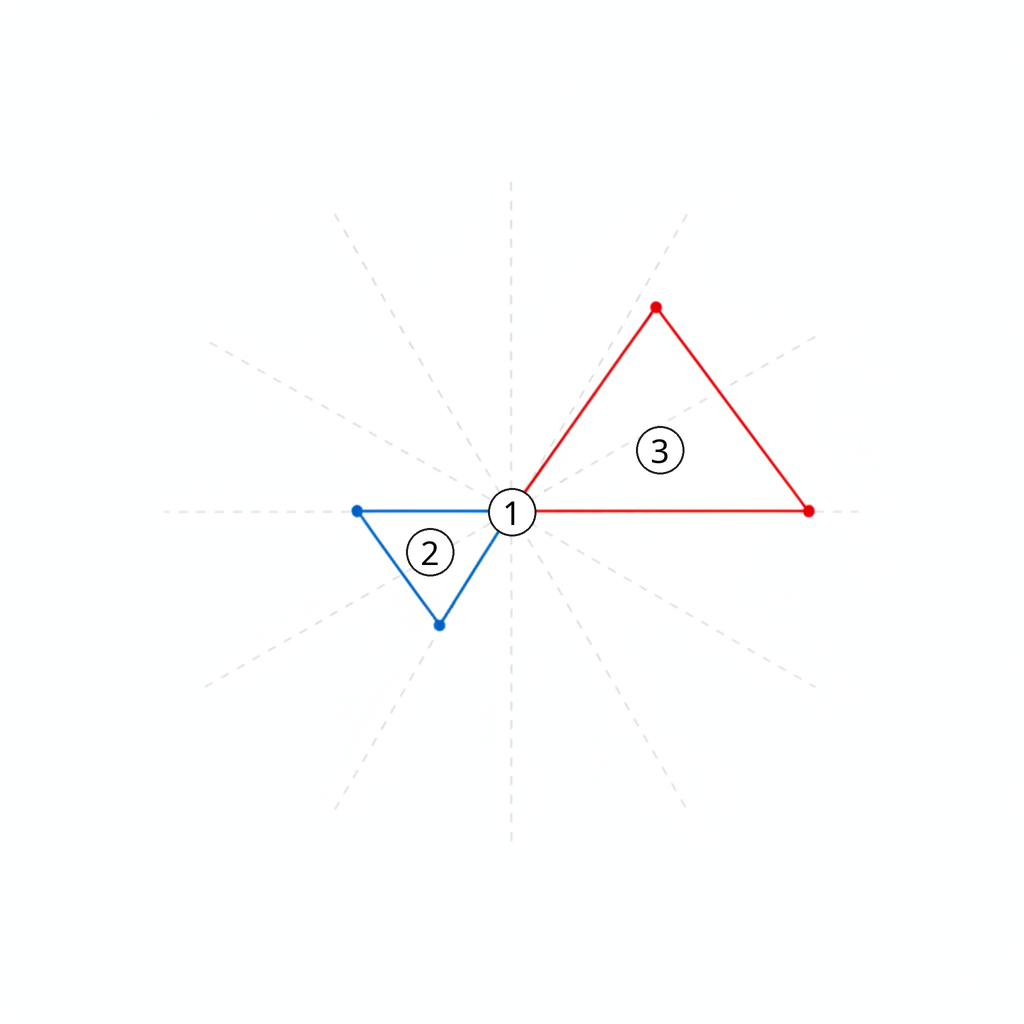
Word Bank (Use each once):
- Pre-image (Original Figure)
- Image (Transformed Figure)
- Center of Dilation
Labels:
-
-
-
Activity 3: Coordinate Plane Analysis (Evaluate)
The graph below shows a square
(solid line) and its image
(dashed line) after a dilation from the origin
.
1. Determine the scale factor (
) of this transformation.
____________2. Write the algebraic rule that describes this dilation.
(____________ , ____________)3. If a point on the original square
was
, what would be the coordinates of its corresponding point on
?
Activity 4: Using Logic for Similarity (Apply)
Use the flowchart below to determine if the following two figures are similar.
Figures:
- Rectangle A: Length = 4 cm, Width = 6 cm
- Rectangle B: Length = 8 cm, Width = 10 cm
Step 1: Are the corresponding angles equal? (Explain why for rectangles):
Step 2: Are the side lengths proportional? (Show your calculation):
Final Conclusion: Are the figures similar?
Activity 5: Scale Factor Assessment (Evaluate)
Which of the following scale factors would result in an image that is smaller than the pre-image and inverted (facing the opposite direction) across the center of dilation?
A.
B.
C.
D.
Activity 6: Advanced Spatial Reasoning (Very Difficult)
A rectangular prism (3D shape) has a volume of
. It is dilated by a scale factor of
.1. What is the ratio of the surface area of the image to the surface area of the original prism?
2. What is the new volume of the dilated prism? (Hint: The volume changes by
).
Activity 7: Similarity Statement Mappings (Evaluate)
Given the statement
, which of the following is a false statement regarding their relationship?A.
B.
C.
D.
Activity 8: Real-World Proportions (Apply)
An architect creates a scale model of a skyscraper using a scale factor of
.1. If the model's base is
wide, how wide is the actual building's base in meters?2. If the actual building is
tall, how tall is the architect's model in centimeters?
Activity 9: Sequences of Transformations (Very Difficult)
Triangle
has a vertex
at
. The triangle undergoes the following sequence of transformations:- A dilation from the origin with a scale factor of .
- A translation 5 units right and 3 units down.
What are the final coordinates of vertex
after both transformations?
Activity 10: Synthesis Graphic Organizer
Complete the T-Chart below to compare the properties of congruent figures and similar figures.
Name:
Date: