Generated with Monsha
Mastering Mitosis: The Mechanics of Eukaryotic Cell Division
Anything · Grade 12 · English
Mastering Mitosis: The Mechanics of Eukaryotic Cell Division
Introduction: The Essence of Mitosis
Mitosis is the process by which a eukaryotic cell separates its already duplicated chromosomes into two identical sets in two separate nuclei. It is the cornerstone of growth, tissue repair, and asexual reproduction in multicellular organisms. In Grade 12 Biology, we move beyond simple identification of phases to understand the complex regulatory mechanisms and molecular structures that ensure genetic fidelity.
At its core, mitosis ensures that if a parent cell is diploid (denoted as
), both resulting daughter cells will also be perfectly diploid (
). This requires a precise sequence of replication and distribution:
The Cell Cycle: Preparing for Division
Before a cell enters mitosis, it spends the majority of its life in Interphase. Interphase is not a "resting" phase; it is a period of intense metabolic activity and preparation.
- G1 Phase (Gap 1): The cell grows in size and synthesizes mRNA and proteins required for DNA synthesis.
- S Phase (Synthesis): DNA replication occurs. Each of the 46 chromosomes in a human cell is copied, resulting in two identical sister chromatids joined at a centromere.
- G2 Phase (Gap 2): The cell continues to grow and produces the proteins (such as tubulin) necessary for the spindle apparatus.

The M-Phase: A Step-by-Step Breakdown
Mitosis itself is divided into four main stages, characterized by specific movements of chromosomes and changes in cellular architecture.
1. Prophase: The Setup
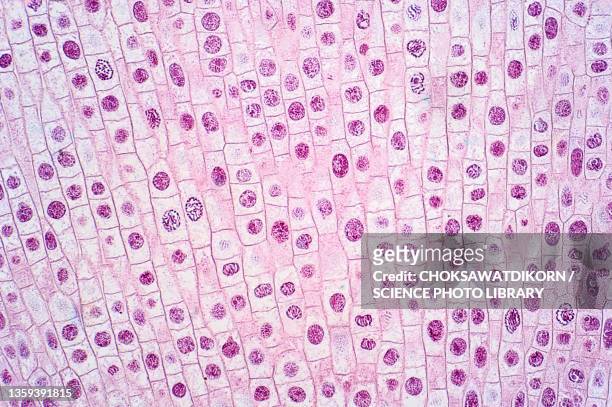
During prophase, the loosely packed chromatin condenses into visible, tightly coiled chromosomes. The nucleolus disappears, and the nuclear envelope begins to break down. In animal cells, the centrioles migrate to opposite poles, organizing the mitotic spindle—a framework of microtubules that will orchestrate chromosome movement.
2. Metaphase: The Alignment
The spindle fibers attach to the kinetochores (protein complexes at the centromere) of each chromosome. The chromosomes are then tugged to the center of the cell, aligning along the metaphase plate (the cell's equator). This alignment is critical for ensuring that each daughter cell receives one copy of every chromosome.
3. Anaphase: The Separation
Anaphase is the shortest stage of mitosis. The enzyme separase cleaves the cohesion proteins holding sister chromatids together. The spindle fibers then shorten, pulling the sister chromatids—now referred to as individual chromosomes—toward opposite poles of the cell.
4. Telophase: The Rebuilding
Once the chromosomes reach the poles, they begin to decondense back into chromatin. New nuclear envelopes form around each set of chromosomes, and the spindle apparatus disassembles. The cell now has two distinct nuclei, but it is still a single physical unit.
Cytokinesis: The Physical Split
While mitosis refers specifically to the division of the nucleus, cytokinesis is the division of the cytoplasm, resulting in two separate cells.
- In Animal Cells: A contractile ring of actin and myosin filaments forms a cleavage furrow, pinching the cell membrane until it snaps into two.
- In Plant Cells: Because of the rigid cell wall, a cleavage furrow cannot form. Instead, vesicles from the Golgi apparatus gather at the center and fuse to form a cell plate, which eventually develops into a new cell wall between the two daughter cells.
Regulation: The M-Checkpoint
To prevent errors like aneuploidy (an abnormal number of chromosomes), cells utilize regulatory checkpoints. The most critical during mitosis is the M-checkpoint (or Spindle Checkpoint). This checkpoint occurs during metaphase; the cell will not proceed to anaphase until it detects that every single kinetochore is properly attached to a spindle fiber from opposite poles. If an error is detected, the cell cycle pauses to allow for correction, or may undergo programmed cell death (apoptosis) if the error is terminal.
Summary of Biological Significance
Function | Description |
|---|---|
Growth | Multicellular organisms increase their cell count from a single zygote to trillions of cells. |
Repair | Damaged tissues (like skin or intestinal lining) are constantly replaced by new, genetically identical cells. |
Genetic Stability | Mitosis ensures that every cell in an organism's body has the same instructions (DNA). |