Generated with Monsha
Save this resource to edit, expand, or export it, or create more resources for free.
The Other Side: A 4-Day Journey of Friendship
Anything
Grade 4
English
The Other Side: A 4-Day Journey of Friendship
Overview
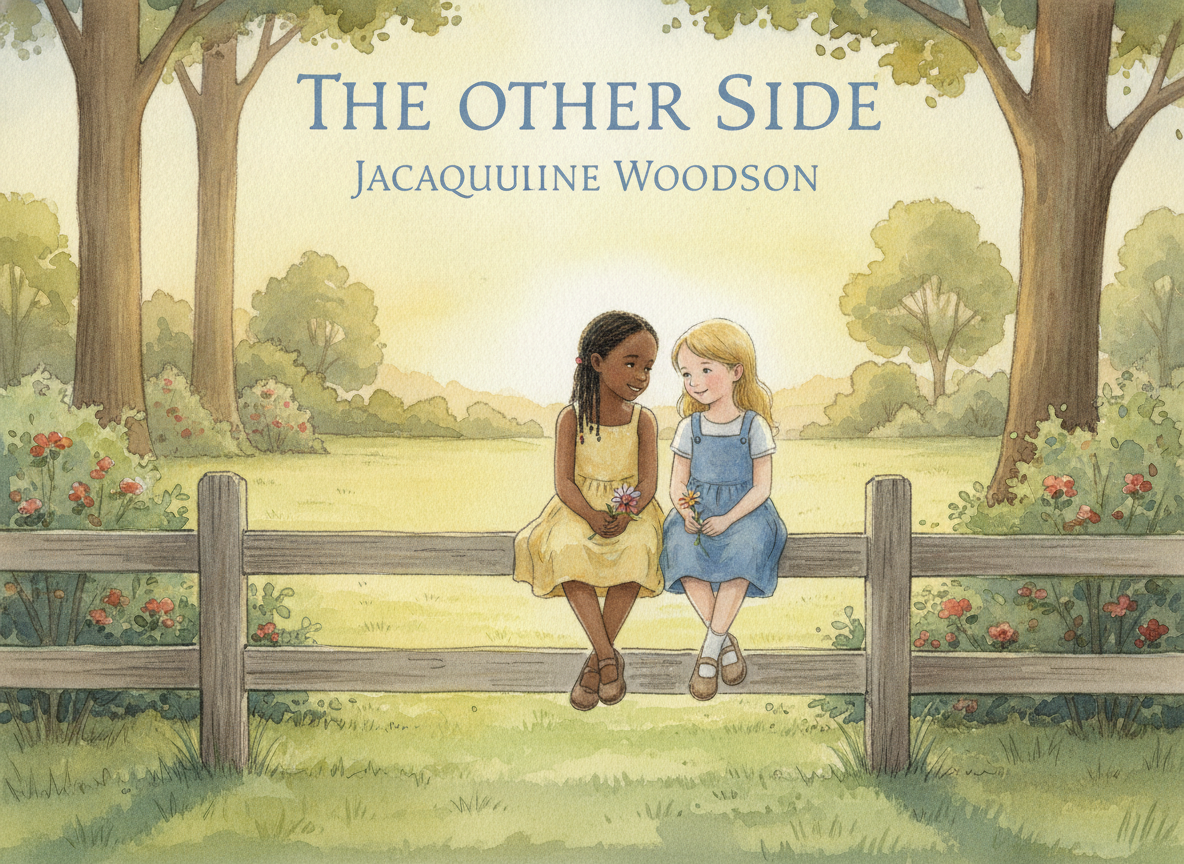
This 4-day unit explores The Other Side by Jacqueline Woodson. We will focus on the theme of friendship and how it can bridge gaps created by rules and history.
Day 1: The Fence as a Barrier
Focus: Setting and Symbolism
The Lesson:
In the story, a long wooden fence runs through the middle of the town. Clover, who lives on one side, is told by her mother, "Don't climb over that fence. It's not safe." Annie, who lives on the other side, is told the same thing.
- Symbolism: The fence isn't just wood and nails. It represents segregation and the invisible lines that kept people apart because of the color of their skin.
- Perspective: We see the world through Clover's eyes. She watches Annie from her porch, wondering why the world has to be divided.
Discussion Question: Why do you think the adults in the town want the children to stay on their own sides of the fence?
Day 2: Courage to Connect
Focus: Character Actions and Making the First Move
The Lesson:
Friendship often starts with a single, brave act. Annie is the one who first tries to bridge the gap by watching the Black children play and eventually coming closer to the fence.
- The Meeting: When it rains, Annie sits on the fence. Clover finally goes out to talk to her. They realize they have things in common—both their mothers told them not to cross the fence.
- The Loophole: Since they aren't supposed to cross the fence, they decide to sit on top of it. This is a clever way to be together while following the letter of the "rules."
Key Vocabulary: Courage (doing something brave even when you are nervous).
Day 3: Building a Bridge
Focus: Theme of Friendship and Change
The Lesson:
By the end of the book, other children join Clover and Annie on the fence. The friendship between two girls starts to change how the other kids see the world.
- Theme: Friendship is stronger than the barriers people build. Clover and Annie show that you don't have to follow rules that keep people apart just because "that's how it's always been."
- The Future: Annie says, "Someday someone's going to come along and knock this old fence down." This shows hope for a future where everyone can play together without a fence at all.
Reflection: How did Clover and Annie's friendship change the other girls in the neighborhood?
Day 4: Friendship Theme Test
Part 1: Multiple Choice
Choose the best answer for each question.
- In the beginning of the story, what does the fence mostly represent? A) A place to practice balance B) A property line for the two houses C) A structure that was built incorrectly D) A social barrier keeping different people apart
- Why does Clover’s mother tell her not to climb over the fence? A) She is afraid Clover will get a splinter from the wood. B) She wants Clover to finish her chores first. C) She thinks the fence is too high and dangerous. D) She is following the social rules of segregation in their town.
- Which action shows that Annie is eager to be Clover's friend? A) She spends time watching Clover and her friends play. B) She ignores Clover when she walks by the fence. C) She stays inside her house whenever it is sunny. D) She tells her mother she never wants to go outside.
- Why do the girls decide to sit on top of the fence instead of crossing it? A) They can see the whole town better from up high. B) It is the most comfortable place to sit and talk. C) They want to show off how well they can climb. D) It allows them to be together without technically breaking their mothers' rules.
- What is the main theme, or lesson, of The Other Side? A) Playing in the rain is more fun than playing in the sun. B) It is important to always follow every rule exactly as it is told. C) True friendship can overcome barriers and help change the world. D) Fences are useful for keeping people safe from strangers.
Part 2: Short Answer
- Describe one moment in the story where Clover showed courage to become Annie's friend.
- At the end of the story, Annie says that one day someone will "knock this old fence down." What does she mean by this?
The Other Side: A 4-Day Journey of Friendship
Overview
This 4-day unit explores The Other Side by Jacqueline Woodson. We will focus on the theme of friendship and how it can bridge gaps created by rules and history. These lessons include specific checkpoint questions to prepare students for the final test.
Day 1: The Fence as a Barrier
Focus: Setting and Symbolism
The Lesson:
In the story, a long wooden fence runs through the middle of the town. Clover, who lives on one side, is told by her mother, "Don't climb over that fence. It's not safe." Annie, who lives on the other side, is told the same thing.
- Symbolism: The fence isn't just wood and nails. It represents segregation and the invisible lines that kept people apart because of the color of their skin.
- Perspective: We see the world through Clover's eyes. She watches Annie from her porch, wondering why the world has to be divided.
💡 Checkpoint Question (Test Prep):
How is the fence more than just a piece of wood? Look at how the adults treat it—what is the fence actually keeping apart in this town?
Day 2: Courage to Connect
Focus: Character Actions and Making the First Move
The Lesson:
Friendship often starts with a single, brave act. Annie is the one who first tries to bridge the gap by watching the Black children play and eventually coming closer to the fence.
- The Meeting: When it rains, Annie sits on the fence. Clover finally goes out to talk to her. They realize they have things in common—both their mothers told them not to cross the fence.
- The Loophole: Since they aren't supposed to cross the fence, they decide to sit on top of it. This is a clever way to be together while following the letter of the "rules."
💡 Checkpoint Question (Test Prep):
Why is sitting on top of the fence so important for Clover and Annie? How does this allow them to be friends while still "following" their mothers' rules?
Day 3: Building a Bridge
Focus: Theme of Friendship and Change
The Lesson:
By the end of the book, other children join Clover and Annie on the fence. The friendship between two girls starts to change how the other kids see the world.
- Theme: Friendship is stronger than the barriers people build. Clover and Annie show that you don't have to follow rules that keep people apart just because "that's how it's always been."
- The Future: Annie says, "Someday someone's going to come along and knock this old fence down."
💡 Checkpoint Question (Test Prep):
When Annie talks about someone "knocking the fence down," is she just talking about the wood? What bigger change in the world is she hoping for?
Day 4: Friendship Theme Test
Part 1: Multiple Choice
Choose the best answer for each question.
- In the beginning of the story, what does the fence mostly represent? A) A place to practice balance B) A property line for the two houses C) A structure that was built incorrectly D) A social barrier keeping different people apart
- Why does Clover’s mother tell her not to climb over the fence? A) She is afraid Clover will get a splinter from the wood. B) She wants Clover to finish her chores first. C) She thinks the fence is too high and dangerous. D) She is following the social rules of segregation in their town.
- Which action shows that Annie is eager to be Clover's friend? A) She spends time watching Clover and her friends play. B) She ignores Clover when she walks by the fence. C) She stays inside her house whenever it is sunny. D) She tells her mother she never wants to go outside.
- Why do the girls decide to sit on top of the fence instead of crossing it? A) They can see the whole town better from up high. B) It is the most comfortable place to sit and talk. C) They want to show off how well they can climb. D) It allows them to be together without technically breaking their mothers' rules.
- What is the main theme, or lesson, of The Other Side? A) Playing in the rain is more fun than playing in the sun. B) It is important to always follow every rule exactly as it is told. C) True friendship can overcome barriers and help change the world. D) Fences are useful for keeping people safe from strangers.
Part 2: Short Answer
- Describe one moment in the story where Clover showed courage to become Annie's friend.
- At the end of the story, Annie says that one day someone will "knock this old fence down." What does she mean by this?
The Other Side: A 4-Day Journey of Friendship
Overview
This 4-day unit explores The Other Side by Jacqueline Woodson. We will focus on the theme of friendship and how it can bridge gaps created by rules and history.
Day 1: The Fence as a Barrier
Focus: Setting and Symbolism
The Lesson:
In the story, a long wooden fence runs through the middle of the town. Clover, who lives on one side, is told by her mother, "Don't climb over that fence. It's not safe." Annie, who lives on the other side, is told the same thing.
- Symbolism: The fence isn't just wood and nails. It represents segregation and the invisible lines that kept people apart because of the color of their skin.
- Perspective: We see the world through Clover's eyes. She watches Annie from her porch, wondering why the world has to be divided.
💡 Checkpoint Question (Test Prep):
How is the fence more than just a piece of wood? Look at how the adults treat it—what is the fence actually keeping apart in this town?
Day 2: Courage to Connect
Focus: Character Actions and Making the First Move
The Lesson:
Friendship often starts with a single, brave act. Annie is the one who first tries to bridge the gap by watching the Black children play and eventually coming closer to the fence.
- The Meeting: When it rains, Annie sits on the fence. Clover finally goes out to talk to her. They realize they have things in common—both their mothers told them not to cross the fence.
- The Loophole: Since they aren't supposed to cross the fence, they decide to sit on top of it. This is a clever way to be together while following the letter of the "rules."
Key Vocabulary: Courage (doing something brave even when you are nervous).
💡 Checkpoint Question (Test Prep):
Why is sitting on top of the fence so important for Clover and Annie? How does this allow them to be friends while still "following" their mothers' rules?
Day 3: Building a Bridge
Focus: Theme of Friendship and Change
The Lesson:
By the end of the book, other children join Clover and Annie on the fence. The friendship between two girls starts to change how the other kids see the world.
- Theme: Friendship is stronger than the barriers people build. Clover and Annie show that you don't have to follow rules that keep people apart just because "that's how it's always been."
- The Future: Annie says, "Someday someone's going to come along and knock this old fence down." This shows hope for a future where everyone can play together without a fence at all.
💡 Checkpoint Question (Test Prep):
When Annie talks about someone "knocking the fence down," is she just talking about the wood? What bigger change in the world is she hoping for?
⭐ Review Sheet: Study This for the Test! ⭐
Use this guide to review what we learned before our test tomorrow.
1. The Big Symbol: The Fence
- What it looks like: A long, wooden fence that divides the town.
- What it represents: Segregation. It is a physical barrier that shows how the town is divided by race.
2. The Mothers' Rules
- Both Clover's mother and Annie's mother tell them not to climb over the fence.
- They say this because of the social rules of the time and because they want to keep the girls "safe" on their own sides.
3. Annie's First Move
- Annie is curious and eager. She spends time watching Clover and her friends play before she ever talks to them.
- She shows she wants to be a friend by being present and patient.
4. "The Loophole" (The Sitting Solution)
- Clover and Annie realize that their mothers said not to climb over the fence. They never said they couldn't sit ON it.
- By sitting on top of the fence together, they find a way to be friends while still technically following the rules.
5. The Final Lesson (Theme)
- Theme: Friendship is a bridge. It can overcome unfair rules and bring people together.
- The Future: When Annie mentions "knocking the fence down," she means ending segregation and the unfair divisions between people.
Quick Vocabulary Review:
- Courage: Being brave enough to talk to someone new, even when there are rules against it.
- Segregation: The act of keeping people apart based on the color of their skin (represented by the fence).
Day 4: Friendship Theme Test
Part 1: Multiple Choice
Choose the best answer for each question.
- In the beginning of the story, what does the fence mostly represent? A) A place to practice balance B) A property line for the two houses C) A structure that was built incorrectly D) A social barrier keeping different people apart
- Why does Clover’s mother tell her not to climb over the fence? A) She is afraid Clover will get a splinter from the wood. B) She wants Clover to finish her chores first. C) She thinks the fence is too high and dangerous. D) She is following the social rules of segregation in their town.
- Which action shows that Annie is eager to be Clover's friend? A) She spends time watching Clover and her friends play. B) She ignores Clover when she walks by the fence. C) She stays inside her house whenever it is sunny. D) She tells her mother she never wants to go outside.
- Why do the girls decide to sit on top of the fence instead of crossing it? A) They can see the whole town better from up high. B) It is the most comfortable place to sit and talk. C) They want to show off how well they can climb. D) It allows them to be together without technically breaking their mothers' rules.
- What is the main theme, or lesson, of The Other Side? A) Playing in the rain is more fun than playing in the sun. B) It is important to always follow every rule exactly as it is told. C) True friendship can overcome barriers and help change the world. D) Fences are useful for keeping people safe from strangers.
Part 2: Short Answer
- Describe one moment in the story where Clover showed courage to become Annie's friend.
- At the end of the story, Annie says that one day someone will "knock this old fence down." What does she mean by this?